Free Wordle Solver & Helper
Stuck on today’s Wordle? Type each guess exactly as you played it, tap the tiles to match Wordle’s gray, yellow, and green colors, and instantly see every word that still fits — plus the smartest next guess ranked by letter coverage. Set the word length to 4, 5, 6, 7, or 8 and it solves Wordle-style games with 4-, 6-, or 7-letter words just as well. Everything runs in your browser: no signup, no server, and it never knows the answer until your clues reveal it.
Type with your keyboard or the keys below. Click a filled tile to cycle gray → yellow → green.
Loading word list…
Enter a complete 5-letter guess and set its colors — suggestions appear instantly. No guess yet? Start with one of the best starting words below.
Once you enter a guess, every word that still fits your clues is listed here.
Teaching with it, or recommending it to readers? Link it— it's free either way, and no attribution beyond the link is required.
Link (HTML)
<a href="https://www.puzzlepage.app/wordle-solver">Wordle Solver — PuzzlePage</a>Best Wordle Starting Words
Your opener matters more than any other guess: it is the one word you choose with zero information. These ten five-letter openers are consistently strong because they pack the most common letters into the positions where they most often appear. Playing at another length? The same idea holds: lead with a word full of common vowels and consonants, then let the ranked suggestions take over.
How to Use the Wordle Solver
- Pick your word length first— leave it on 5 for classic Wordle, or switch to 4, 6, 7, or 8 for a Wordle-style game with longer or shorter words. Changing it rebuilds the grid and refilters the dictionary to that length.
- Type your guess exactly as you played it — click the grid and type, or use the on-screen keys. Letters fill left to right and advance to the next row automatically.
- Match the colors Wordle showed you — every new letter starts gray. Click or tap a tile to cycle it to yellow, then green, then back to gray. Copy the colors exactly, including gray tiles on repeated letters — those grays carry real information.
- Read the two panels— “Best next guesses” ranks the words most likely to shrink the field fastest, and “Remaining possible answers” shows everything that still fits.
- Repeat until one word remains— play the suggestion (or your own pick) in Wordle, enter its colors here, and watch the list collapse.
How the Filtering Logic Works
Every colored guess is a set of hard constraints, and the solver simply keeps the words that satisfy all of them:
- Green pins a letter: the answer has that exact letter in that exact position.
- Yellow means the letter is in the answer but notin that position — so the solver requires it somewhere else.
- Gray is the subtle one, and it is about counts, not simple absence — see below.
The duplicate-letter rule, in plain English
Most people read a gray tile as “this letter is not in the word.” That is only true when the letter appears oncein your guess. When a letter appears twice, Wordle colors the tiles copy by copy: it awards a green or yellow for each copy the answer actually contains, and grays out the extras. So a gray tile next to a yellow or green twin does not mean the letter is missing — it means the answer has no more copies than the colored tiles show.
Concrete example: you guess SPEED and the first E turns yellow while the second E turns gray. The answer contains exactly one E— the yellow proves an E exists, the gray proves there is no second one. A solver that treats that gray as “no E at all” would wrongly throw away the correct answer. Likewise, if one E is green and the other gray, the answer has exactly one E, locked at the green position.
This solver derives a minimum count (colored tiles) and a maximum count (capped when a gray twin appears) for every letter in every guess, alongside the positional rules — the same deduction expert players make in their heads, applied to all ~9,000 five-letter words at once. The rules are length-agnostic, so the identical counting logic runs on the 4-, 6-, 7-, and 8-letter word lists when you change the length.
Wordle Strategy Guide
- Cover vowels and common consonants first. Your first two guesses should test as many of E, A, R, O, T, L, I, S, N, C as possible with no repeats. Ten distinct letters in two guesses usually leaves only a handful of candidates.
- Positions matter as much as letters. S is far more common at the start of a word, E at the end. The ranking here scores by positional frequency for exactly that reason.
- Know when to burn a guess.If the remaining answers are things like BATCH, CATCH, HATCH, LATCH, MATCH, guessing them one at a time can run you out of rows. Instead “burn” a word you know is wrong but tests several of the differing letters at once — a word like CLAMP checks C, L, and M in a single row.
- Suspect duplicates late in the game. When few words remain and clues feel contradictory, the answer often has a repeated letter (LEVEL, ERROR, SASSY). The solver accounts for this automatically.
- On hard mode, order your tests.Hard mode forces you to reuse revealed letters, so you cannot burn a coverage word — prefer next guesses that keep the most remaining answers alive as options.
About the Word List
The solver uses the public-domain ENABLE word list (the Words With Friends base list), filtered to the length you select — roughly 9,000 five-letter words, with even larger pools at six and seven letters. It contains every likely Wordle answer plus more obscure words that are valid guesses, so the real answer is always somewhere in the remaining list — occasionally alongside rare words an official answer list would never use. The whole list downloads once as a static file; your guesses never leave your browser.
Frequently Asked Questions
Is using a Wordle solver cheating?
That’s up to you. Many people use a solver to learn — to check what the optimal play would have been, to understand why a clue eliminated more words than they thought, or to rescue a streak on a rough day. The solver only uses information you already have from your own guesses.
Does the solver know today’s Wordle answer?
No. It has no connection to The New York Times and no answer list for any specific day. It only filters a public-domain dictionary using the clues you enter — the same deductions you could make by hand, just faster.
How does the Wordle solver work?
Each colored guess becomes constraints: green pins a letter to its position, yellow requires the letter somewhere other than where you tried it, and gray limits how many copies the answer contains. Every five-letter word is tested against all constraints, and survivors are ranked by positional letter frequency among the remaining answers.
How does it handle duplicate letters?
With real Wordle semantics. A gray tile for a letter that is also yellow or green elsewhere in the same guess means “no more copies” — not “letter absent.” Guess SPEED with one E yellow and one E gray, and the solver knows the answer has exactly one E.
What dictionary does the solver use?
The public-domain ENABLE word list, filtered to whichever length you pick — roughly 9,000 words at five letters. It contains every likely Wordle answer plus more obscure valid guesses.
Does it work for 6-letter and 7-letter word games?
Yes. Use the word length selector above the board to switch between 4, 5, 6, 7, and 8 letters. The grid rebuilds at that width and the dictionary refilters to words of that length, so the solver handles Wordle-style games with 4-, 6-, or 7-letter words using exactly the same green, yellow, and gray deductions.
What’s the best Wordle starting word?
Exhaustive computer analysis points to words like SALET, CRANE, and TRACE. Popular strong openers include SLATE, RAISE, STARE, and ADIEU — see the full list with reasons above.
Does it work for Wordle clones and unlimited versions?
Yes. It works for any game with green/yellow/gray feedback at any of the supported word lengths, including our own Wordle Unlimited, the PuzzlePage daily word game, and custom puzzles built with the Wordle Maker.
Is the Wordle solver free and private?
Completely free, no signup. The word list downloads once as a static file and all filtering happens in your browser — your guesses are never sent to a server.
More free word games & tools
Not affiliated with The New York Times. Wordle is a trademark of The New York Times.
From our own shelf
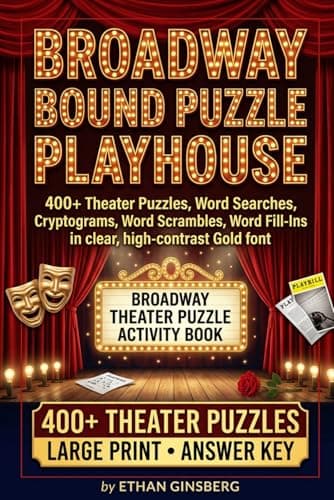
Every title- Broadway Bound Puzzle Playhouse400+ Theater Puzzles, Word Searches, Cryptograms, Word Scrambles & Word Fill-Ins
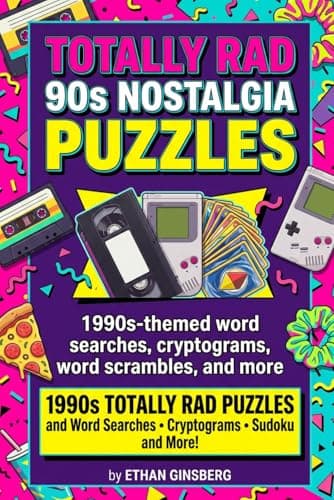
- Totally Rad 90s Nostalgia Puzzles1990s-Themed Word Searches, Cryptograms, Word Scrambles & More
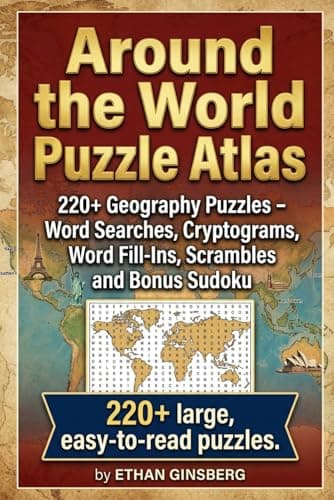
- Around the World Puzzle Atlas220+ Geography Puzzles — Word Searches, Cryptograms, Fill-Ins, Scrambles & Bonus Sudoku
These are Amazon links, and we earn a small commission if you buy through them — at no extra cost to you. They are our own books.
Browse word lists
Every list is generated from the ENABLE dictionary and carries a live filter.
All word lists · Unscramble answers · Scrabble dictionary check
Every free PuzzlePage tool
All free, no signup, and they run in your browser.
Word Solvers & Finders
Daily Game Solvers & Helpers
Logic Puzzle Solvers
Cipher Tools & Decoders
Translators & Converters
Word Lists & Dictionary