Free word jumble generator
Free Word Jumble Generator — Printable Daily-Jumble-Style Puzzles
Make printable word jumble puzzles in the classic daily-newspaper format. Letter jumbles with an optional word bank, a separate answer-key page, and full commercial-use rights for KDP and classroom packets.
Make a printable jumble
Enter 5–10 words, pick a difficulty (with or without word bank), and download a print-ready PDF with answer key. Works for classroom warm-ups, newsletters, family party games, and KDP activity books.
Open the makerSolve a jumble
Stuck on a daily-newspaper jumble or a worksheet your kid brought home? The word unscrambler runs entirely in your browser — paste the scrambled letters, see every valid English word that fits.
Open the unscramblerA short history of the Jumble
The word jumble as most American households know it traces back to 1954, when cartoonist Martin Naydel sold a syndicated word-puzzle feature to a Chicago newspaper. The original format printed four scrambled four-to-six-letter words; solvers unscrambled them, then transferred specific circled letters into a final cartoon-caption answer. The format barely changed in seventy years. It still runs in hundreds of U.S. papers today — many readers solve the jumble before the crossword.
What made the format sticky: the difficulty is high enough to be satisfying for adults but low enough that a kid at the breakfast table can crack one. The final cartoon caption rewards lateral thinking on top of the basic letter-scrambling mechanic. And the daily cadence built a habit that survived TV, the internet, and the smartphone.
Word jumble vs. word scramble vs. anagram puzzle
They are three names for the same underlying mechanic:
- Word jumble — the newspaper-syndication brand name, popularized by the Jumble feature. Always implies a printable, daily-paper-style format.
- Word scramble — the classroom term. Used for worksheets, spelling practice, vocabulary review.
- Anagram puzzle — the literary term. Same mechanic, but with a stronger implication that the rearrangement should produce a meaningful word, not just any valid word.
All three describe the same puzzle: a known word with its letters mixed up, and a solver reconstructing the original. The PuzzlePage word scramble makergenerates puzzles for all three formats from the same generator — different name on the page, identical underlying mechanic. We list it on this page as the jumble generator because that’s what people search for.
How to make a daily-jumble-style puzzle
The classic format is four words of 5–7 letters each, plus a fifth “cartoon caption” challenge built from circled letters. To recreate the format with PuzzlePage:
- Pick four words that share a theme. The cartoon caption answer is usually a pun or phrase related to the theme.
- Enter the four words in the word scramble maker at Hard difficulty (no word bank, aggressive shuffle).
- Download the printable PDF.
- By hand, circle one or two letters in each unscrambled word that spell out your caption answer when read in order.
The result is the same format daily papers have been running since 1954. PuzzlePage handles steps 1–3 in under a minute; the caption design is the creative part, which is exactly the part that makes a daily jumble feel like a daily jumble.
Word jumbles for classrooms and KDP
Outside the daily-paper format, word jumbles are workhorse puzzles for two specific audiences:
- Classrooms — perfect for bell-ringers, spelling review, and substitute-teacher folder content. Use Easy difficulty (with word bank) for grades 2–4, Medium or Hard for grades 5+. One sheet per student, one minute of setup.
- KDP activity books — word jumble books are a steady mid-tier KDP category. Less competitive than word search, faster to produce than crossword (no clue writing). Best as part of a mixed-puzzle activity book where each page rotates through 3–4 puzzle types.
Why word jumbles are harder than they look
Most solvers underestimate how much of jumble difficulty is about vowel placement. A 5-letter scramble like ESHORcould be HORSE, HOSER, or SHORE — and which one is right depends on which vowel configuration English actually allows. Once you’ve seen a few thousand jumbles, your brain starts to recognize valid vowel patterns instantly. Until then, jumbles feel deceptively hard.
The second factor is letter clusters. English has a lot of high-frequency two-letter and three-letter combinations: TH, ST, CH, ING, ION, TION. When you spot one of these in your jumbled letters, you’ve effectively locked in 2–3 letters at a known position, and the rest of the word usually falls into place.
Frequently asked questions
What is a word jumble?
A word jumble is a puzzle where the letters of a word are scrambled and the solver has to rearrange them back into the original word. The format was popularized by the syndicated “Jumble” newspaper feature, which has appeared in U.S. papers since 1954.
Is a word jumble the same as a word scramble?
Functionally, yes. “Jumble” is the newspaper-syndication brand name; “word scramble” is the classroom term. The mechanic is identical.
How do I make a daily-style jumble?
Pick four 5–7 letter words on a theme, enter them in the word scramble maker at Hard difficulty, and download the PDF. Add a cartoon caption by hand to recreate the classic format.
Are word jumbles good for kids?
Yes — Easy difficulty (with word bank) works well for grades 2–4; Medium and Hard for grades 5+.
Can I publish word jumbles on Amazon KDP?
Yes. The puzzles are commercial-use licensed and available in all four KDP paper sizes. Free PDFs carry a small “Made with PuzzlePage.app” footer credit; a watermark-free export is coming with Premium.
We make puzzle books too
Every book in our catalog was made with this tool. Here are a few favorites — available on Amazon.
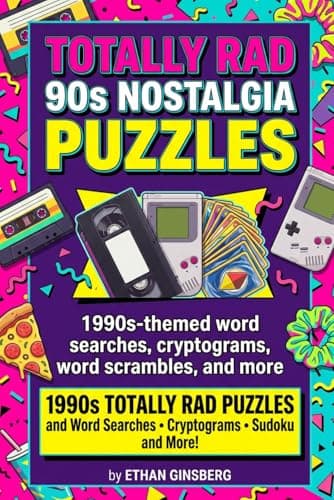
Totally Rad 90s Nostalgia Puzzles
1990s-Themed Word Searches, Cryptograms, Word Scrambles & More
Cartoons, mixtapes, butterfly clips, dial-up. Every page is loaded with the pop culture that defined the greatest decade ever — built for Gen X, Elder Millennials, and every 90s kid at heart.
See details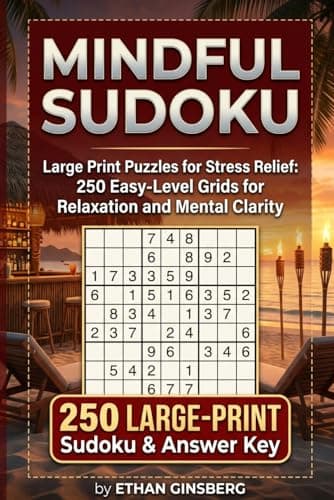
Large Print Brain Games
Mindful Sudoku
250 Easy Large-Print Sudoku Puzzles for Stress Relief & Mental Clarity
250 easy Sudoku grids built for stress relief and calm focus. A screen-free way to unplug, sharpen the mind, and find that satisfying "aha" moment at the end of a long day.
See details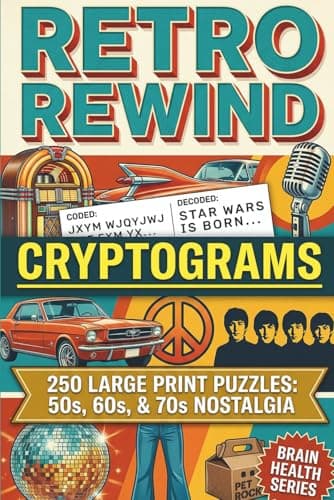
Retro Rewind Cryptograms
Nostalgic Puzzles to Unlock Your Memory
Take a trip back. Cryptograms built around the quotes, slang, and moments that defined decades gone by.
See detailsMore word tools:
Word Scramble Maker →Anagram Solver & Maker →Word Search Maker → The unscrambler guideEvery free PuzzlePage tool
All free, no signup, and they run in your browser.
Word Solvers & Finders
Daily Game Solvers & Helpers
Logic Puzzle Solvers
Cipher Tools & Decoders
Translators & Converters
Word Lists & Dictionary