Free anagram tools
Free Anagram Solver & Anagram Maker
Unscramble any set of letters into valid English words, or generate a printable anagram puzzle for a classroom or KDP activity book. Two distinct free tools on one page — pick the one that matches what you’re trying to do.
Solve an anagram
You have a set of letters — find every valid word they rearrange to. Useful for Scrabble racks, crossword fills, Wordle clues, and stuck word-scramble worksheets. Runs in your browser, no server round-trip per query.
Open the unscramblerMake an anagram puzzle
You have a word list — turn it into a printable anagram (a.k.a. word scramble) worksheet with optional word bank and a separate answer-key page. Free PDF, commercial use allowed for KDP.
Open the makerWhat is an anagram, really?
An anagram is a word, phrase, or sentence formed by rearranging the letters of another. The most quoted example is LISTEN ↔ SILENT — same six letters, completely different meaning. Anagrams have been a fixture of English for over four hundred years. Cryptographers used them; poets used them; modern crossword constructors use them.
A short history of anagrams in real life
In 1610, Galileo Galilei wrote to Johannes Kepler announcing he had discovered something extraordinary about Saturn — and he encoded his discovery as the anagram SMAISMRMILMEPOETALEUMIBUNENUGTTAUIRAS. Several months later he revealed the unscrambled Latin:ALTISSIMUM PLANETAM TERGEMINUM OBSERVAVI— “I have observed the highest planet to be triple.” What Galileo had actually seen, of course, was the rings of Saturn — but his telescope was too primitive to resolve them as rings. The anagram bought him priority over the discovery without committing him to a description he wasn’t yet sure of.
Lewis Carroll routinely wrote anagrams. The Victorian poet Vivian Mercier signed several letters under the anagram I Vie an Aviary. Modern crossword puzzles are saturated with anagrams as clue mechanics. And the daily “Jumble” newspaper feature, syndicated in U.S. papers since 1954, is built entirely around four-anagram-per-day puzzles that still appear in hundreds of papers today.
How a digital anagram solver actually works
You can’t solve an anagram by “intelligence” — you solve it by dictionary lookup. Every digital anagram solver works in three steps:
- Take your input letters and sort them alphabetically.
PUZZLE → ELPUZZ. - Look up every dictionary word whose sorted letters equal that key.
ELPUZZ → PUZZLE. - Optionally repeat the lookup for every subset of your letters to surface sub-anagrams (shorter words inside your input).
That’s the whole mechanic. Modern solvers can run thousands of these lookups per second from a single browser tab. PuzzlePage’s implementation runs entirely in your browser against the public-domain ENABLE1 wordlist(~172,000 words) — no server round-trip per query, sub-millisecond response after the dictionary is loaded.
When the maker is the right tool
If you’re writing a worksheet, a classroom warm-up, a KDP activity book, or an anagram puzzle for a family game night, you don’t want the solver — you want the word scramble maker. Word scrambles and anagram puzzles are the same mechanic with different names: the solver sees a scrambled string and reconstructs the original word. Our maker handles bulk generation, an optional word bank, multiple difficulty levels, and a separate answer-key page.
When the solver is the right tool
Use the solver when you have a set of letters and need to know what valid words they spell. The most common contexts:
- Scrabble racks — sort by point value, find the highest-scoring play available.
- Crossword fills — combine known letters and crossing letters to narrow candidates.
- Wordle — feed remaining valid letters to see candidate guesses.
- Word-scramble worksheets you’re stuck on — last-resort check, not first move.
- Anagram puns and riddles — the “aha” is usually a synonym of the source word.
Famous anagrams worth knowing
- DORMITORY → DIRTY ROOM — the most-cited anagram in middle school English.
- ASTRONOMER → MOON STARER — perfect mapping, perfect meaning.
- SCHOOLMASTER → THE CLASSROOM — twelve letters, identical sets.
- ELEVEN PLUS TWO → TWELVE PLUS ONE — same letters, same answer (13).
- A GENTLEMAN → ELEGANT MAN — Victorian-era favorite.
Frequently asked questions
What is an anagram?
An anagram is a word, phrase, or sentence formed by rearranging the letters of another. LISTEN → SILENT is the classic example. Anagrams have been used in literature, cryptography, and word games for centuries.
What’s the difference between an anagram solver and a word unscrambler?
They’re essentially the same tool with different default settings. An anagram solver typically returns words of the exact letter count. A word unscrambler also returns shorter sub-anagrams. Both run the same lookup against a dictionary keyed on sorted letters.
How does the anagram solver work?
It sorts your input letters alphabetically to create a lookup key, then finds every dictionary word that shares the same sorted key. PuzzlePage runs the lookup entirely in your browser — sub-millisecond after the dictionary loads, works offline.
Can I make my own anagram puzzles for a classroom?
Yes. The word scramble maker generates printable anagram puzzles (same mechanic) with optional word bank and answer key.
Is this free?
Yes — both the solver and the maker are free. Works on mobile and desktop, all major browsers.
We make puzzle books too
Every book in our catalog was made with this tool. Here are a few favorites — available on Amazon.
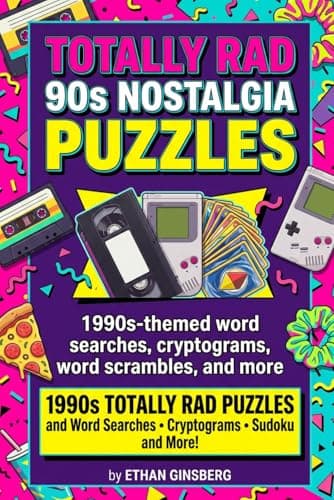
Totally Rad 90s Nostalgia Puzzles
1990s-Themed Word Searches, Cryptograms, Word Scrambles & More
Cartoons, mixtapes, butterfly clips, dial-up. Every page is loaded with the pop culture that defined the greatest decade ever — built for Gen X, Elder Millennials, and every 90s kid at heart.
See details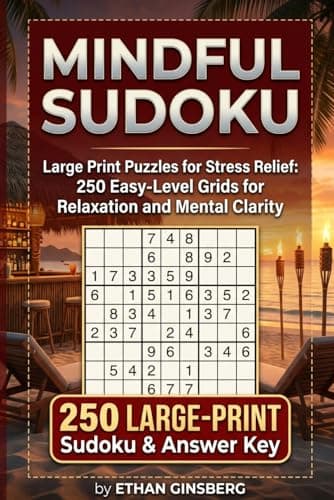
Large Print Brain Games
Mindful Sudoku
250 Easy Large-Print Sudoku Puzzles for Stress Relief & Mental Clarity
250 easy Sudoku grids built for stress relief and calm focus. A screen-free way to unplug, sharpen the mind, and find that satisfying "aha" moment at the end of a long day.
See details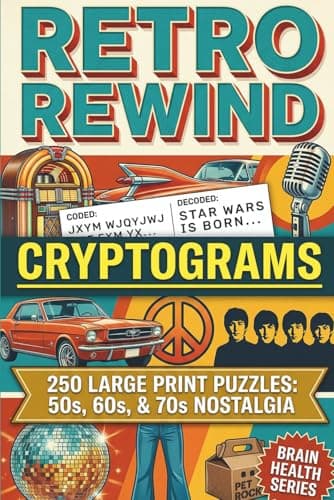
Retro Rewind Cryptograms
Nostalgic Puzzles to Unlock Your Memory
Take a trip back. Cryptograms built around the quotes, slang, and moments that defined decades gone by.
See detailsMore word tools:
Word Scramble Maker →Word Jumble Generator →Crossword Maker → The anagram solver guideEvery free PuzzlePage tool
All free, no signup, and they run in your browser.
Word Solvers & Finders
Daily Game Solvers & Helpers
Logic Puzzle Solvers
Cipher Tools & Decoders
Translators & Converters
Word Lists & Dictionary