NYT Crossplay Helper & Solver
This free NYT Crossplay solver finds your highest-scoring play. Type your 7 tiles — plus the board letters you’re playing through — and get every playable word ranked by score, using Crossplay’s own letter values (W = 5, K and V = 6, and a 40-point bonus for using all seven tiles). Runs entirely in your browser against the 168,000-word ENABLE list.
Letters = tiles already on the board; ? = cells you fill from your rack. Leave empty to see everything your rack can spell.
Click an input above — the word list will start loading.
1 — A E I N O R S T
2 — D L U
3 — C H M P
4 — B F G Y
5 — W
6 — K V
8 — X
10 — J Q Z
Blanks score 0. Playing all 7 tiles adds a 40-point bonus.
Type your rack to start
What Is Crossplay?
Crossplay is The New York Times’ two-player, Scrabble-style word game, released in its own app in January 2026. Each player draws a hidden rack of 7 tiles from a shared 100-tile bag. You take turns building words that connect to tiles already on the board — every new letter combination formed must be a valid word — and score the sum of your letters’ values, boosted by the board’s double and triple bonus squares. Playing all 7 tiles in one turn earns a 40-point bonus, and an equal-turns rule means both players get the same number of moves before final scoring. You can play a friend, a stranger, or the computer.
What This Helper Does (and Doesn’t)
The helper is a word finder: given your rack and, optionally, the letters you’re playing through on the board, it lists every word the ENABLE dictionary allows and ranks them by raw score under Crossplay’s letter values, including the all-tiles bonus. It does not model bonus-square positions, parallel plays, or cross-words formed perpendicular to your main word — the board geometry stays in your head. Think of it as a strong vocabulary assistant, not an autopilot: it tells you what words exist, and you decide where they land.
How to Use the Crossplay Helper
- Type your rack — up to 7 letters, with ? for a blank tile. Results update as you type.
- Describe the board slot (optional) — letters for tiles already on the board, ? for open cells. ?A??T means a 5-letter word with A second and T last.
- Scan the table — highest raw score first. Words flagged with the trophy use your whole rack and already include the +40.
- Place it well — before committing, check which option reaches a double or triple square in the actual game.
How the Helper Works
Each dictionary word is checked against your inputs with a letter-count comparison: the pattern’s fixed letters must match exactly, and every remaining letter must be available on your rack, with blanks covering any shortfall (blanks score zero). Scoring sums Crossplay letter values — board letters you play through count too, since they are part of the word — and adds 40 when a play consumes all seven tiles. The whole scan of 168,000 words takes a few tens of milliseconds in your browser, so results refresh live as you type.
Crossplay Strategy Notes
- Learn the value differences from Scrabble. W (5), K (6), V (6), G (4) and Y (4) are worth more in Crossplay; H (3) and F (4) are worth less. Old Scrabble instincts undervalue KNAVE-type words here.
- Chase the 40-point bingo. Keeping flexible one-point letters (A, E, I, N, R, S, T) makes seven-tile plays far more likely — that bonus swings most games.
- Blanks are tempo. A blank scores 0, so spend it to unlock a big word or the all-tiles bonus, not on a 12-point play.
- Mind the equal-turns rule. You can’t win by racing the bag empty; every turn should maximize points or deny your opponent a bonus lane.
- Watch cross-words. Every new combination your tiles form must be valid — check short hooks (two- and three-letter words) before playing parallel to existing words.
Frequently Asked Questions
Is Crossplay the same as Scrabble?
It’s the same family — racks, a shared board, bonus squares — but with its own letter values and tile counts, a 40-point all-tiles bonus, an equal-turns rule, and real-time play in a dedicated NYT app.
Are the letter values here really Crossplay’s?
Yes — the helper uses Crossplay’s published distribution (e.g. W=5, K=6, V=6, G=4, Y=4), which differs from Scrabble for several letters. A switch lets you score with classic Scrabble values instead.
Why doesn’t the score match what I’d get in the game?
Bonus squares. The helper reports raw letter sums (plus the all-tiles bonus); double/triple letter and word squares depend on board position, which you apply mentally when choosing where to play.
What does ? mean in the rack vs. the pattern?
In the rack, ? is a blank tile you own (scores 0, becomes any letter). In the pattern, ? is an open board cell you’ll fill from your rack. Pattern letters are tiles already on the board.
A word the helper suggested was rejected in Crossplay. Why?
Crossplay uses a curated NASPA/Oxford-based dictionary; we use the public-domain ENABLE list. They overlap heavily, but each contains a few words the other doesn’t.
Does this connect to my Crossplay game?
No. It never reads game data — you type your tiles and board letters yourself, and everything runs locally in your browser.
Is it fair to use a helper?
Against the computer or for post-game study, absolutely. In live ranked games, most players would consider it unsporting — use it to learn, not to sandbag strangers.
Related tools
Not affiliated with The New York Times. Crossplay is an NYT game and a trademark of The New York Times Company. This is an independent helper that works only on tiles and letters you enter — it never connects to, scrapes, or reads live games.
From our own shelf
Every title- Broadway Bound Puzzle Playhouse400+ Theater Puzzles, Word Searches, Cryptograms, Word Scrambles & Word Fill-Ins
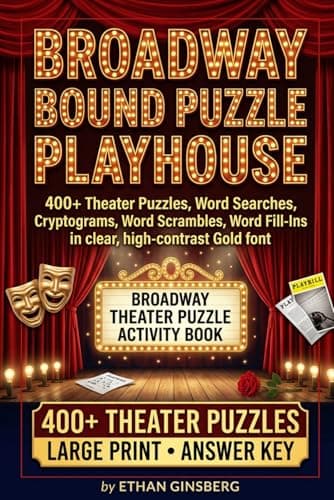
- Totally Rad 90s Nostalgia Puzzles1990s-Themed Word Searches, Cryptograms, Word Scrambles & More
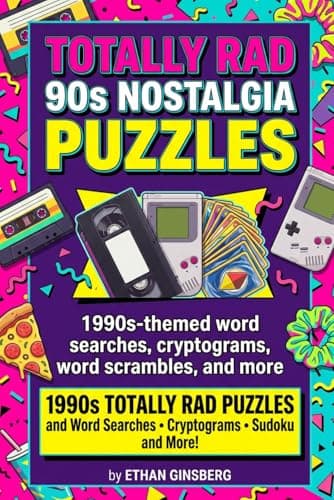
- Around the World Puzzle Atlas220+ Geography Puzzles — Word Searches, Cryptograms, Fill-Ins, Scrambles & Bonus Sudoku
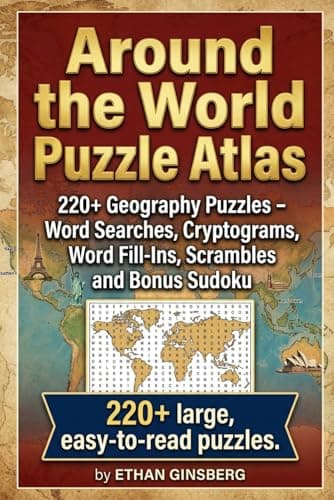
These are Amazon links, and we earn a small commission if you buy through them — at no extra cost to you. They are our own books.
Every free PuzzlePage tool
All free, no signup, and they run in your browser.
Word Solvers & Finders
Daily Game Solvers & Helpers
Logic Puzzle Solvers
Cipher Tools & Decoders
Translators & Converters
Word Lists & Dictionary