Atbash Cipher Decoder & Encoder
Convert text with the Atbash cipher instantly: the alphabet is mirrored, so A↔Z, B↔Y, C↔X. Because the mirror is its own reverse, the same box encodes and decodes. All conversion happens in your browser.
Atbash is its own inverse — paste either side here.
The mirrored text appears here.
What Is the Atbash Cipher?
Atbash is one of the oldest ciphers we know of — a substitution scheme that simply flips the alphabet back to front. The first letter trades places with the last, the second with the second-to-last, and so on down the line. It was invented for the Hebrew alphabet around 500 BCE: aleph (first) maps to tav (last), bet (second) to shin (second-to-last), and those four letter names — Aleph-Tav-Bet-Shin — spell “Atbash”. Scholars point to the Book of Jeremiah, where the name “Sheshach” reads as an Atbash encoding of “Babel” (Babylon), as one of the earliest ciphertexts in recorded history.
How to Use This Converter
- Paste your text — plain or enciphered; the mirror works both ways.
- Read the result instantly — letters mirror, everything else (spaces, digits, punctuation, capitalization) is preserved.
- Check the mirror table above if you want to decode by hand — it’s the complete key.
Worked Example
Encode WIZARD: W→D, I→R, Z→A, A→Z, R→I, D→W, giving DRAZIW. Feed DRAZIW back through and you get WIZARD again — one operation, both directions. A fun quirk: a handful of English words mirror into other English words. HOLY becomes SLOB, WIZARD becomes DRAZIW (not a word, alas) — type a few of your own and see what turns up.
Atbash vs. Caesar vs. Cryptograms
All three are monoalphabetic substitution ciphers — each plaintext letter always maps to the same ciphertext letter. A Caesar cipher slides the alphabet by 1-25 positions (25 possible keys). Atbash mirrors it (exactly one key, so identifying the cipher is the same as breaking it). A general cryptogram scrambles the alphabet arbitrarily (about 4 × 10²⁾ keys) and needs pattern analysis — that’s what our interactive cryptogram solver is for. Not sure which one you’re looking at? Paste it into the cipher identifier.
Frequently Asked Questions
What is the Atbash cipher?
A substitution cipher that mirrors the alphabet: A↔Z, B↔Y, C↔X. The name comes from the Hebrew letters aleph-tav-bet-shin, the first two mirror pairs.
Is Atbash its own inverse?
Yes — mirroring twice restores every letter, so encoding and decoding are the same operation.
Where does Atbash appear in history?
In the Hebrew Bible: “Sheshach” in Jeremiah is widely read as Atbash for “Babel”. It’s roughly 2,500 years old.
Is Atbash secure?
No — it has exactly one key. If you suspect Atbash, you’ve already broken it. It’s for puzzles, escape rooms, and teaching.
What happens to non-letters?
Numbers, spaces, and punctuation pass through unchanged; uppercase and lowercase are preserved.
How is Atbash different from Caesar?
Caesar slides the alphabet (25 keys); Atbash flips it (1 key). Both are broken instantly by frequency analysis or brute force.
Does my text leave my browser?
No — the substitution runs entirely client-side.
Turn It Into a Printable Puzzle
If you’re building a treasure hunt or worksheet, encode your clue here, then use the free cryptogram maker to generate full substitution-cipher puzzles with printable answer keys.
From our own shelf
Every title- She Spoke WondersLarge Print Inspirational Cryptograms for Women

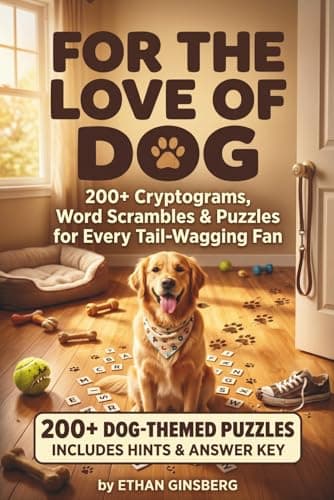
- For the Love of Dog200+ Cryptograms, Word Scrambles & Puzzles for Every Tail-Wagging Fan
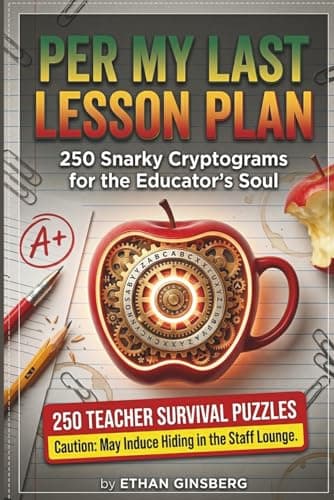
- Last Lesson PlanCryptograms for Aggressively Dedicated Teachers
These are Amazon links, and we earn a small commission if you buy through them — at no extra cost to you. They are our own books.
Every free PuzzlePage tool
All free, no signup, and they run in your browser.
Word Solvers & Finders
Daily Game Solvers & Helpers
Logic Puzzle Solvers
Cipher Tools & Decoders
Translators & Converters
Word Lists & Dictionary