A1Z26 Decoder & Encoder — Letters to Numbers
Convert between letters and numbers with the A1Z26 cipher: A=1, B=2, up to Z=26. Decode numbers separated by dashes, spaces, or commas, or encode your own message with the separator of your choice. Instant, free, and entirely in your browser.
Dashes, spaces, commas, and dots all work as separators. Use “/” or a new line between words.
The decoded message appears here. Numbers outside 1–26 are left as-is.
What Is the A1Z26 Cipher?
A1Z26 — read it as “A is 1, Z is 26” — replaces every letter with its position in the alphabet. It’s the first “secret code” most people learn, a staple of scout activities, classroom puzzles, escape rooms, and geocaching caches, and it had a pop-culture moment as one of the rotating end-credits ciphers in the show Gravity Falls. Strictly speaking, A1Z26 is an encoding rather than a cipher: there’s no key and no secret, just a fixed, public lookup table. That makes it a great first layer in multi-step puzzle hunts, where the numbers are then shifted with a Caesar cipher or mirrored with Atbash for an extra twist.
How to Use This Decoder
- Decoding: paste the numbers. Any mix of dashes, spaces, commas, or dots separates letters; a slash or line break separates words. 8-9, 8 9, and 8,9 all decode to HI.
- Encoding: switch tabs, type your message, and pick a separator. Words are joined with “/” so the message stays unambiguous.
- Check stray numbers: anything outside 1–26 can’t be a letter, so it’s left in place for you to spot and fix.
Why Separators Matter
Digits without separators are ambiguous. The string 125 could mean 1-2-5 (ABE), 12-5 (LE), or 1-25 (AY). One- and two-digit numbers overlap, so there is no way to cut an unseparated digit string uniquely. That’s why nearly every A1Z26 message you’ll encounter uses dashes between numbers — and why this encoder always writes them. If you’ve found an unseparated string, try reading it aloud both ways or look for a pattern in the puzzle that hints at the split.
Worked Example
Decode 16-21-26-26-12-5 / 16-1-7-5: 16→P, 21→U, 26→Z, 26→Z, 12→L, 5→E gives PUZZLE, and 16-1-7-5 gives PAGE. The slash marks the word break, so the message reads PUZZLE PAGE.
Frequently Asked Questions
What is the A1Z26 cipher?
Each letter becomes its alphabet position: A=1 through Z=26. The name spells the rule.
How do I decode A1Z26?
Turn each number back into its letter: 8-9 is HI. This page accepts dash, space, comma, dot, or mixed separators, with slashes or line breaks as word boundaries.
Why do the messages need separators?
Because one- and two-digit numbers overlap: 125 could be ABE, LE, or AY. Separators make the split unambiguous.
What about numbers over 26?
They can’t map to a letter, so the decoder leaves them untouched in the output where you can see them.
Where is A1Z26 used?
Scouting and classroom codes, escape rooms, geocaching, ARGs, and TV puzzle hunts like Gravity Falls’ credits cryptograms.
Is A1Z26 secure?
No — it’s a public, keyless encoding. Perfect for puzzles, useless for secrets.
Does my text leave my browser?
No. Encoding and decoding run entirely client-side.
Build a Number-Code Worksheet
Teachers and puzzle-book makers: encode a quote here, or use the free cryptogram maker to generate printable letter-substitution puzzles with answer keys in one click.
From our own shelf
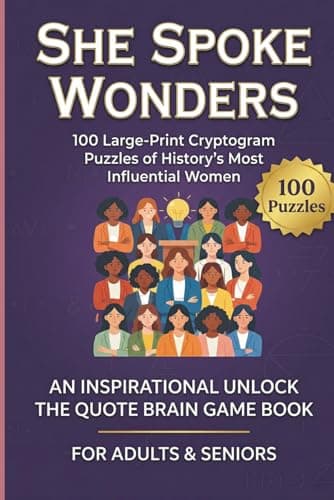
Every title- She Spoke WondersLarge Print Inspirational Cryptograms for Women
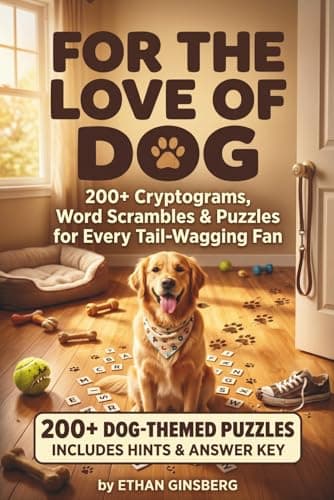
- For the Love of Dog200+ Cryptograms, Word Scrambles & Puzzles for Every Tail-Wagging Fan
- Last Lesson PlanCryptograms for Aggressively Dedicated Teachers
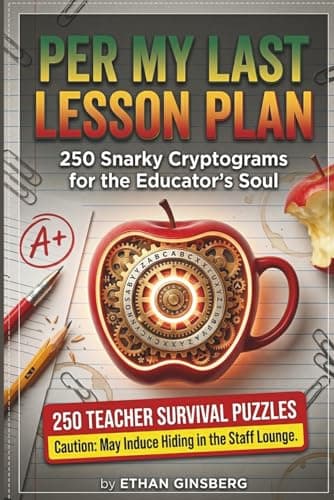
These are Amazon links, and we earn a small commission if you buy through them — at no extra cost to you. They are our own books.
Every free PuzzlePage tool
All free, no signup, and they run in your browser.
Word Solvers & Finders
Daily Game Solvers & Helpers
Logic Puzzle Solvers
Cipher Tools & Decoders
Translators & Converters
Word Lists & Dictionary