Boggle Solver — Find Every Word on Your Board
Enter the 16 letters of a classic 4×4 Boggle board (or 25 for Big Boggle’s 5×5) and this free Boggle solver finds every valid word, grouped by length with official point values. Click any word to see its exact path traced on the board. Runs entirely in your browser against the public-domain ENABLE word list — no signup, nothing sent to a server.
Loading dictionary…
| Word length | Points |
|---|---|
| 3–4 letters | 1 |
| 5 letters | 2 |
| 6 letters | 3 |
| 7 letters | 5 |
| 8+ letters | 11 |
Loading dictionary…
We make puzzle books too
Every book in our catalog was made with this tool. Here are a few favorites — available on Amazon.
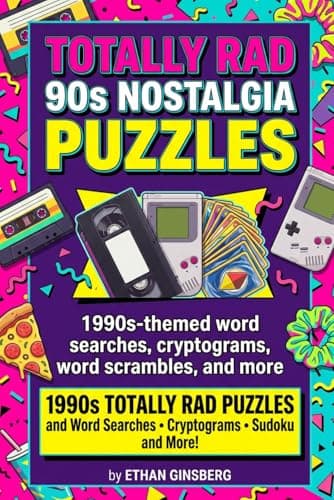
Totally Rad 90s Nostalgia Puzzles
1990s-Themed Word Searches, Cryptograms, Word Scrambles & More
Cartoons, mixtapes, butterfly clips, dial-up. Every page is loaded with the pop culture that defined the greatest decade ever — built for Gen X, Elder Millennials, and every 90s kid at heart.
See details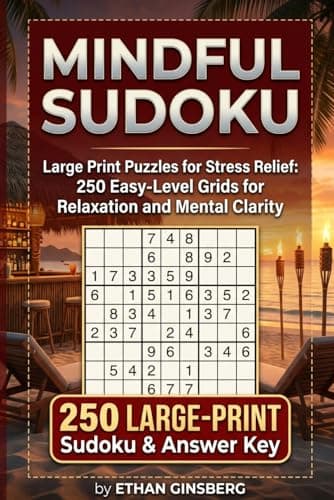
Large Print Brain Games
Mindful Sudoku
250 Easy Large-Print Sudoku Puzzles for Stress Relief & Mental Clarity
250 easy Sudoku grids built for stress relief and calm focus. A screen-free way to unplug, sharpen the mind, and find that satisfying "aha" moment at the end of a long day.
See details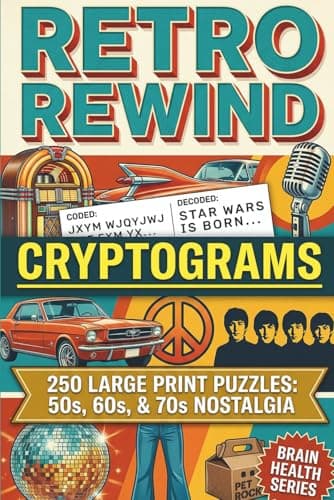
Retro Rewind Cryptograms
Nostalgic Puzzles to Unlock Your Memory
Take a trip back. Cryptograms built around the quotes, slang, and moments that defined decades gone by.
See detailsWhat Is a Boggle Solver?
A Boggle solver takes the letters on a Boggle board and finds every word hidden in it. In Boggle, you build words by chaining adjacent letters — horizontally, vertically, or diagonally — without using the same cube twice in one word. Even strong players spot only a fraction of what a board holds: a typical 4×4 board contains 100 to 300 valid words, and dense boards can hold over 1,000. This tool exists for the moment after the timer runs out: check disputed words, see the longest word you all missed, and learn the letter patterns that hide the high scorers.
Boggle Rules and Scoring
Each round, players have three minutes to write down words formed from adjacent cubes. Words must be at least three letters, must be real dictionary words (no proper nouns or abbreviations), and a cube can appear only once per word. The “Qu” cube counts as two letters. After time is called, players compare lists — any word found by two or more players is crossed out, and remaining words score by length:
- 3–4 letters: 1 point
- 5 letters: 2 points
- 6 letters: 3 points
- 7 letters: 5 points
- 8 or more letters: 11 points
In Big Boggle (5×5), the minimum word length rises to four letters in official play; the solver still lists 3-letter words so you can use it for either variant.
How the Boggle Solver Works
The solver builds a prefix tree (trie) from the 168,551-word public-domain ENABLE word list, then runs a depth-first searchstarting from each of the 16 or 25 cells. At every step it tries all 8 neighboring cells that haven’t been used yet in the current path. The trie is what makes this fast: if the letters collected so far (say “ZQT”) are not the beginning of any dictionary word, the entire branch is abandoned immediately instead of being explored. That pruning cuts the search from billions of theoretical paths down to a few thousand real ones, which is why a full board solves in milliseconds on your own device. The Qu cube is handled by advancing two letters through the trie while consuming a single board cell.
Worked Example
Suppose the top-left corner of your board reads C, A over R, T. From the C you can move diagonally to A, then down... no wait — adjacency is what matters, not reading order. C(1,1) touches A(1,2), R(2,1), and T(2,2), so CART traces C→A→R→T only if each consecutive pair touches: A(1,2) and R(2,1) are diagonal neighbors, and R(2,1) and T(2,2) sit side by side, so CART is valid — 1 point. The same four cubes also yield CAT, ART, RAT, TAR, and CRAT… no, CRAT isn’t a word, and the solver knows it: the trie contains no entry starting “CRAT” except CRATE and friends, which would need an E the corner doesn’t have. Enter your own board above and click any result to watch its path light up step by step.
Strategy Tips for Better Boggle Scores
- Hunt suffixes first. Spotting -ING, -ED, -ER, and -S clusters instantly multiplies your list: RATE becomes RATED, RATER, RATES.
- Work prefixes too. RE-, UN-, and OUT- turn short finds into 5- and 6-letter scorers worth double or triple.
- Chase the 8-letter jackpot. An 11-point word outscores eleven 4-letter words. Scan for common long patterns like -TION and -NESS before writing down the obvious 3-letter words.
- Skip words everyone will find. Duplicated words score zero in multiplayer, so unusual words beat common ones.
- Learn from solved boards.After each game, run the board here and study the longest words you missed — pattern recognition is trainable.
Frequently Asked Questions
How does the Boggle solver work?
It builds a prefix tree (trie) from a 168,000-word dictionary, then runs a depth-first search from every cell of your board. The search moves to any of the 8 neighboring cells, never reuses a cell within one word, and prunes any path that is not a prefix of a real word. The whole solve runs in your browser in a few milliseconds.
Does the solver handle the Qu cube?
Yes. Typing Q enters a Qu tile by default, matching the real Boggle cube that prints Qu on one face. The Qu tile counts as two letters toward word length and scoring but occupies one cell on the path. A toggle lets you switch to a plain Q if your board variant uses one.
Does it support Big Boggle (5×5)?
Yes. Switch the board size to 5×5 for Big Boggle. The same rules apply, and the Random board button rolls the authentic 25-die Big Boggle letter distribution.
What dictionary does the Boggle solver use?
The public-domain ENABLE word list (the Words With Friends base list) with 168,551 words of 2 to 15 letters. Only words of 3 or more letters count in Boggle, so shorter entries are ignored.
How is Boggle scored?
3- and 4-letter words score 1 point, 5-letter words score 2, 6-letter words score 3, 7-letter words score 5, and words of 8 or more letters score 11. In a real game, only words no other player found earn points.
Can I see the path of a word on the board?
Yes. Click or hover any word in the results and the board highlights its exact path with numbered steps, so you can trace how the word snakes through adjacent cells.
Is the Boggle solver free?
Completely free, no signup. The dictionary loads once as a static file and every solve runs locally in your browser; your board is never sent to a server.
Is this an official Hasbro tool?
No. This is an independent educational tool. It is not affiliated with Hasbro; Boggle is a trademark of Hasbro.
Try another free word tool
Not affiliated with Hasbro. Boggle is a trademark of Hasbro.
Every free PuzzlePage tool
All free, no signup, and they run in your browser.
Word Solvers & Finders
Daily Game Solvers & Helpers
Logic Puzzle Solvers
Cipher Tools & Decoders
Translators & Converters
Word Lists & Dictionary