Classroom Escape Room: Free Printable Cipher Puzzles
Free printable cipher puzzles for a classroom escape room: a 45-minute formula, four stations, lock and envelope logistics, and easy subject swaps.

Hints
Classroom Escape Room Cipher Clues
Encouraging escape room messages for review-day code breakers
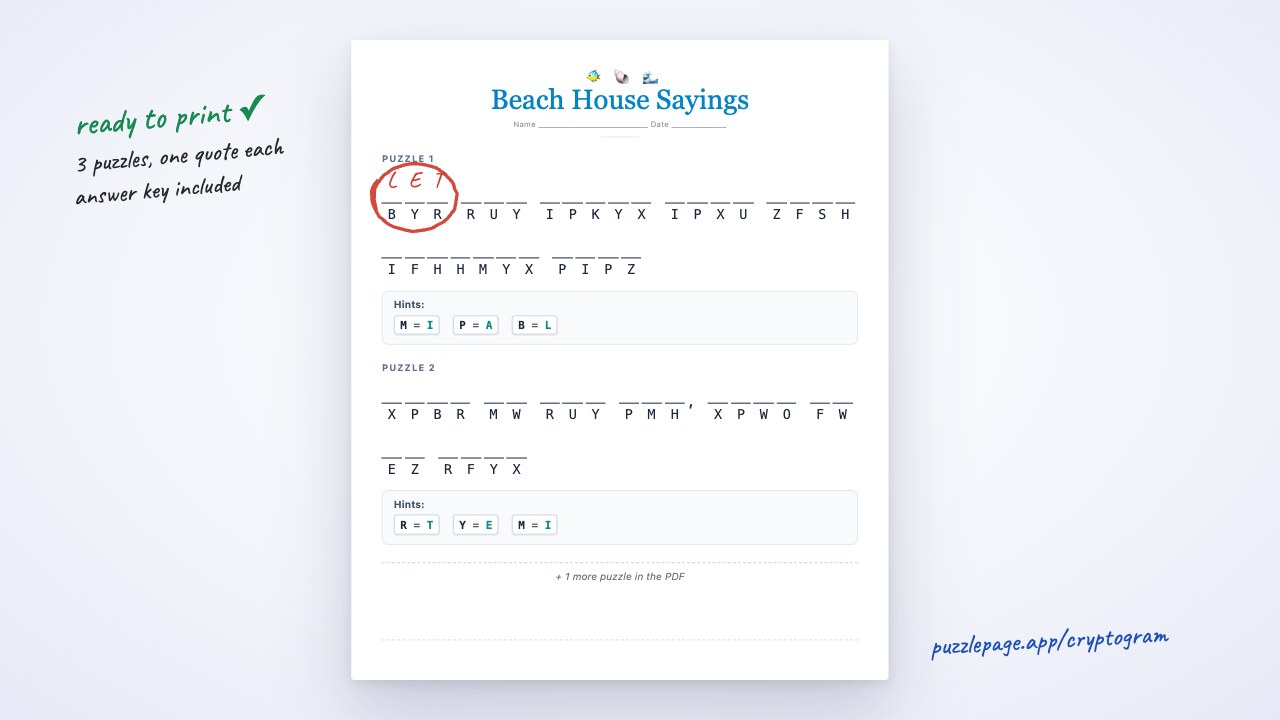
Phrase 1
Hint: F = O
Phrase 2
Hint: O = R
+ 3 more phrases in the PDF
Free companion PDF
Classroom Escape Room Cipher Clues
Encouraging escape room messages for review-day code breakers. Grab the PDF now and we'll send 10 more printable puzzles, plus a heads-up when new generators or seasonal packs go live. Roughly two emails a month — unsubscribe anytime.
No payment · Letter-size · Answer key included
Prefer to play online? There's a new puzzle every day.
Free daily word games — play instantly. Come back tomorrow for a fresh one.
On this site: Create your own free cryptogram puzzle·Browse 100+ free printables·Play today's puzzles
Review day has an attention problem, and a classroom escape room solves it by turning the same questions into a mission. Teams decode clues, open envelopes, and race a countdown, and somewhere in the middle they review an entire unit without noticing.
The best part is what you do not need: no purchased kit, no real locks, no theatrical budget. A free cryptogram maker, a word list, and a box of envelopes cover the whole build.
📌 Key Takeaways
- A classroom escape room needs four stations, a stack of envelopes, and about 45 minutes; no kit purchase required.
- Cryptograms make the best clues because every team can decode the message at its own speed.
- Sealed envelopes and paper padlocks replace real locks, and the drama survives the budget cut.
- The same formula adapts to math facts, science vocabulary, or novel review with a simple word swap.
 0:58
0:58What Is a Classroom Escape Room?
A classroom escape room is a review game where teams solve a chain of puzzles to open a final envelope or box before time runs out. Nobody is actually shut in anywhere; the escape is the story, and the review content is the game.
Teachers keep building them because the format earns its minutes. In surveys of educators who run game-based review, more than 8 in 10 report higher participation than on traditional review days, a pattern documented across subjects in Edutopia’s game-based learning resources.
The make-your-own approach has one big edge over printed kits: your clues can match this week’s unit. A free cryptogram generator turns any review sentence into a code-breaking puzzle, so the cipher activity always fits the content you actually taught.
Pro Tip
Write your cryptogram sentences as upbeat messages to the team, like YOU CRACKED THE CODE AND SAVED THE DAY. Students read the solution out loud when they finish, so the puzzle itself delivers the celebration.
Free Cryptogram PDF — Classroom Escape Room Cipher Clues
Print-ready · answer key included · unsubscribe anytime
The 45-Minute Escape Room Formula
The formula is four stations, each unlocking the next, with a five-minute briefing at the start and a five-minute debrief at the end. The screenshot below shows the live cryptogram tool that generates the cipher clues for station one and the finale.


| Station | Puzzle type | Minutes | What solving it unlocks |
|---|---|---|---|
| 1 | Cipher warm-up | 8 | Location of envelope two |
| 2 | Word search with hidden code | 10 | Code word for station three |
| 3 | Word scramble lock code | 8 | The paper padlock on the box |
| 4 | Final cryptogram | 9 | The prize and the win |
Station one hands each team a short letter substitution cipher. Decoding it reveals where envelope two is taped, and the built-in answer key means you always know the solution at a glance.
Station two is a themed grid from the free word search generator, with five of the review terms marked by stars on the word list. Found in order, the first letters of those five hidden words spell the code word for station three.
Station three is a word scramble of four review terms; unscramble the jumbled letters and the first letter of each answer becomes the code written on a paper padlock. Station four is the finale cryptogram, one full sentence that congratulates the team and points to the prize.
When we ran this formula with a class of 26 fourth graders, all four teams cracked the final cryptogram, and the fastest finished with six minutes to spare. The debrief question they debated hardest was who got to take the decoded message home.
How Do You Handle Locks and Envelopes on a Budget?
You do not need real locks; sealed envelopes, binder clips, and paper padlocks create the same reveal for pennies. Teachers who share their setups report that the envelope version runs just as hot as the hardware version, and resets in a fraction of the time.
Envelope chain
Number four envelopes and tape them around the room. Each solved puzzle names the next location, so the route itself feels like part of the code.
Paper padlock
Fold a paper band around a pencil box and write a blank code line on it. Teams may only tear the band once they can say the code out loud to you.
Hint tickets
Give each team two paper tickets. Cashing one in buys a hint but costs two minutes on their finish time, which keeps hands working before they wave.
Projected countdown
A big timer on the board supplies all the urgency you need, and you can quietly pause it if a class needs breathing room.
Pro Tip
Seal every envelope with a sticker instead of glue. You can restock the whole room between class periods in under five minutes, and the leftover stickers double as team badges.
Subject Swaps for Math, Science, and Reading
The formula never changes; only the word lists do. That is what makes this a review-day system rather than a one-off event, and it is why the second build takes ten minutes instead of an evening.
- Math: scramble the answers to four computation problems, and make the cipher key use digits so decoding doubles as number practice.
- Science: build the station two grid from unit vocabulary, and hide the code word inside the equipment list.
- Reading: make the finale cryptogram a memorable line from the class read-aloud, and let teams shout it together at the end.
- Geography: the hidden words are state or country names, and the final clue points to a spot on the classroom map.
Around 40 minutes of puzzle time fits four stations comfortably, and teachers who publish their room formats report finish rates near 90 percent when hint tickets are allowed. Aim for challenge, not heartbreak.
Try It Yourself
Build all four clues in about ten minutes, starting with the finale and working backward.
- Open the free cryptogram generator and type your finale sentence, or use our ready-made escape set themed around teamwork, sharp-eyed detectives, hidden clues under the globe, and cracking the final code.
- Print each cipher puzzle with its answer key; the keys become your master control sheet.
- Generate station two and station three from your review list with the word search and word scramble tools.
- Number four envelopes, hide them around the room, and set the countdown for 45 minutes.
Print your first clue tonight with the free classroom escape room cryptogram maker and turn your next review day into the 45 minutes your students talk about all week.
Frequently Asked Questions
How do you make a classroom escape room from scratch?
Pick a review topic, write one finale sentence, and build four puzzles: a cipher clue, a word search with a hidden code, a word scramble lock code, and a final cryptogram. Seal them in numbered envelopes, hide the envelopes, and give teams 45 minutes.
What puzzle ideas work best in a classroom escape room?
Letter substitution cryptograms, word searches with a hidden code word, and scrambles that produce a lock code are the reliable trio. They print in minutes, need no special hardware, and every team member can work on a different part at once.
How long should a classroom escape room take?
Plan for 45 minutes: five for the briefing, about 35 for the four stations, and five to debrief. If a class runs long, drop station three rather than rushing the finale, since the final decoded message is the payoff.
Do you need to buy an escape room kit for the classroom?
No. A free cryptogram generator, a word search maker, envelopes, and a projected timer cover everything a purchased kit does. Building your own also means the clues review your actual unit instead of a generic theme.
Live demo
Make your own cryptogram right here
Swap in your own words (a spelling list, residents' names, a unit's vocabulary) and press Generate. The full maker adds answer keys, size options and PDF export.
More you can make here
One puzzle is the start. Here is the rest of the kit.
 New
NewWorksheet Builder
Put a word search, a cryptogram and a scramble on one page, or build a whole themed packet. Prints with answer keys.
Build a worksheet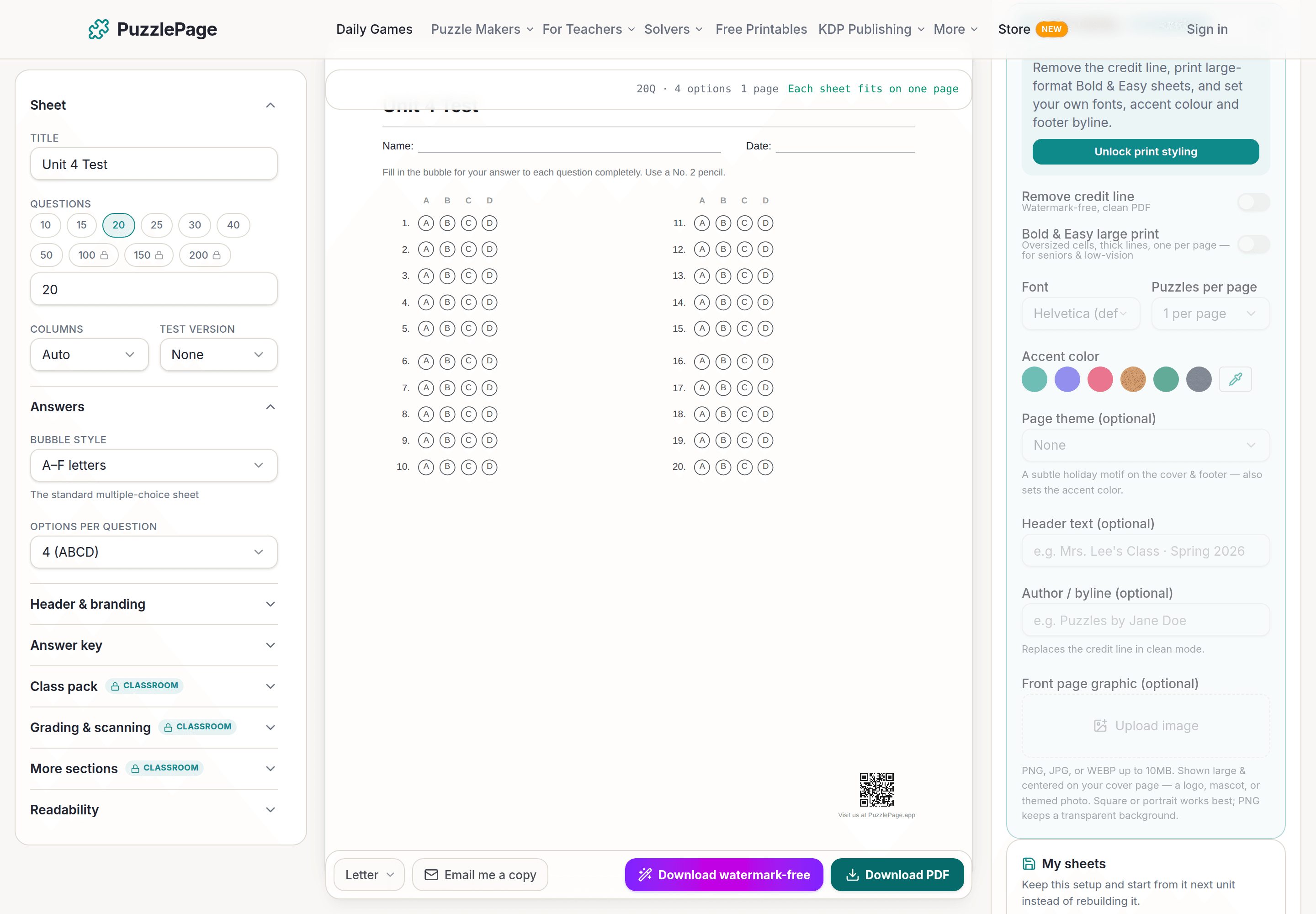
Bubble Sheet Studio
Answer sheets for any test length, with sections, versions, student ID grids and a matching answer key.
Make a bubble sheet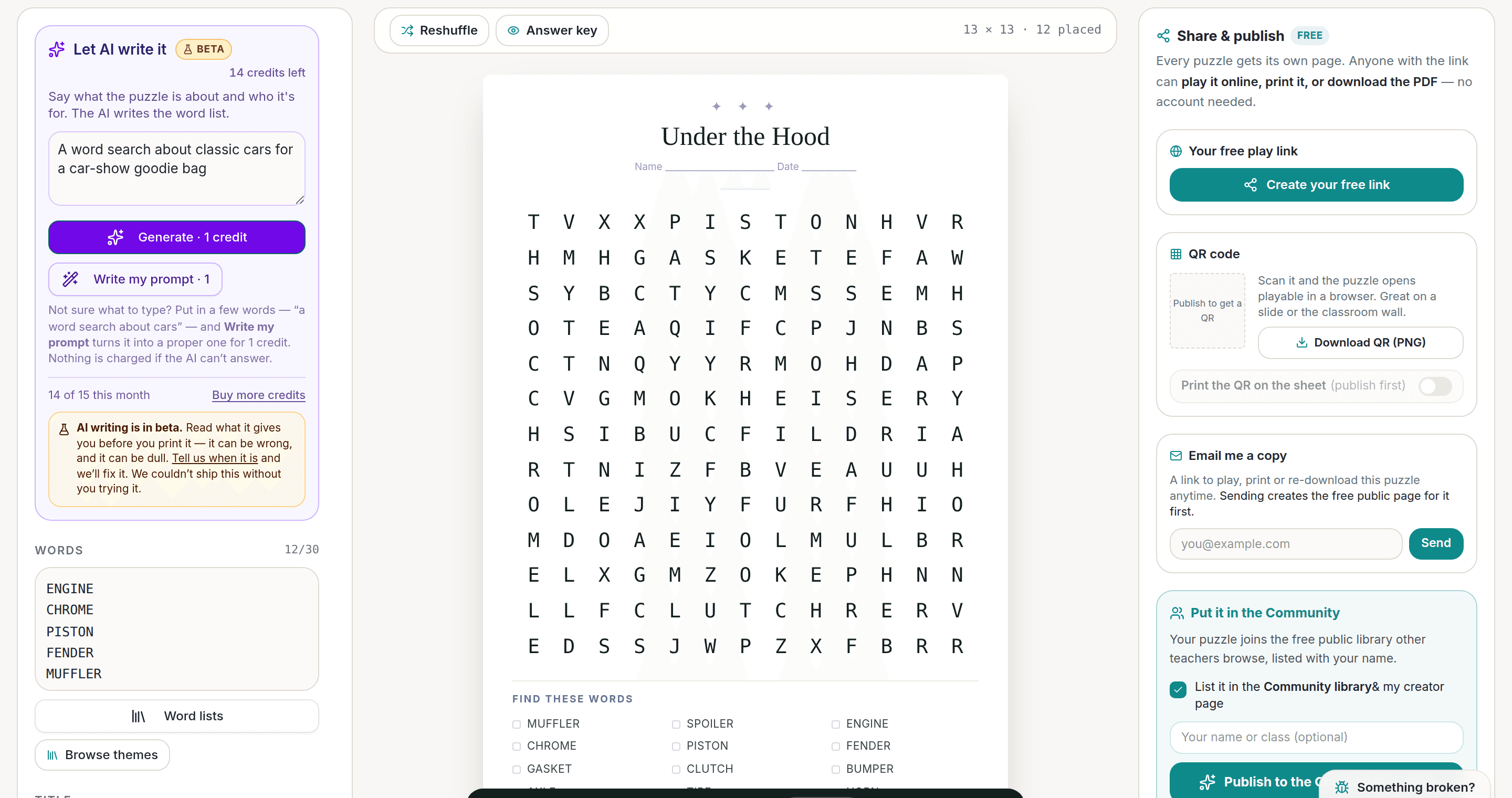
AI Puzzle Generator
Type a topic, get a themed word list and a finished puzzle. Premium also removes the footer credit and adds Word export.
Try the AI generator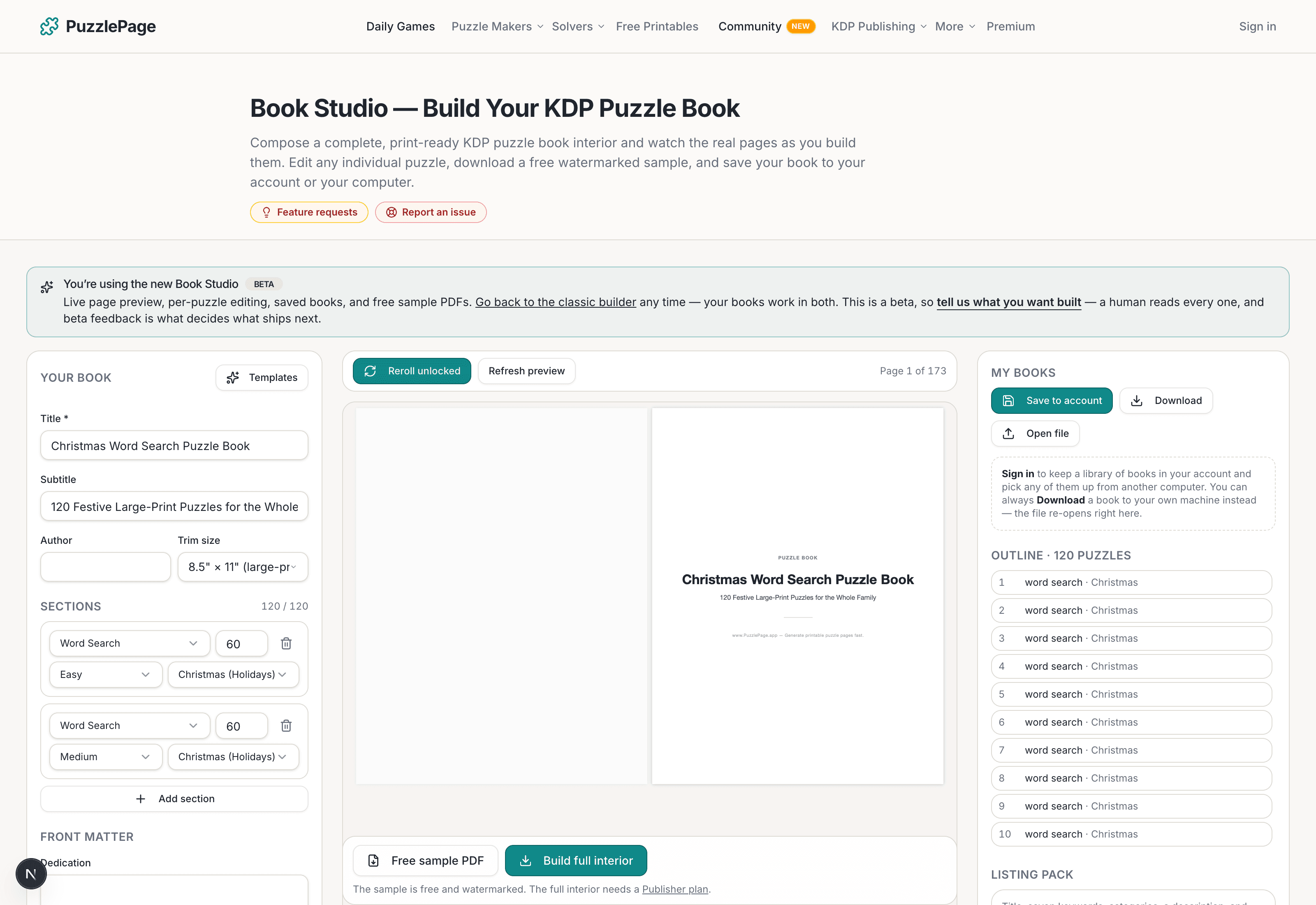
KDP Book Studio
Lay out a full puzzle book for Amazon KDP: templates, trim sizes, page checks and a cover designer.
Start a puzzle bookPremium removes the footer credit, adds Word export and custom styling across every maker.
See plans →Free daily games
Need a two-minute break? Today's puzzles are live.
A new Sudoku and a new Connections board every day. No download, no account.


Keep reading
Take the puzzle with you
Free Cryptogram PDF — Classroom Escape Room Cipher Clues
Print-ready · answer key included · unsubscribe anytime
Enjoyed this? Share the puzzle on X
Like puzzles like this? Follow on Pinterest for a new one every day.