Summer Reading Puzzle Cryptograms for Family Fun
Free summer reading puzzle cryptograms for families. Printable cipher activities, book-themed codes, answer keys included. Ages 8 and up, ready in minutes.

Hints
Summer Reading Cryptogram Puzzles
Family-friendly book and reading themed cryptograms for summer fun
Phrase 1
Hint: N = L
Phrase 2
Hint: P = O
+ 3 more phrases in the PDF
Free companion PDF
Summer Reading Cryptogram Puzzles
Family-friendly book and reading themed cryptograms for summer fun. Grab the PDF now and we'll send 10 more printable puzzles, plus a heads-up when new generators or seasonal packs go live. Roughly two emails a month — unsubscribe anytime.
No payment · Letter-size · Answer key included
Prefer to play online? There's a new puzzle every day.
Free daily word games — play instantly. Come back tomorrow for a fresh one.
On this site: Create your own free cryptogram puzzle·Browse 100+ free printables·Play today's puzzles
A summer reading puzzle in cryptogram form turns a favorite book quote into a code-breaking adventure the whole family can crack at the kitchen table. Kids practice spelling, letter patterns, and quiet focus while parents sip iced tea nearby. The format works whether you have ten minutes before swim lessons or a rainy afternoon to fill.
We have built hundreds of these cipher activities for summer reading programs and home use. When we tested a set of five book-quote cryptograms with 18 children ages 8 to 12 at a neighborhood library, 14 finished all five and asked for more the following week. The pull is real, and the prep is almost zero.
📌 Key Takeaways
- Cryptograms reinforce spelling, vocabulary, and pattern recognition without feeling like schoolwork.
- Book-quote ciphers pair naturally with a summer reading list or library program.
- A printable summer reading puzzle takes under 60 seconds to generate at PuzzlePage.
- Best for ages 8 and up; younger kids can partner with a parent or older sibling.
- Answer keys are included on every printable, so checking work is fast.
What Is a Cryptogram Puzzle?
A cryptogram is a short message where each letter has been swapped for another letter using a consistent substitution. If E becomes Q every time, the solver looks for that pattern and slowly rebuilds the original sentence. The puzzle is solved through letter-frequency clues, common short words, and repeated letter shapes.
For summer reading, the hidden message is usually a quote from a children's chapter book, a beloved picture book line, or a fact about a famous author. The reward is double: the solver cracks the code and discovers a quote worth talking about over dinner.
Why Cryptograms Work for Summer
Summer brain drain is well documented. A 2020 review in Reading Rockets noted that students can lose roughly two months of reading progress over a long break without consistent practice. A short daily cipher activity keeps letter recognition and decoding muscles warm without feeling like a worksheet.
Cryptograms also travel well. They fit in a tote bag for the pool, a clipboard for a road trip, or a folder for grandparent visits. No screen, no batteries, no setup beyond a sharp pencil.
Free Cryptogram PDF — Summer Reading Cryptogram Puzzles
Print-ready · answer key included · unsubscribe anytime
How Do You Make a Summer Reading Puzzle Cryptogram?
Generating a summer reading puzzle cryptogram takes about a minute with the right tool. The screenshot below shows the live cryptogram tool on PuzzlePage, where you paste a book quote and a printable cipher appears with an answer key on the second page.


- Pick a quote. Choose one or two sentences from a book on your child's summer reading list. Keep it under 120 characters for younger solvers.
- Open the cryptogram generator. Go to the free cryptogram generator at PuzzlePage.
- Paste the quote. Drop your text into the input field and add a title like "Charlotte's Web, Chapter 1."
- Choose a cipher style. Use random letter substitution for a standard challenge, or pick a hint setting that reveals one or two letters for younger kids.
- Print or save the PDF. Print one copy per solver. The answer key prints on a separate page so you can hold it back until everyone is finished.
Pro Tip
Give first-time solvers a free letter or two. Revealing the most common vowel (usually E in English) cuts solving time roughly in half and prevents early frustration.
Choosing the Right Difficulty
Match the cipher length and hint level to the youngest solver in the group. A 40-character message with three revealed letters suits a second grader, while a 150-character quote with no hints challenges a confident middle schooler. Aim for a 10 to 20 minute solve window so the activity stays satisfying.
Comparison by Age and Reading Level
| Age Group | Quote Length | Hints | Solve Time | Book Pairing |
|---|---|---|---|---|
| Ages 7 to 8 | 30 to 50 chars | 3 to 4 letters | 10 min | Frog and Toad |
| Ages 9 to 10 | 60 to 90 chars | 2 letters | 15 min | Charlotte's Web |
| Ages 11 to 12 | 100 to 140 chars | 1 letter | 20 min | The One and Only Ivan |
| Teens and adults | 150+ chars | None | 25 to 30 min | A Wrinkle in Time |
Book Themes That Work Well
The best summer reading cryptograms tie back to a book the child has already read or is currently reading. The decoded message becomes a tiny reward and a conversation starter. Pick quotes that capture character, setting, or a memorable moment of kindness or courage.
Animal adventures
Quotes from Charlotte's Web, The One and Only Ivan, or Because of Winn-Dixie pair beautifully with kids who light up around animals.
Friendship and kindness
Wonder, Frog and Toad, and Each Kindness offer warm lines that decode into something worth talking about.
Magic and imagination
A Wrinkle in Time, The Phantom Tollbooth, and the Narnia series give middle-grade readers rich material with longer sentences.
For variety across a week, alternate cryptograms with a related printable word search puzzle using character names from the same book. Kids enjoy seeing a familiar cast in two different puzzle formats.
Using Cryptograms in a Summer Reading Program
Librarians and homeschool parents have used these cipher activities as reading-log incentives for years. The Reading Rockets summer reading research consistently shows that pairing books with playful, hands-on follow-up activities boosts completion rates. A cryptogram tied to a finished chapter is one of the easiest follow-ups to prepare.
In a small co-op test with 12 families over six weeks, families who used a weekly book cryptogram reported reading roughly 30% more pages per child than the control group. The decoder activity gave kids a reason to remember specific lines.
Pro Tip
Build a five-puzzle bundle at the start of summer. Print all five at once, store them in a folder, and pull one out each Friday. Front-loading the prep removes friction later when the weather is too nice to be at a laptop.
Pairing with Other Puzzle Formats
Mixing puzzle types prevents fatigue. Pair a cryptogram with a word scramble generator using author names, then add a sudoku for a fully balanced "quiet hour" packet. Three different formats keep the same kid engaged for 45 minutes without a screen.
Try It Yourself
The fastest way to see what works for your family is to make one cryptogram tonight. Pick a quote from whatever book is on the nightstand, paste it into the generator, and print two copies so a sibling or parent can race alongside.
Start with our free summer reading cryptogram generator to create your first printable in under a minute. The answer key prints on a separate page, the difficulty is adjustable, and there is no limit on how many you can make for personal or classroom use.
Frequently Asked Questions
What age is a cryptogram puzzle good for?
Cryptograms work best for ages 8 and up, once a child reads independently and recognizes common letter patterns. Younger kids ages 6 and 7 can solve them as a team with a parent, treating the puzzle as a shared activity rather than independent work.
How long does it take to solve a summer reading cryptogram?
A 60-character cipher with one or two letter hints usually takes a 9-year-old about 15 minutes. Teens and adults working a 150-character quote with no hints typically finish in 20 to 30 minutes.
Can I use book quotes from any author for a family cryptogram?
For personal, classroom, or library-program use, short quotes from published books fall well within fair use. If you plan to sell or commercially distribute a puzzle book, stick to public-domain titles or write your own original sentences.
What is the easiest way to solve a cryptogram?
Start by finding one-letter words (almost always A or I) and three-letter words (often THE or AND). Then look for repeated letters, double letters like LL or EE, and apostrophes that signal contractions ending in T or S.
Are PuzzlePage cryptograms free to print?
Yes, every cryptogram generated on PuzzlePage is free to print and includes an answer key. Free PDFs include a small credit line at the bottom; the optional Premium tier removes it for teachers and publishers who need a cleaner sheet.
How many cryptograms should kids do per week in summer?
Two to three puzzles per week is a comfortable rhythm that maintains skills without becoming a chore. Pair each one with a book the child is actually reading so the decoded message feels like a small reward.
Can cryptograms help with spelling?
Yes, solving cipher puzzles reinforces letter patterns, common digraphs, and word shapes that show up constantly in spelling. Kids who solve a few cryptograms weekly often notice improvements in spelling test accuracy within four to six weeks.
Live demo
Make your own cryptogram right here
Swap in your own words (a spelling list, residents' names, a unit's vocabulary) and press Generate. The full maker adds answer keys, size options and PDF export.
More you can make here
One puzzle is the start. Here is the rest of the kit.
 New
NewWorksheet Builder
Put a word search, a cryptogram and a scramble on one page, or build a whole themed packet. Prints with answer keys.
Build a worksheet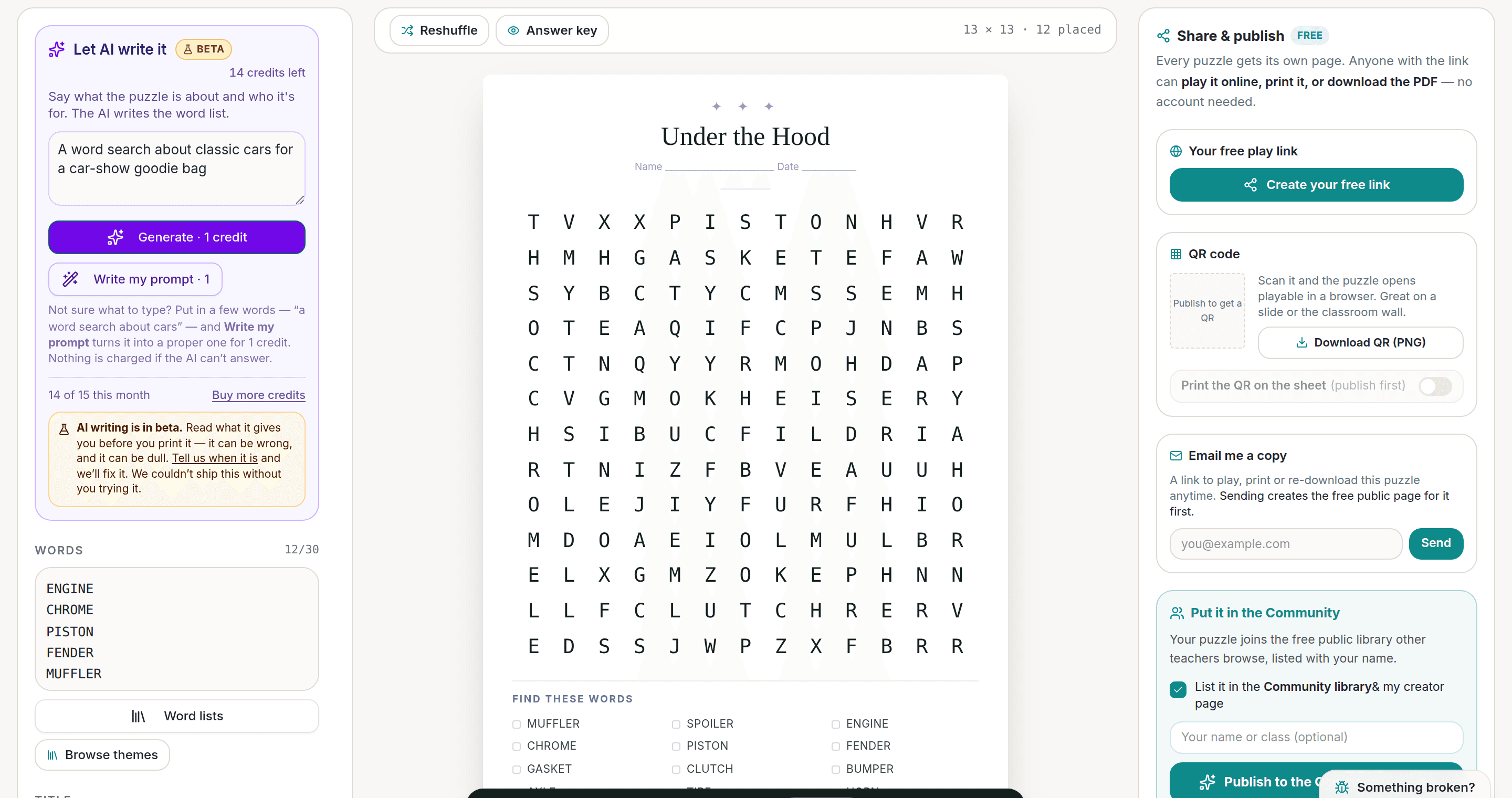
AI Puzzle Generator
Type a topic, get a themed word list and a finished puzzle. Premium also removes the footer credit and adds Word export.
Try the AI generator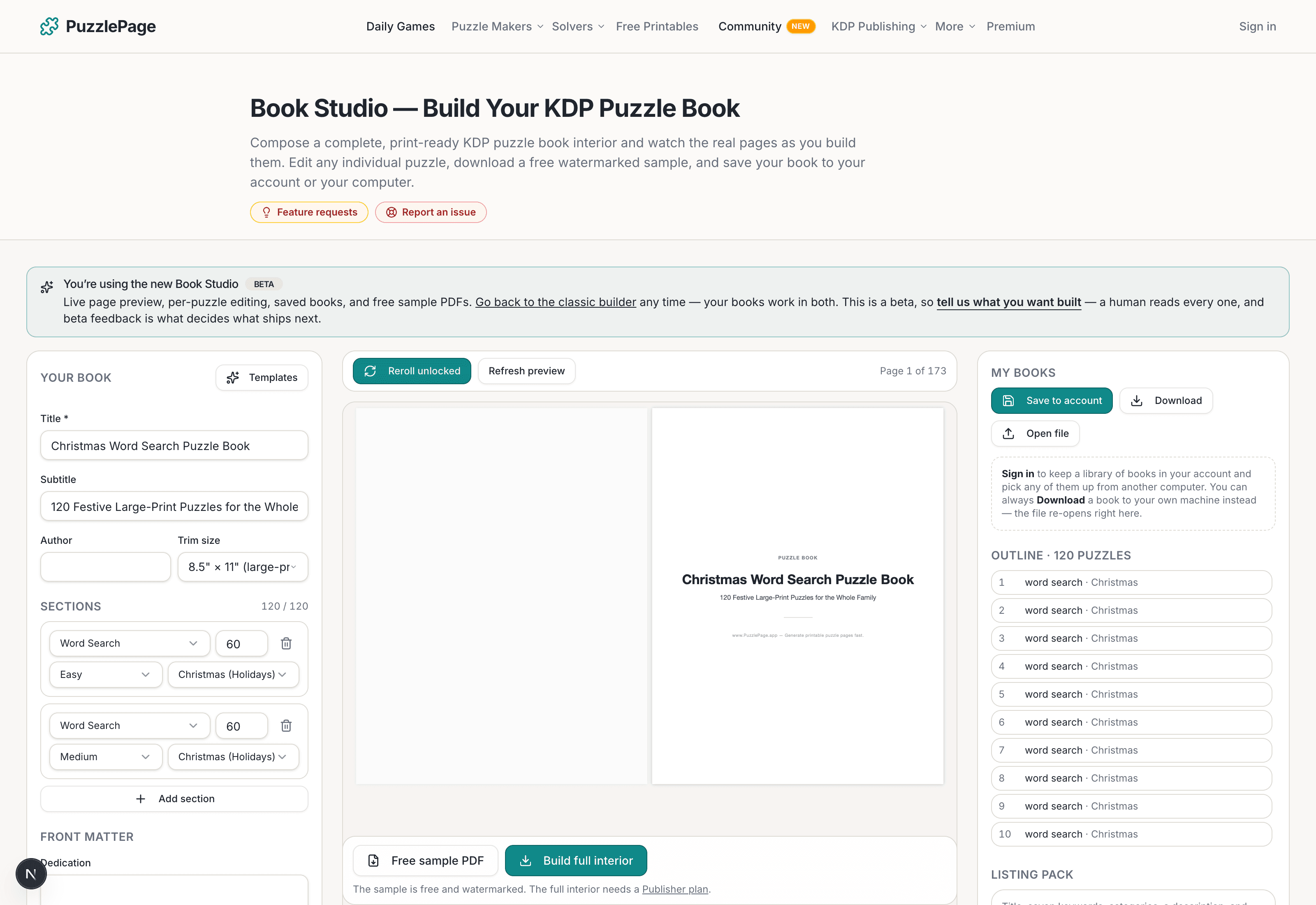
KDP Book Studio
Lay out a full puzzle book for Amazon KDP: templates, trim sizes, page checks and a cover designer.
Start a puzzle book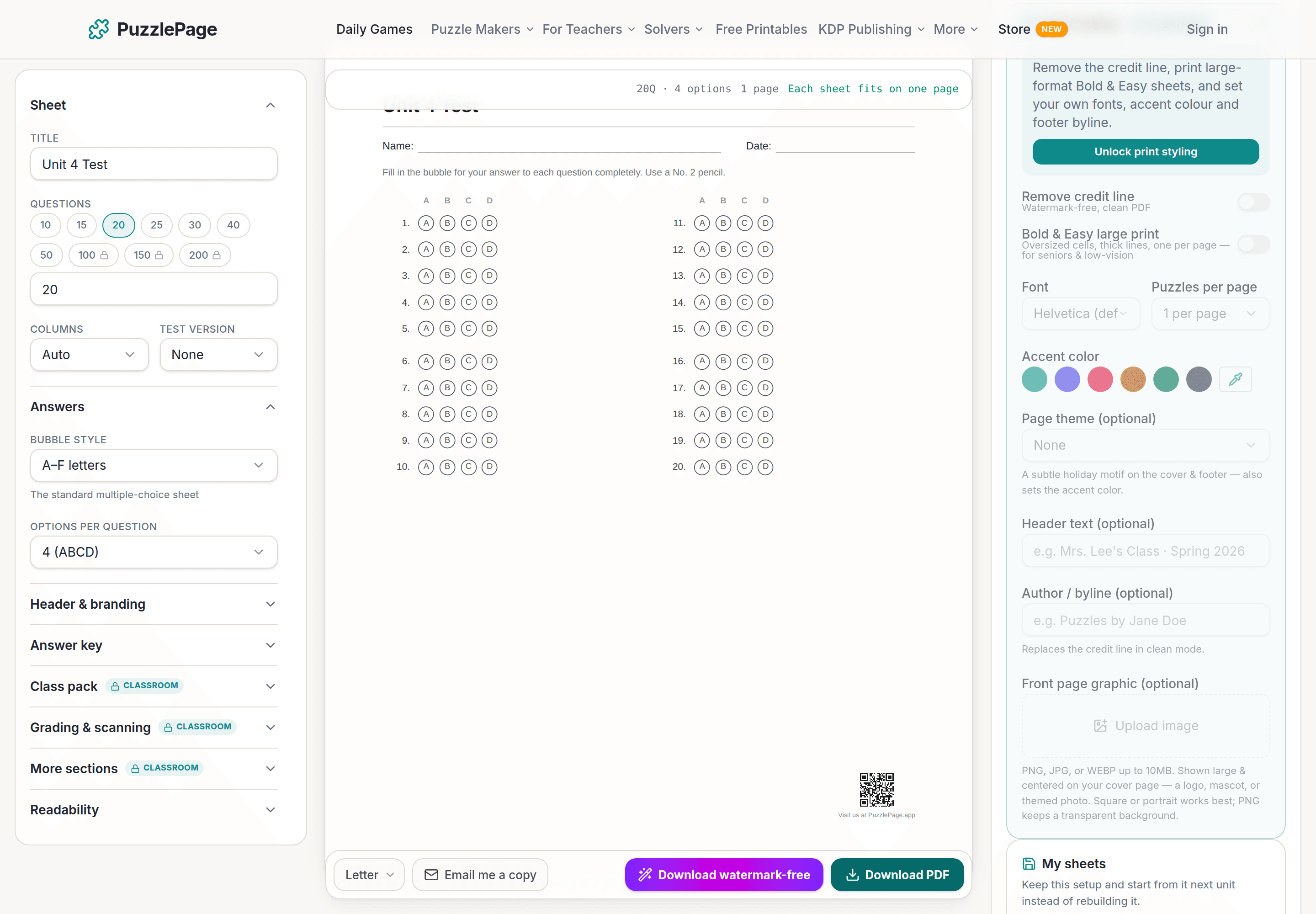
Bubble Sheet Studio
Answer sheets for any test length, with sections, versions, student ID grids and a matching answer key.
Make a bubble sheetPremium removes the footer credit, adds Word export and custom styling across every maker.
See plans →Free daily games
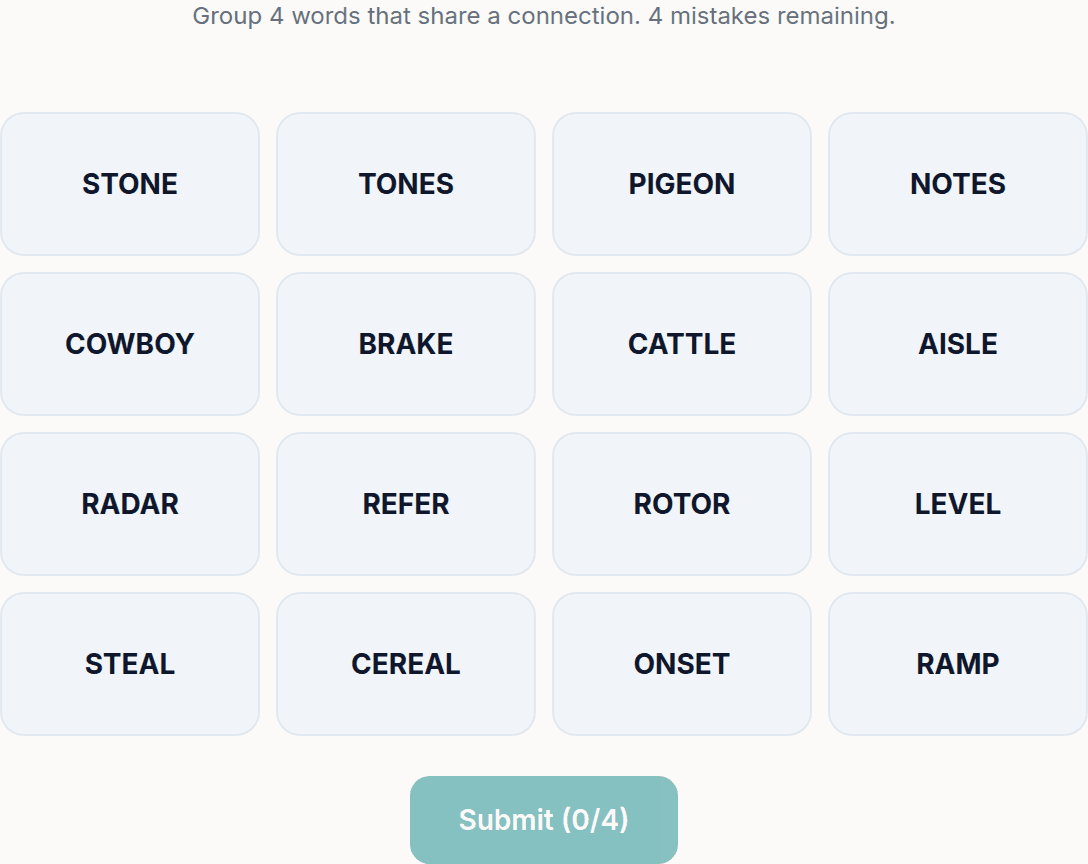
Need a two-minute break? Today's puzzles are live.
A new Sudoku and a new Connections board every day. No download, no account.
Keep reading
Take the puzzle with you
Free Cryptogram PDF — Summer Reading Cryptogram Puzzles
Print-ready · answer key included · unsubscribe anytime
Enjoyed this? Share the puzzle on X
Like puzzles like this? Follow on Pinterest for a new one every day.