Graph Paper for Math: Pick the Right Grid Size for Each Job
Graph paper for math, matched to the job: 1/4 inch for coordinate planes and long multiplication, 5 mm for older grades, 1 cm for young hands. Free PDF.
On this site: Print free graph paper·Browse 100+ free printables·Play today's puzzles
Quick answer
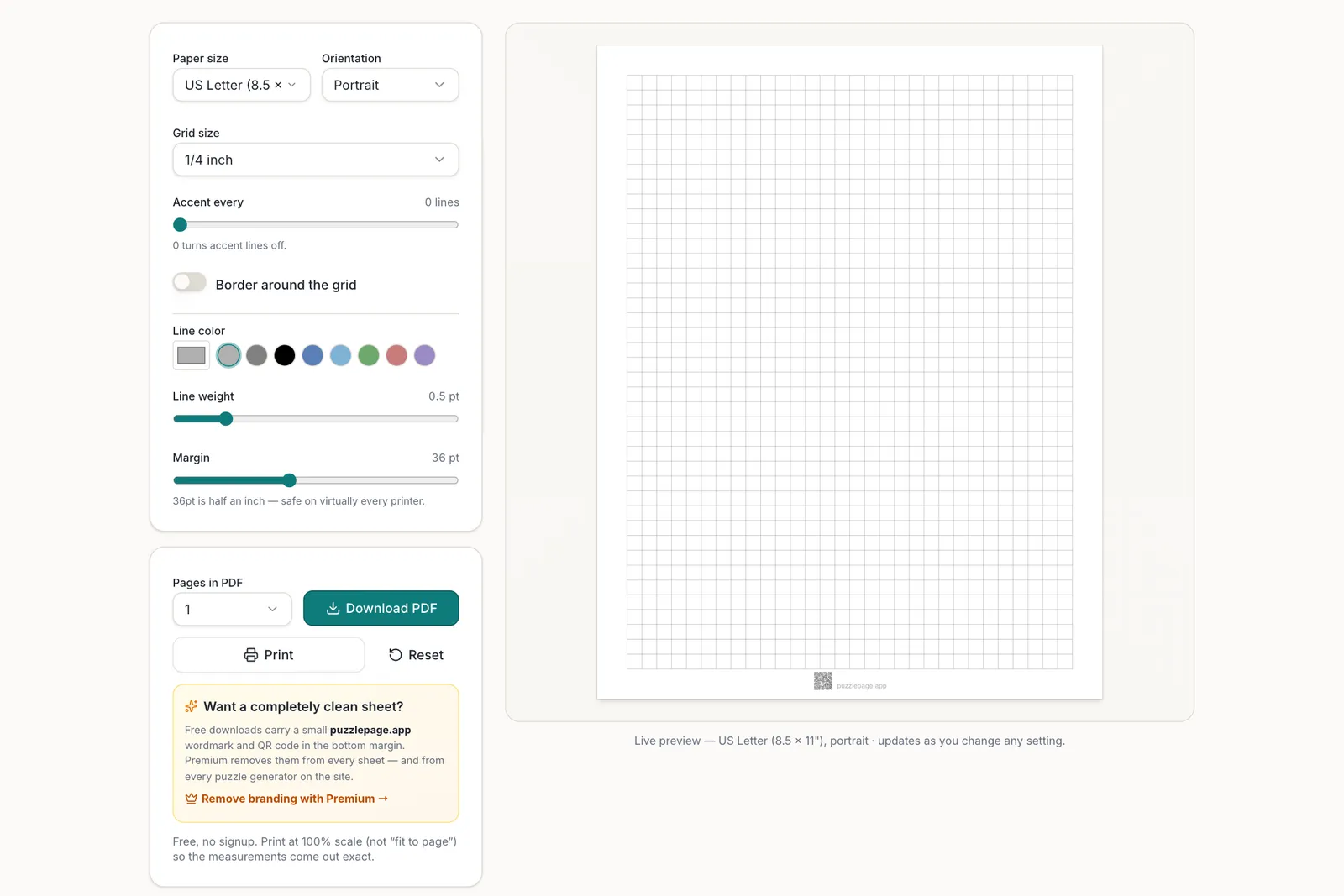
Graph paper for math works best when the grid fits the task. Use 1/4 inch for coordinate planes and multi-digit work from about grade 4, 1 cm for younger students who write big digits, and 5 mm for older students who need more squares. Print at 100% so the size stays exact.
A pad of store-bought graph paper gives you one grid size, and it is rarely the one the lesson needs. Graph paper for math is more useful when you print the exact square size for the job: big squares for little hands, smaller ones for long division and graphing.
The free graph paper maker prints 17 grid sizes from 1/10 inch to 2 inches as an exact-scale PDF. This guide covers the three sizes that do most of the work in math class, 1/4 inch, 5 mm and 1 cm, and which job each one suits.
📌 Key Takeaways
- 1/4 inch is the US classroom default for coordinate planes, bar graphs and long multiplication.
- 1 cm (or 1/2 inch) squares give younger students room for one large digit per square.
- 5 mm fits more squares on the page for detailed graphs and geometry in the older grades.
- Print at 100% or Actual size, or the squares will not measure what the label says.
What Size Graph Paper for Math Is Best?
The best size is the one where a student can write one digit or plot one point per square without crowding. For most US math from about grade 4, that is 1/4 inch. Younger students need bigger squares, and older students graphing detailed functions often want smaller ones.
| Grid size | Square width | Good for | Typical grades | Open it |
|---|---|---|---|---|
| 1 cm | 10 mm | Large digits, arrays, counting area in square centimetres | K to 3 | 1 cm grid |
| 1/2 inch | 12.7 mm | Very large writing, early number work, simple grid pictures | K to 2 | 1/2 inch grid |
| 1/4 inch | 6.35 mm | Coordinate planes, long multiplication and division, bar graphs | 4 to 8 | 1/4 inch grid |
| 5 mm | 5 mm | Detailed graphs, geometry constructions, metric measurement | 6 to 12 | 5 mm grid |
Treat the grade bands as a starting point, not a rule. A third grader with small, neat handwriting can work on 1/4 inch, and a high school student sketching a quick table of values may still prefer 1 cm squares.
Like this? We send 10 of these every month.
Free printable puzzles, answer keys included — same quality as the ones in this post.
One email. Unsubscribe anytime.
Coordinate Planes and Graphing on 1/4 Inch Graph Paper
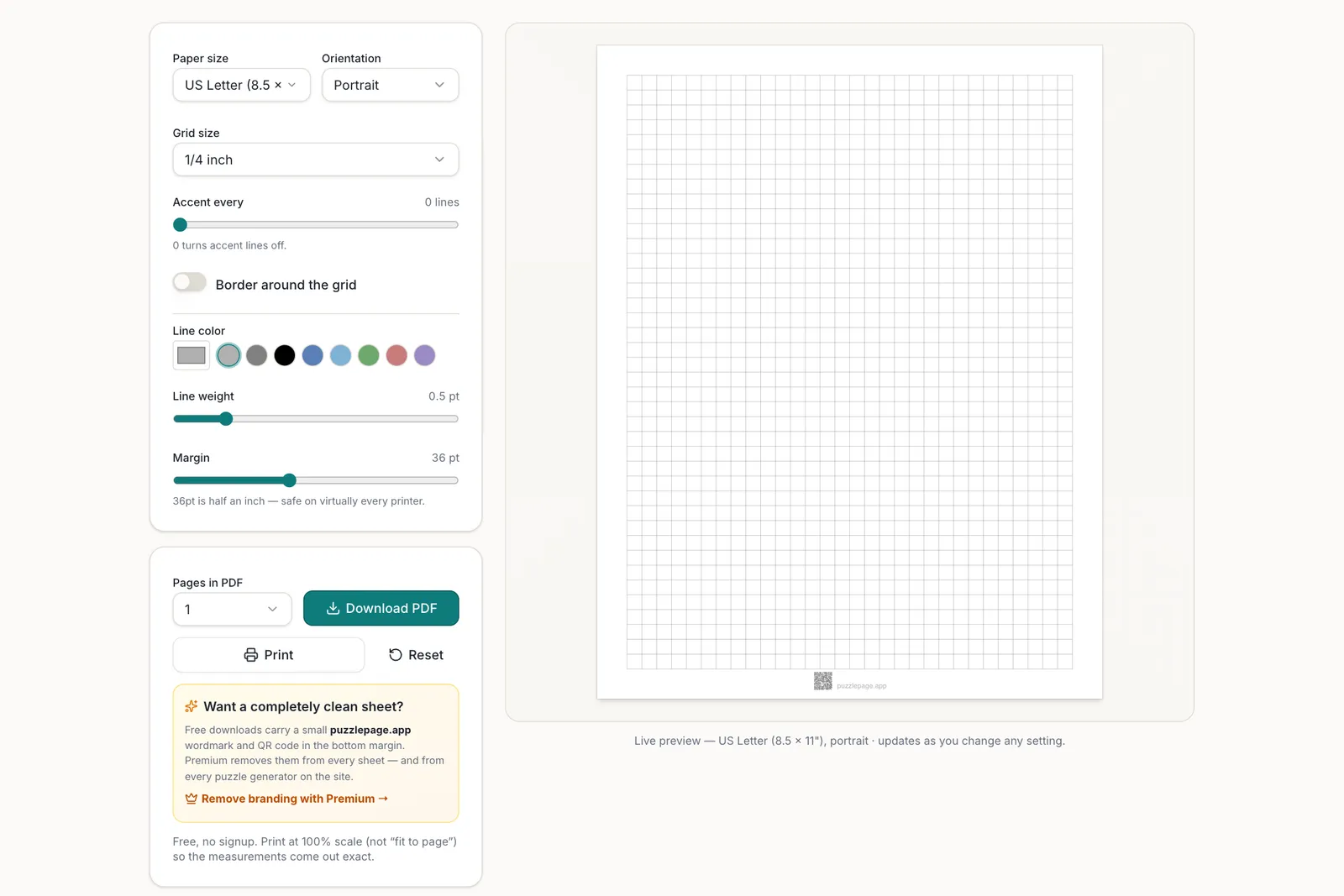
Quarter-inch squares are big enough to read a plotted point at a glance and small enough to fit a useful range on one sheet. That balance is why 1/4 inch is the default in the maker and the usual choice in US math classes.
For ready-made axes, the free coordinate plane paper sheet numbers both axes from minus 10 to 10 by default and fits up to four grids on a page. Switch it to first quadrant only for students who are just starting with ordered pairs.
Pro Tip
Need numbered axes for free? Use the coordinate plane sheet, which sets the range anywhere from ±4 to ±25 and numbers both axes at no cost. X and Y axes drawn on the plain graph paper sheet are a Premium option.
Which Grid Size Keeps Multi-Digit Arithmetic Lined Up?
Graph paper turns place value into columns. When every digit sits in its own square, the ones stay under the ones and the tens stay under the tens, which takes a lot of the guesswork out of long multiplication and long division.
Match the square to the handwriting. Use 1 cm squares in grades 2 to 3 while digits are still large, then move to 1/4 inch once handwriting shrinks enough to fit. Scholastic Parents has a short piece on using graph paper to support math learning, and its list of uses includes lining up numbers vertically and horizontally.
Fact fluency makes column work faster. The free math fact flash cards print every operation, and the guide to multiplication flash cards for every times table walks through a full set from 1 to 12.
Area, Perimeter and Geometry
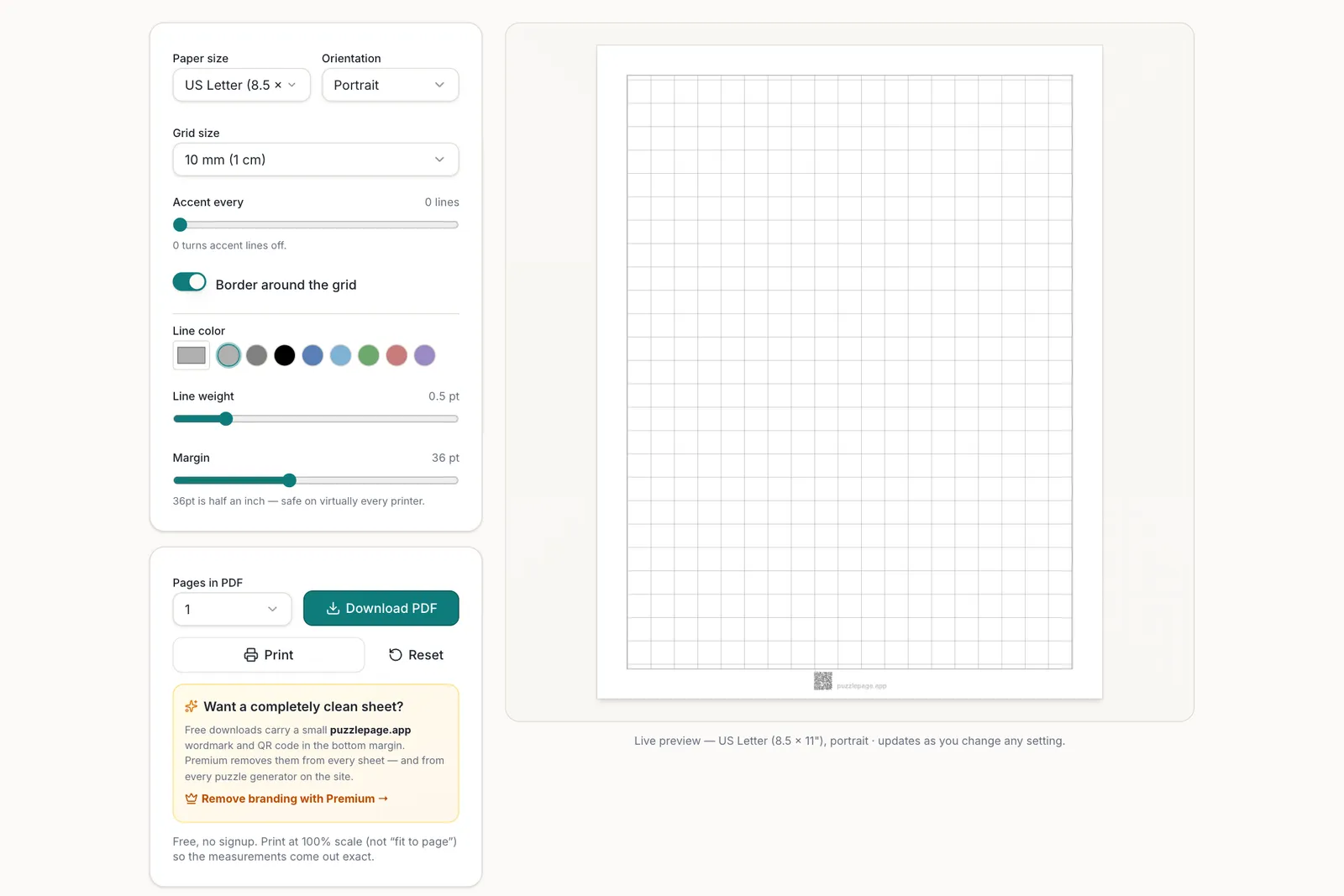
A 1 cm grid makes area concrete. Students draw a shape along the lines, count the squares inside, and get the area in square centimetres. Because the PDF prints at exact scale, a ruler laid on the page confirms each side length.
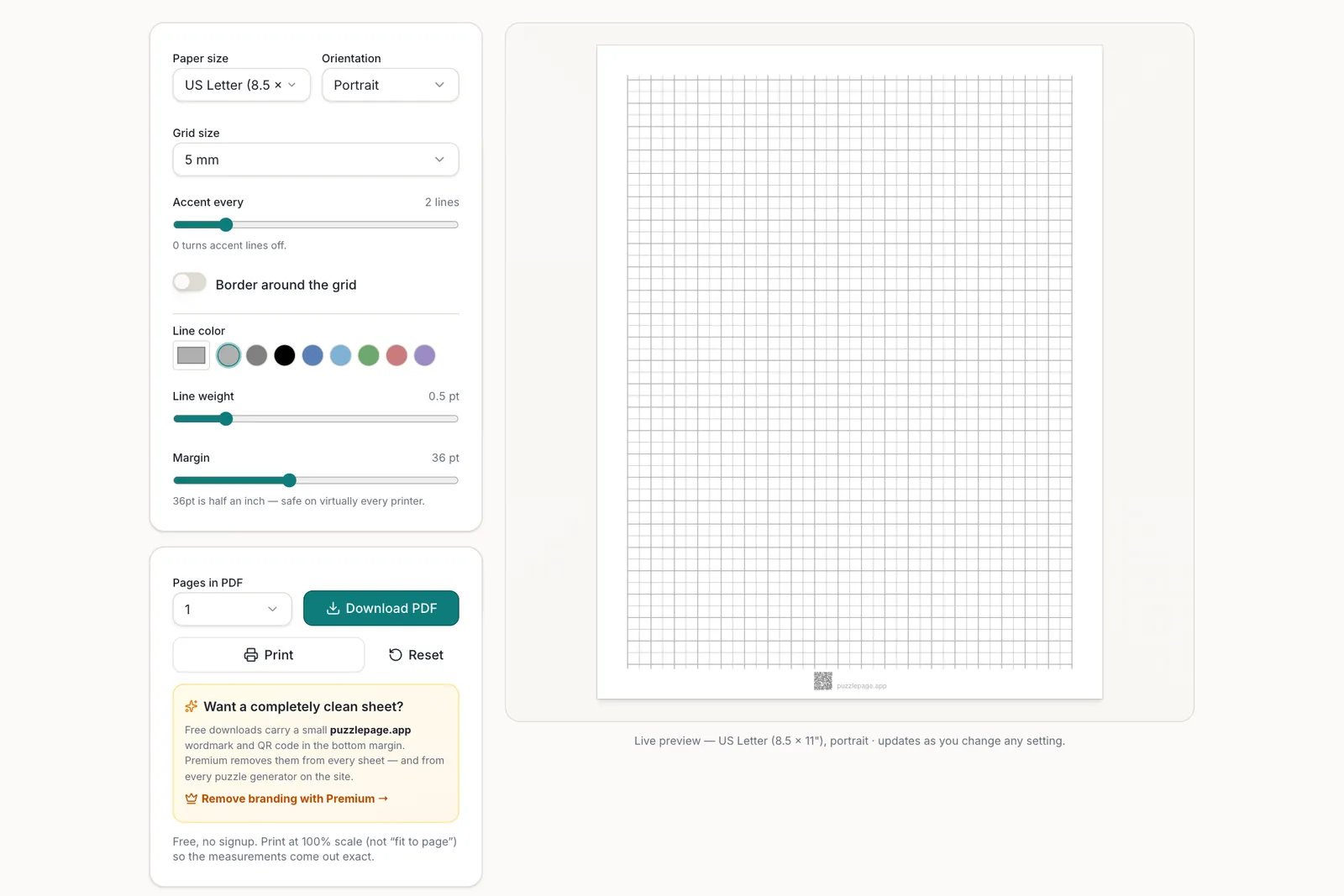
For finer work, 5 mm squares with the Accent every setting at 2 draw a heavier line every second square, which is one line every centimetre. Students get small squares for precision and a bolder centimetre grid for counting. The accent uses the same color as the grid, just a heavier stroke, so the sheet still photocopies cleanly.
Solid figures need a different grid. The isometric graph paper sheet draws a triangular grid for sketching cubes and prisms in 3D, and the accented graph paper sheet is built around heavier block lines from the start.
Graph Art and Pixel Pictures
Coloring in squares to make a picture is a friendly way to practice coordinates and counting. A 1/4 inch or 5 mm grid gives enough squares for a detailed picture without the cells getting too small to color.
-
Pick a size
Use 1/4 inch for most grid pictures, or 5 mm when the picture needs more detail.
-
Add accent lines
Set Accent every to 5 so students can count squares in blocks of five instead of one at a time.
-
Name the squares
Edge labels (numbers, or battleship style letters and numbers) are a Premium option that names every square for coordinate art.
Pro Tip
Keep the grid light. The default line color is a light grey (#b0b0b0), which keeps pencil and marker work the most visible thing on the page. Choose black only when the grid itself is what students need to see.
Younger vs Older Students
Square size should shrink as handwriting does. Here is a simple progression to start from.
-
Grades K to 2
1/2 inch or 1 cm squares, with room for one large digit each. Open the 1/2 inch grid.
-
Grades 3 to 5
1 cm for early multiplication, then 1/4 inch once digits are smaller. Open the 1 cm grid with a border.
-
Grades 6 to 8
1/4 inch for coordinate planes, ratio tables and bar graphs. Open the 1/4 inch grid.
-
Grades 9 to 12
5 mm for detailed function graphs and constructions. Open the 5 mm grid.
How to Print Graph Paper at the Exact Size
The maker draws in PDF points, the unit the PDF format itself uses, so a 1/4 inch square is exactly 18 points. The only thing that can change the size is your print dialog.
- Open the free graph paper maker.
- Pick a grid size from the 17 presets, from 1/10 inch to 2 inches.
- Pick the paper size (Letter, A4, Legal, Tabloid, A3 or A5) and the orientation.
- Click Download PDF.
- Print at 100% or Actual size, with fit to page turned off.
Free downloads carry a small PuzzlePage wordmark and QR code in the bottom margin, and Premium removes them. For a full math page, pair the grid with a cross math puzzle from the worksheet builder.
Frequently Asked Questions
What size graph paper is used in math class?
Graph paper for math in US classrooms is usually 1/4 inch, which fits one written digit per square and suits coordinate planes and long multiplication. Schools that work in metric tend to use 5 mm. Younger students often do better on 1 cm squares, which leave room for large handwriting.
Is 5mm graph paper the same as 1/4 inch?
No. A 1/4 inch square is 6.35 mm wide, so 5 mm squares are noticeably smaller and fit more rows on a page. If you want a near match for 5 mm in inches, the closest preset is 1/5 inch, which is 5.08 mm.
What graph paper is best for kindergarten and first grade?
Large squares work well for children who are still forming their digits, so try 1 cm or 1/2 inch. Both leave room for one big number per square. Move down to 1/4 inch once handwriting is small and steady enough to stay inside the lines.
Why does my printed graph paper not measure the right size?
Your print dialog is almost always scaling the page. Set the scale to 100% or Actual size, turn off fit to page, and check that the paper size in the maker matches the paper in the tray. The PDF is drawn to exact size, so a ruler will agree once scaling is off.
More you can make here
One puzzle is the start. Here is the rest of the kit.
 New
Worksheet Builder
Put a word search, a cryptogram and a scramble on one page, or build a whole themed packet. Prints with answer keys.
Build a worksheet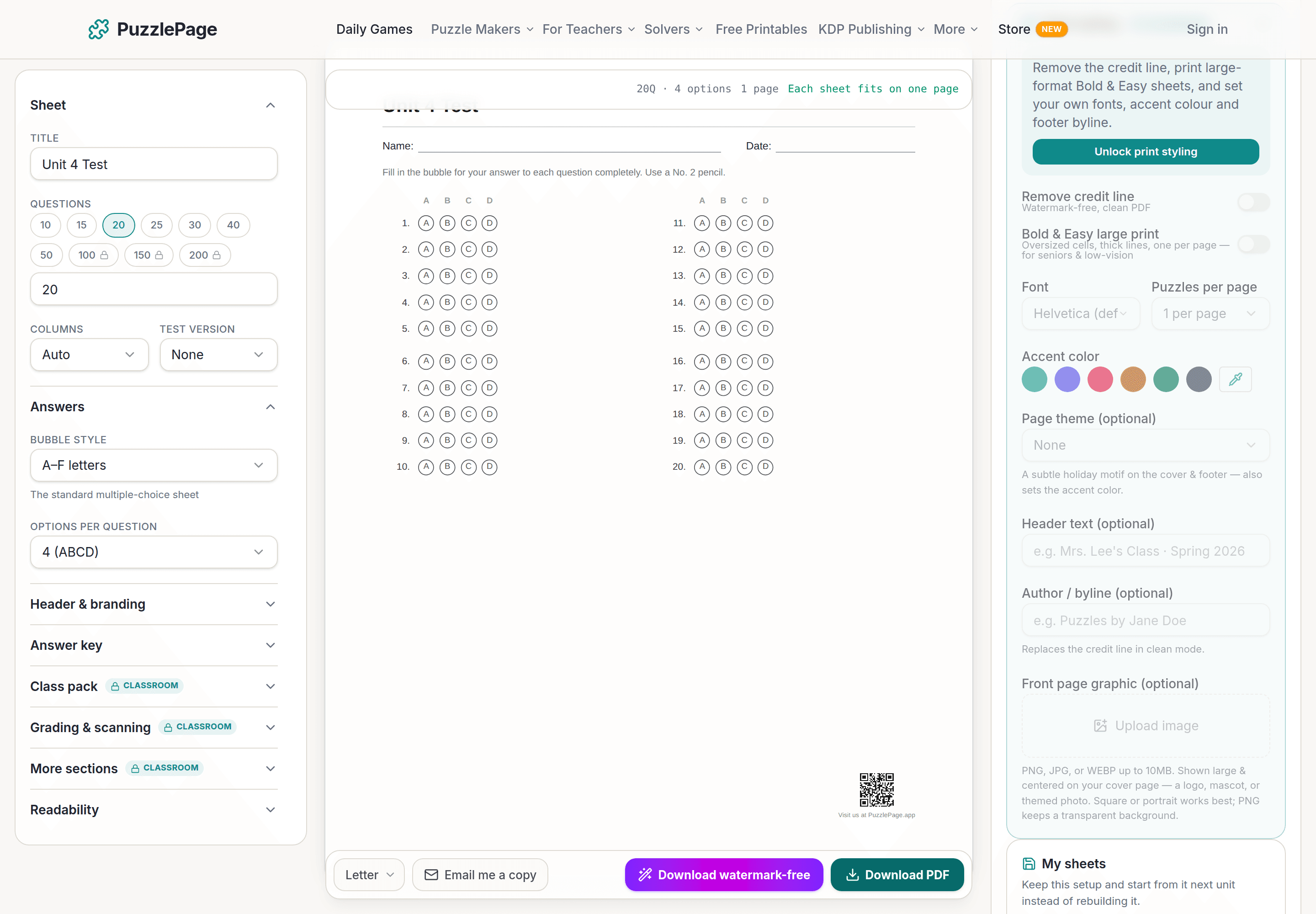
Bubble Sheet Studio
Answer sheets for any test length, with sections, versions, student ID grids and a matching answer key.
Make a bubble sheet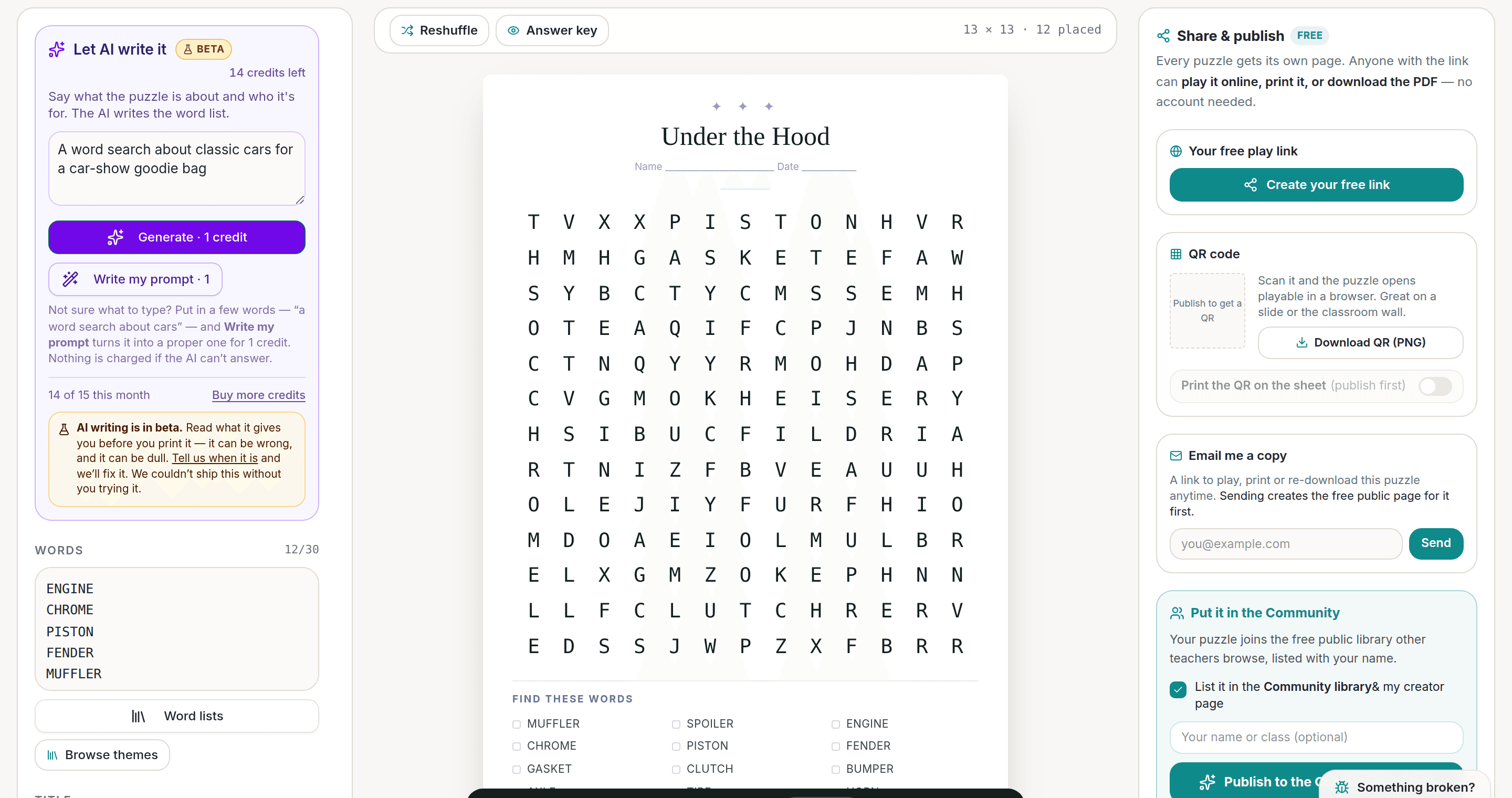
AI Puzzle Generator
Type a topic, get a themed word list and a finished puzzle. Premium also removes the footer credit and adds Word export.
Try the AI generator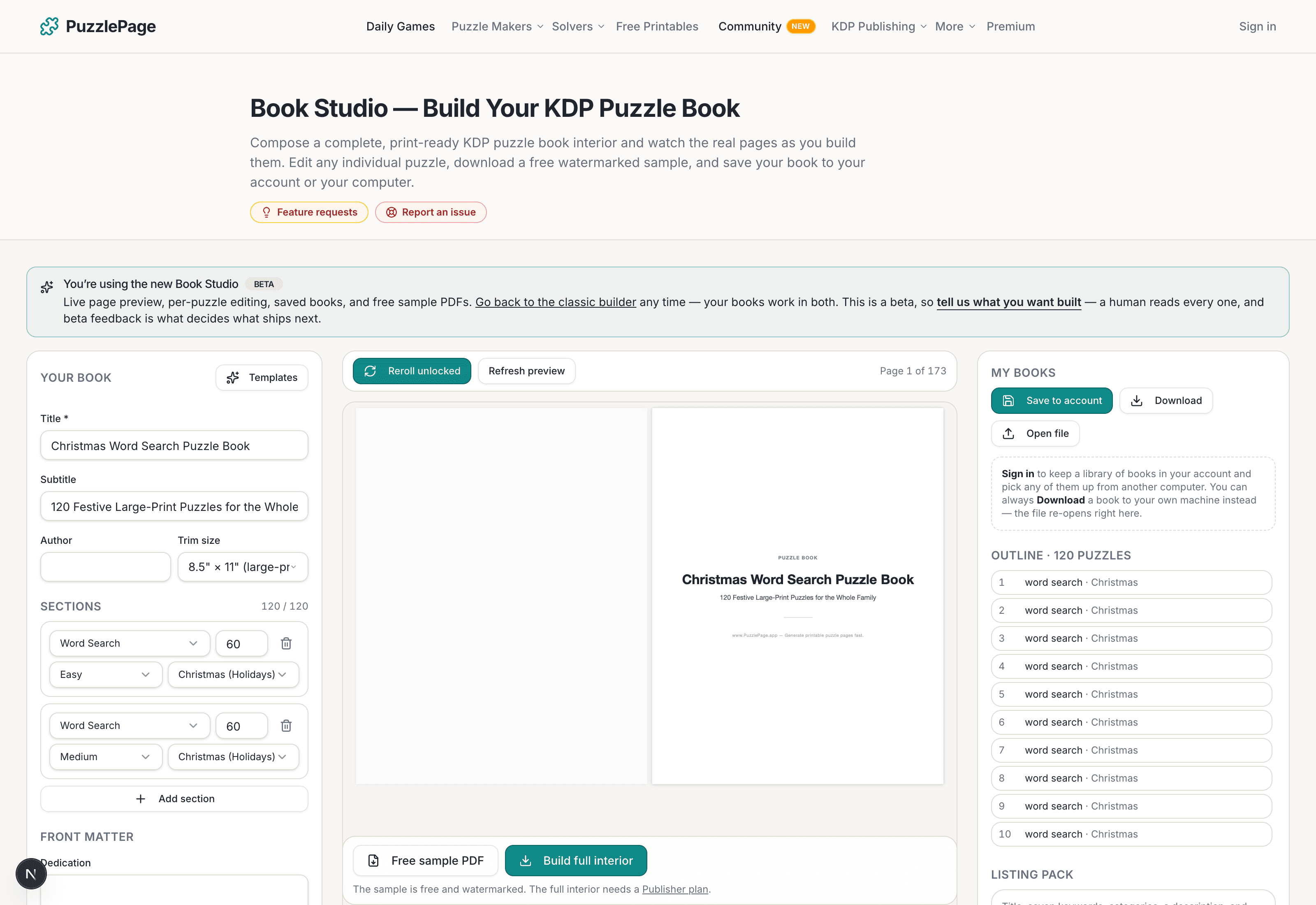
KDP Book Studio
Lay out a full puzzle book for Amazon KDP: templates, trim sizes, page checks and a cover designer.
Start a puzzle bookPremium removes the footer credit, adds Word export and custom styling across every maker.
See plans →Free daily games
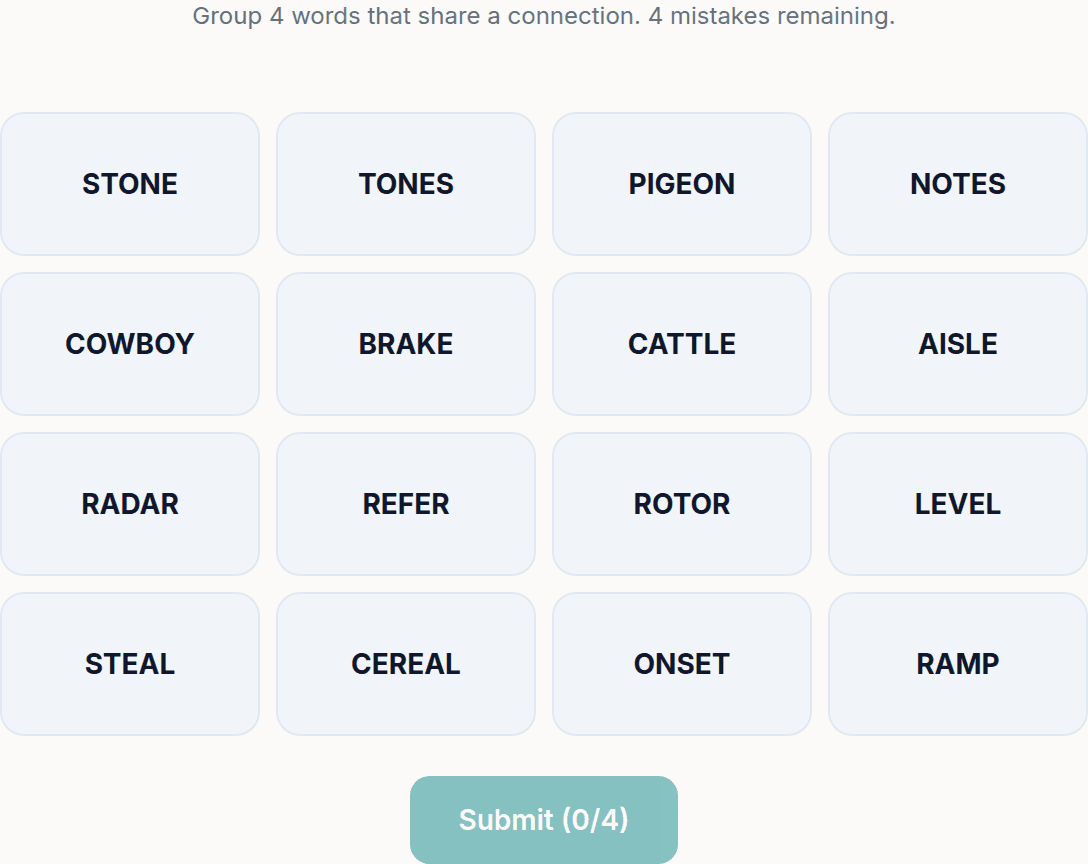
Need a two-minute break? Today's puzzles are live.
A new Sudoku and a new Connections board every day. No download, no account.


Keep reading
Get 10 free puzzles
Get the free 10-puzzle pack
Enter your email and we'll send you 10 print-ready puzzles with answer keys, plus a heads-up when we publish new generators and seasonal puzzle packs. Same quality as the ones on this page.
Roughly two emails a month. No spam, unsubscribe anytime.
Enjoyed this? Share the puzzle on X
Like puzzles like this? Follow on Pinterest for a new one every day.