Fun Ways to Practice Spelling Words: 12 Easy Ideas
Free printable spelling games plus 12 fun ways to practice spelling words with any weekly list, from scramble puzzles to two-minute warm-ups.

- 1.
- 2.
- 3.
- 4.
- 5.
- 6.
- 7.
- 8.
- 9.
- 10.
- 11.
- 12.
- 13.
- 14.
Spelling Practice Word Scramble
Words about learning to spell: phonics, patterns, and practice
- 1.LISPNLGE
- 2.ERCTAPCI
- 3.ESLETRT
- 4.SAETTPRN
- 5.NSICOHP
- 6.YSELLALB
- 7.LVSWEO
- 8.SLBDNE
- 9.TOITCADNI
- 10.WVRIEE
- 11.RTAMYES
- 12.ZUIQ
- 13.PTBHAAEL
- 14.ATOONNCSN
Free companion PDF
Spelling Practice Word Scramble
Words about learning to spell: phonics, patterns, and practice. Grab the PDF now and we'll send 10 more printable puzzles, plus a heads-up when new generators or seasonal packs go live. Roughly two emails a month — unsubscribe anytime.
No payment · Letter-size · Answer key included
Prefer to play online? There's a new puzzle every day.
Free daily word games — play instantly. Come back tomorrow for a fresh one.
On this site: Create your own free word scramble puzzle·Browse 100+ free printables·Play today's puzzles
Spelling lists come home every Monday, and by Wednesday the copy-each-word-three-times routine has lost its charm. The fix is not more repetition; it is better repetition. The best fun ways to practice spelling words all share one trait: they make kids retrieve the word from memory instead of copying it letter by letter.
This guide collects 12 activities that work with any list, whether your school sends home 10 words for a 1st grader or 20 for a 5th grader. Most need zero prep, and the print-and-go puzzle options take under a minute to set up.
📌 Key Takeaways
- Retrieval beats copying: games that make kids recall a word build stronger memories than writing it ten times.
- Any weekly list works. Paste it into a free word scramble generator and print a puzzle worksheet with an answer key.
- Mix one puzzle activity, one movement game, and one writing task per week to reach every kind of learner.
- Ten minutes a day, four days a week, beats a single Thursday night cram session.
 0:50
0:50Why Do Spelling Games Beat Copying Words Ten Times?
Games win because they force retrieval, the act of pulling a word out of memory rather than looking at it. Copying is recognition; unscrambling jumbled letters is recall, and recall is what the Friday quiz actually tests.
The research here is consistent. In classroom studies of retrieval practice, students who reviewed through self-testing and games outscored repetition-only groups by roughly 10 to 15 percentage points on delayed spelling tests, a pattern reading researchers have documented across grade levels.
There is also a motivation dividend. An anagram game or a decode-the-message challenge feels like play, so kids volunteer for a second round of what is, underneath, pure spelling practice. For a deeper look at how spelling connects to reading growth, the spelling and word study library at Reading Rockets is worth bookmarking.
Pro Tip
Keep the Friday quiz format familiar. If students practice by unscrambling words all week, add one scramble item to the quiz itself; the format match lowers test nerves and shows kids that their practice paid off.
Free Word Scramble PDF — Spelling Practice Word Scramble
Print-ready · answer key included · unsubscribe anytime
12 Fun Ways to Practice Spelling Words With Any List
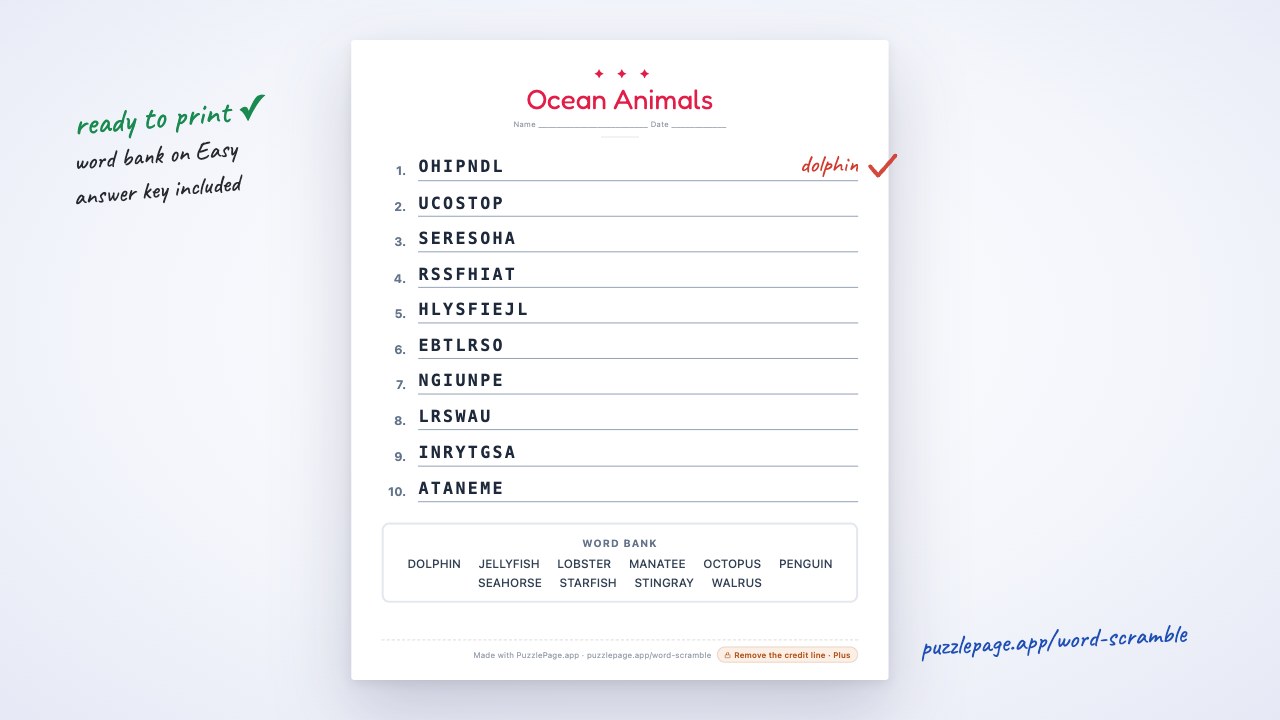
Every activity below works with the word list you already have. The screenshot below shows the live word scramble tool that powers the print-and-go options; paste in your words and it builds the puzzle worksheet and answer key for you.


1. Word scramble swap
Type this week’s list into the generator, print, and let students unscramble words back into their correct spelling. Rearranging jumbled letters forces attention to every letter position, which is exactly where most spelling mistakes hide.
2. Hidden words hunt
Turn the same list into a find-a-word with a free printable word search maker. Hunting for hidden words gives slower spellers repeated, low-pressure exposure to the correct spelling of every word.
3. Secret code spelling
Write a silly sentence that uses three list words, then turn it into a decode-the-message cipher puzzle. Code breaking makes kids process one letter at a time, the same skill spelling demands.
4. Rainbow writing
Students write each word three times in three different colors while saying the letters aloud. The color change keeps attention on the word instead of drifting into autopilot.
5. Letter tile race
Dump magnetic letters or game tiles in the middle of the table. Call out a word and race to build it; the first correct build keeps a point.
6. Air writing
Spell words with huge arm movements, drawing each letter in the air. Big motions recruit muscle memory, which helps active learners lock in tricky letter sequences.
7. Spelling hopscotch
Chalk a letter grid on the sidewalk and hop out each word. This one works well for high-energy kids who resist pencil-and-paper practice.
8. Dictation relay
Read a sentence containing a list word; teams whisper it down the line, and the last player writes it. Dictation builds spelling in context, not just in isolation.
9. Vowel spotlight
Students highlight the vowels or the tricky phonics pattern in every word, like a silent E or a double consonant. Naming the pattern turns 15 random words into three or four word families.
10. Syllable clap and sort
Clap out each word, then sort the list into one-, two-, and three-syllable columns. Breaking a long word into syllables makes it feel like three short words.
11. Two-minute buddy quiz
Partners swap lists and quiz each other for exactly two minutes, then trade roles. The timer turns review into a game and fits into any transition slot.
12. Word wall bingo
Fill bingo cards with list words, then call out definitions instead of the words themselves. Matching meaning to spelling doubles as a vocabulary warm-up.
When we set up a scramble station with a group of 22 second graders, 19 finished their entire list and asked to trade puzzles for a second round. The same list on a copy-three-times worksheet had produced groans the day before.
How Do You Fit Spelling Practice Into a Busy Week?
Ten minutes a day, four days a week, is enough for most kids, and spaced practice moves words into long-term memory far better than one long session. A simple rhythm keeps the week from feeling like a scramble of its own.
- Monday: give a quick pretest and star the words your child misses.
- Tuesday: puzzle day. Print a scramble or word search built from the starred words.
- Wednesday: movement day. Hopscotch, air writing, or the tile race.
- Thursday: writing day. Dictation sentences or rainbow writing.
- Friday: quiz, then celebrate with the puzzle format they liked best.
Scale the list, not the minutes. Most curriculum guides land on 10 to 12 spelling words per week in 1st and 2nd grade, rising to 15 to 20 by 4th and 5th grade.
| Grade | Typical list size | Minutes a day | Go-to activities |
|---|---|---|---|
| 1st grade | 8 to 10 words | 5 to 10 | Tile race, air writing, hopscotch |
| 2nd grade | 10 to 12 words | 10 | Scramble swap, rainbow writing |
| 3rd grade | 12 to 15 words | 10 | Hidden words hunt, buddy quiz |
| 4th grade | 15 to 18 words | 10 to 15 | Secret code spelling, dictation relay |
| 5th grade | 15 to 20 words | 10 to 15 | Vowel spotlight, syllable sort, bingo |
Pro Tip
For practice at home, tape the week’s list inside a kitchen cabinet door. Every snack break becomes a ten-second review, and by Friday the words have been seen dozens of times without a single argument about homework.
Try It Yourself
Here is the fastest version of puzzle day, start to finish in about a minute.
- Open the free word scramble generator at PuzzlePage.
- Paste this week’s list, or test-drive the tool with our starter set of spelling-themed words: SPELLING, PHONICS, SYLLABLE, VOWELS, BLENDS, PATTERNS, DICTATION, and MASTERY.
- Pick a difficulty; medium suits most 2nd through 5th graders.
- Print the puzzle worksheet along with the answer key, and hand it out.
Ready for a spelling week nobody complains about? Build a puzzle from your own word list with the free spelling word scramble generator and print it before the coffee finishes brewing.
Frequently Asked Questions
What is a fun way to practice spelling words at home?
Turn the list into a game the family already understands: a scramble race at the kitchen table, hopscotch spelling on the driveway, or a two-minute buddy quiz before dinner. Rotating two or three of these keeps a whole semester of lists feeling fresh.
What are fun ways to practice spelling words in the classroom?
Puzzle stations are the easiest win: print a word scramble and a word search from the same list and let students choose their format. Dictation relays and word wall bingo work well as whole-class games during the last ten minutes of the day.
How many spelling words should kids practice each week?
Most 1st and 2nd grade programs assign 10 to 12 words, while 4th and 5th graders typically handle 15 to 20. If a child misses more than half on a Monday pretest, trim the list and master a shorter one instead.
Do spelling worksheets still help, or are games always better?
Worksheets still earn their place when they demand recall, which is why scramble and fill-in formats outperform copy-the-word pages. A good rule: if a child can finish the page without thinking about letter order, upgrade to a puzzle worksheet.
Live demo
Make your own word scramble right here
Swap in your own words (a spelling list, residents' names, a unit's vocabulary) and press Generate. The full maker adds answer keys, size options and PDF export.
More you can make here
One puzzle is the start. Here is the rest of the kit.
 New
NewWorksheet Builder
Put a word search, a cryptogram and a scramble on one page, or build a whole themed packet. Prints with answer keys.
Build a worksheet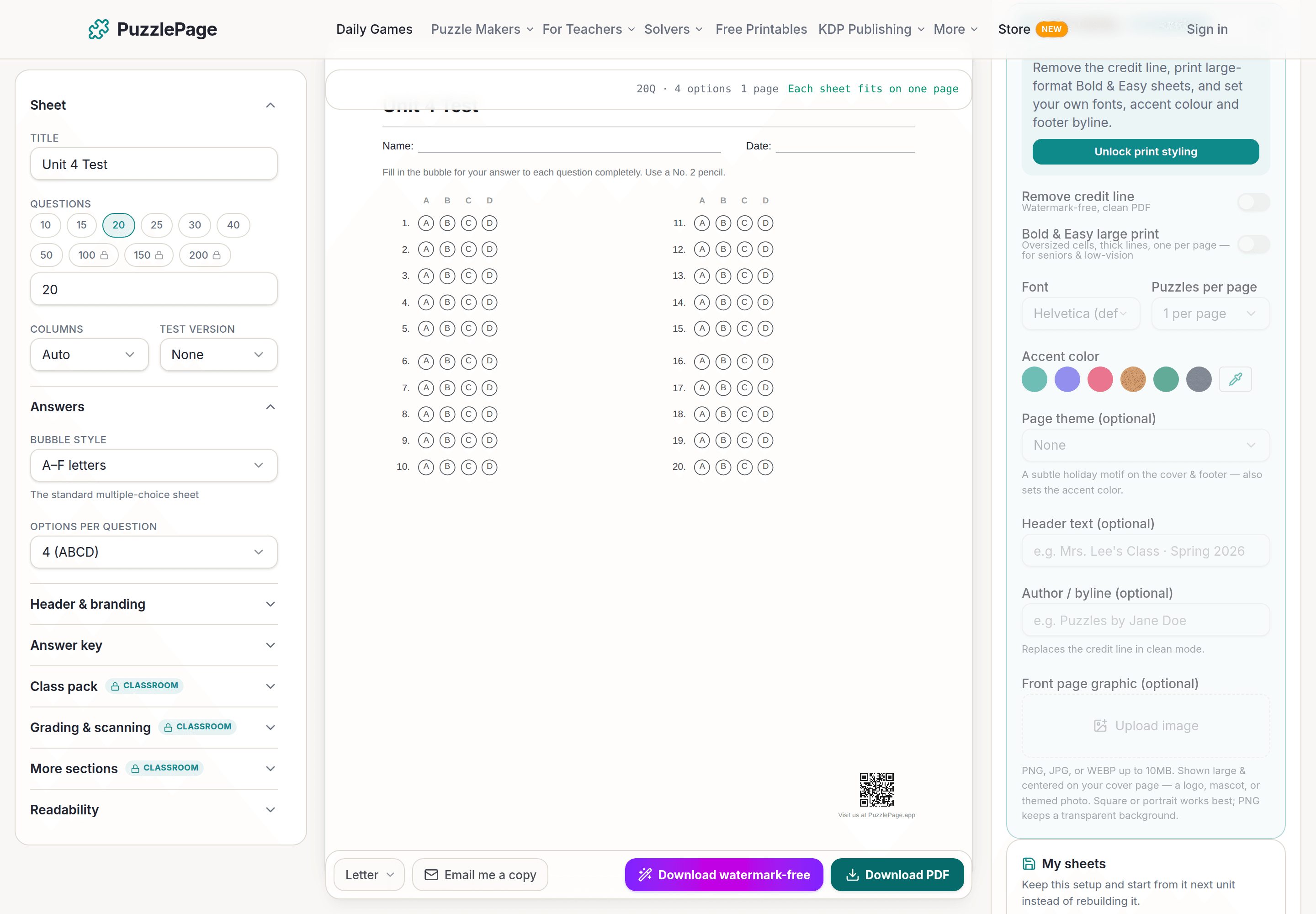
Bubble Sheet Studio
Answer sheets for any test length, with sections, versions, student ID grids and a matching answer key.
Make a bubble sheet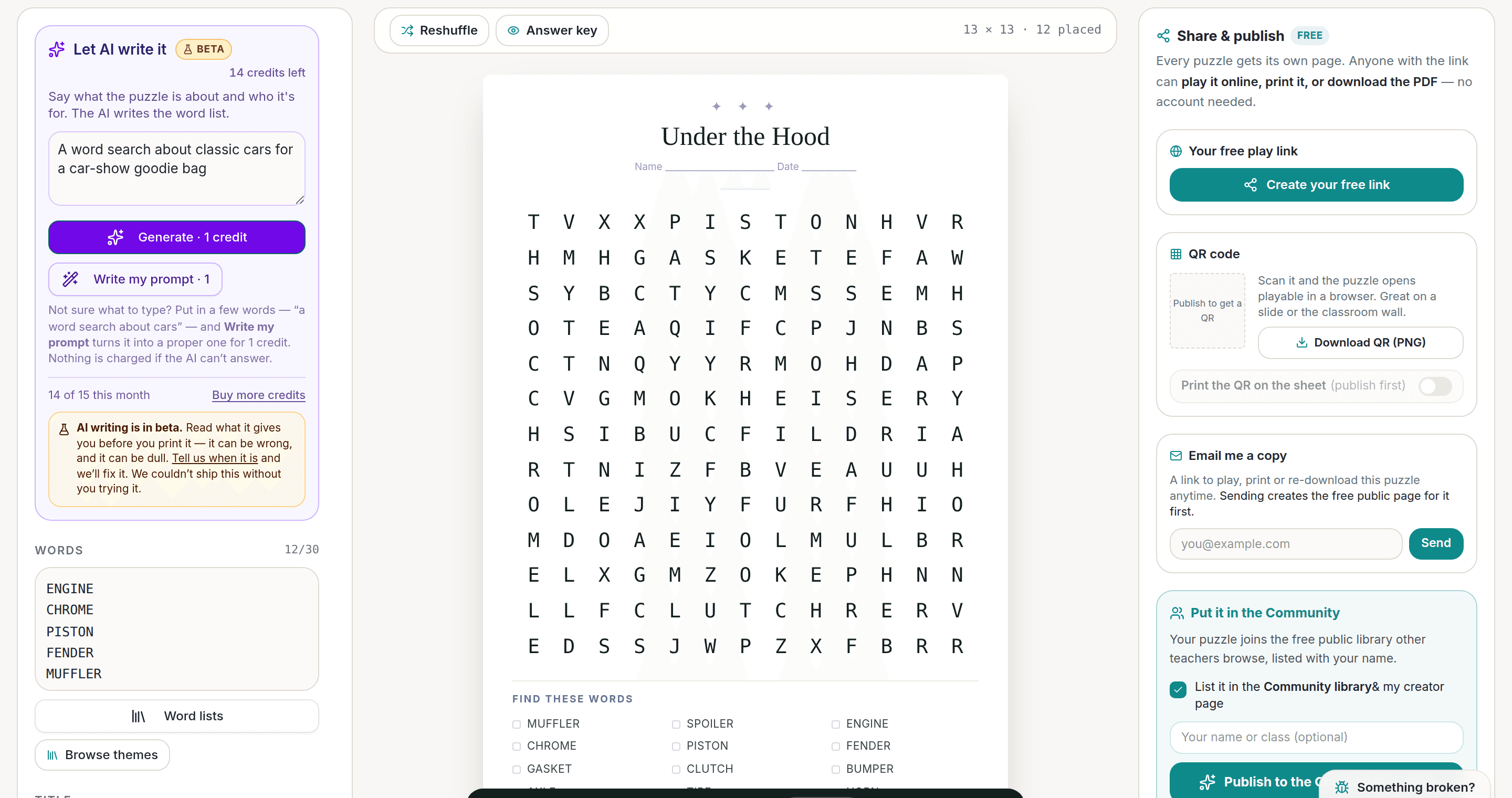
AI Puzzle Generator
Type a topic, get a themed word list and a finished puzzle. Premium also removes the footer credit and adds Word export.
Try the AI generator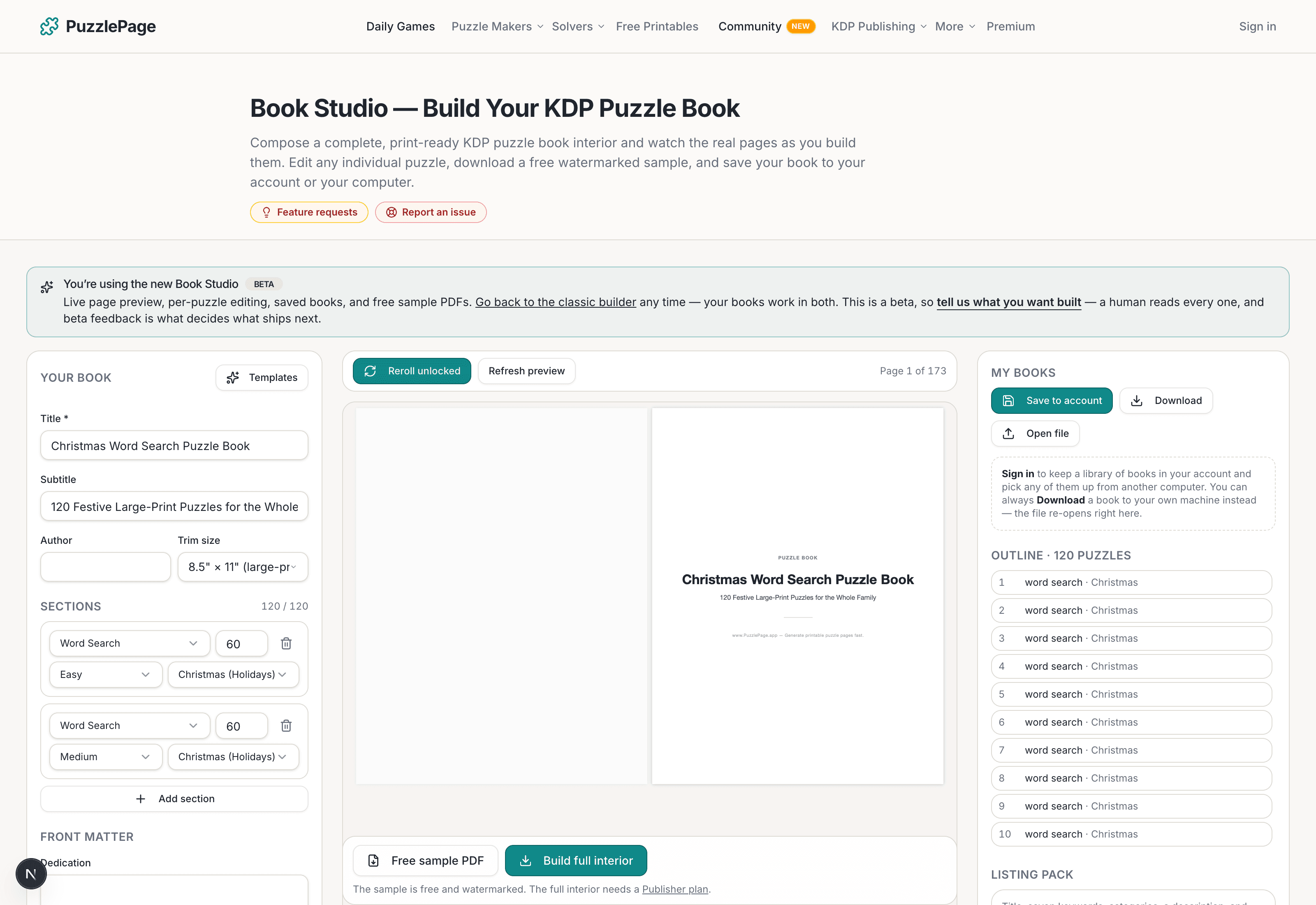
KDP Book Studio
Lay out a full puzzle book for Amazon KDP: templates, trim sizes, page checks and a cover designer.
Start a puzzle bookPremium removes the footer credit, adds Word export and custom styling across every maker.
See plans →Free daily games
Need a two-minute break? Today's puzzles are live.
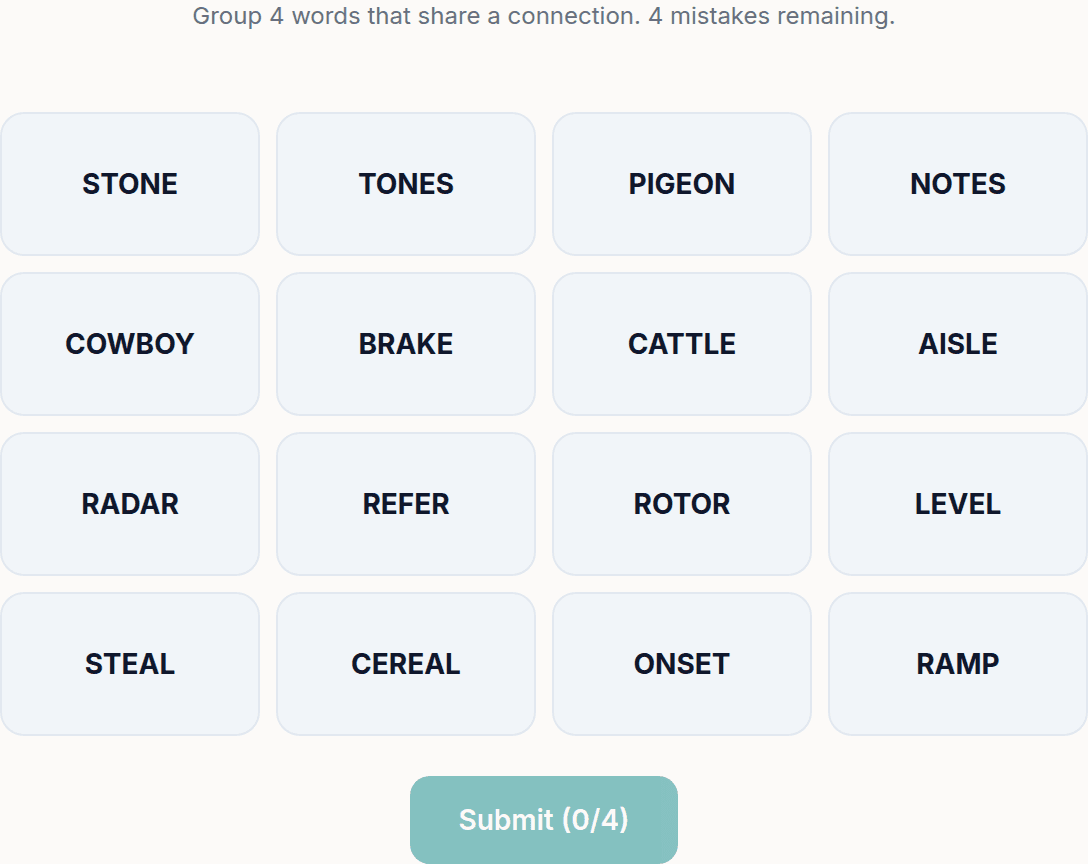
A new Sudoku and a new Connections board every day. No download, no account.


Keep reading
Take the puzzle with you
Free Word Scramble PDF — Spelling Practice Word Scramble
Print-ready · answer key included · unsubscribe anytime
Enjoyed this? Share the puzzle on X
Like puzzles like this? Follow on Pinterest for a new one every day.