Nostalgia Games for Seniors: Free 1950s Word Scramble
Nostalgia games for seniors printable in minutes: a 1950s word scramble with an answer key, plus reminiscence conversation starters for activity directors.

- 1.
- 2.
- 3.
- 4.
- 5.
- 6.
- 7.
- 8.
- 9.
- 10.
- 11.
- 12.
- 13.
- 14.
- 15.
Word bank
Memory Lane Scramble
Everyday life in the 1950s and 1960s: diners, drive-ins, rotary phones, and the family radio
- 1.KBUOXEJ
- 2.EMAKKLIHS
- 3.AYRROT
- 4.PAOERCRLTO
- 5.RNRSOAITST
- 6.KMIALMN
- 7.SOINTVIELE
- 8.EINRD
- 9.ROAHPC
- 10.ADCSTROP
- 11.RTYRPEWEIT
- 12.NAANETN
- 13.RGPOPAHHON
- 14.SEDRRCO
- 15.TMPSAS
Word Bank
JUKEBOX · MILKSHAKE · ROTARY · PERCOLATOR · TRANSISTOR · MILKMAN · TELEVISION · DINER · CARHOP · POSTCARD · TYPEWRITER · ANTENNA · PHONOGRAPH · RECORDS · STAMPS
Free companion PDF
Memory Lane Scramble
Everyday life in the 1950s and 1960s: diners, drive-ins, rotary phones, and the family radio. Grab the PDF now and we'll send 10 more printable puzzles, plus a heads-up when new generators or seasonal packs go live. Roughly two emails a month — unsubscribe anytime.
No payment · Letter-size · Answer key included
Prefer to play online? There's a new puzzle every day.
Free daily word games — play instantly. Come back tomorrow for a fresh one.
On this site: Create your own free word scramble puzzle·Browse 100+ free printables·Play today's puzzles
The November activity calendar is due Friday, and four afternoon slots are still blank. You need something that works for the resident who finishes every crossword and the one who mostly likes to talk.
Nostalgia games for seniors printable on plain paper fill that gap better than almost anything else. A word like JUKEBOX takes thirty seconds to unscramble and ten minutes to talk about, which is exactly the ratio a good group session needs.
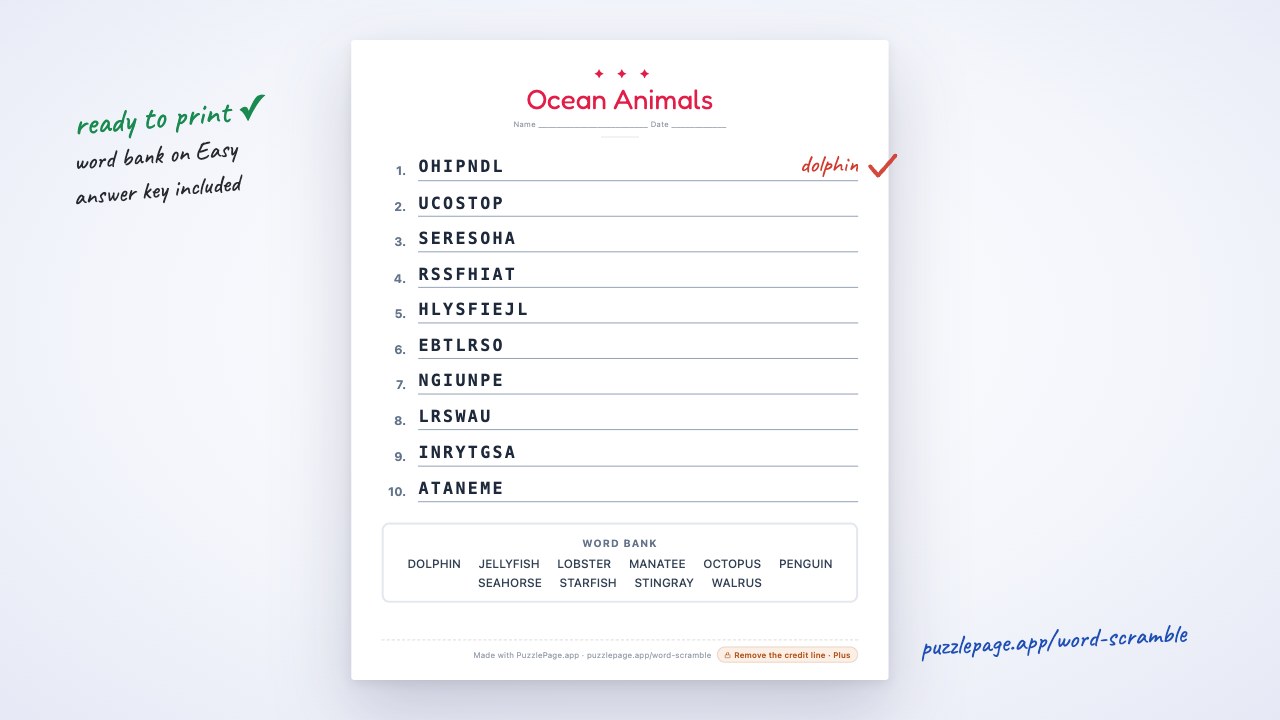
The Memory Lane Scramble at the top of this page is ready now. Play it on screen, switch to the Printable page tab, or download the PDF with its answer key for your next group.
📌 Key Takeaways
- A nostalgia word scramble uses everyday objects from the 1950s and 1960s, so every answer doubles as a memory prompt.
- Run it as a group: solve one word, then ask one question about it before moving on.
- Easy mode prints a word bank at the bottom of the page, which keeps the session relaxed for mixed abilities.
- The Alzheimer's Association recommends building activities on past interests and valuing the time together over the result.
 0:50
0:50What Are Nostalgia Games for Seniors?
Nostalgia games are simple puzzles and prompts built around objects, places and routines older adults remember from earlier decades. For most residents in senior living today, that means the 1950s and 1960s: soda fountains, drive-in movies, rotary phones and the family television set.
The puzzle is only the doorway. The real activity is the conversation that follows each solved word.
Activity professionals often call this reminiscence. The Alzheimer's Association's guidance on planning activities for people living with dementia suggests starting from what a person enjoyed in the past, keeping steps simple, and treating the shared time as the goal rather than a finished page.
That advice works well beyond memory care. Independent living groups enjoy a nostalgia session just as much, and they tend to argue cheerfully about which diner had the best milkshakes.
Free Word Scramble PDF — Memory Lane Scramble
Print-ready · answer key included · unsubscribe anytime
How Do You Run a Nostalgia Word Scramble Session?
Print one sheet per resident plus a large copy for the leader, solve the words one at a time as a group, and pause after each answer for a single memory question. A 15-word sheet fills a comfortable 45-minute slot.
- Open the free word scramble maker and type 12 to 15 era words, one per line.
- Choose Easy so the word bank prints at the bottom of the page.
- Title the sheet something warm, such as Memory Lane Scramble, and download the PDF.
- Print one copy per resident, plus the answer key page for yourself.
- Read the first scrambled word aloud and give the room a minute before offering the first letter.
- When someone solves it, ask one open question about the word, then move on.
Pro Tip
Write each scrambled word on a whiteboard in letters at least three inches tall. Residents who find the handout hard to read can follow along on the board, and nobody has to say so.
Keep the pace gentle. If a word sits unsolved for more than two minutes, give the first letter, then the last, and then simply tell the room and ask the question anyway.
The conversation is the part residents remember. A good rule is one question per word, with room for a second only if the stories are flowing.
Which 1950s and 1960s Words Work Best?
The best words name ordinary objects that most people handled every day, not famous events or celebrities. Everyday items spark personal stories, and nobody feels left out for not remembering a name.
| Word | What it was | Conversation starter |
|---|---|---|
| JUKEBOX | Coin-operated record player in diners | What song would you play first? |
| MILKSHAKE | Soda fountain treat | Which flavor did you always order? |
| ROTARY | Dial telephone | What was your family's phone number? |
| PERCOLATOR | Stovetop coffee pot | Who made the coffee in your house? |
| TRANSISTOR | Pocket radio | What did you listen to at night? |
| MILKMAN | Home delivery | What else was delivered to your door? |
| CARHOP | Drive-in restaurant server | Where did you go on a Friday night? |
| TYPEWRITER | Office and school machine | Did you learn to type? Where? |
Words with a strong sound or smell work especially well. PERCOLATOR brings back the bubbling noise and the kitchen, and that sensory detail is what gets quieter residents talking.
Avoid words tied to hardship, school discipline or anything a resident may find upsetting. You know your community best, so trust your judgment over any list.
What Questions Spark the Best Reminiscence Conversations?
Open questions about everyday routines work best: where, who and what questions, rather than yes-or-no or quiz-style questions. Ask about the person's own experience, never about facts they might be expected to recall correctly.
Home and family
Who did the cooking in your house? What was the first television you remember? What did your kitchen table look like?
Going out
Where did you go on a Saturday night? Did your town have a drive-in? What did a movie ticket cost?
School and work
What was your first job? How did you get to school? Which teacher do you still think about?
Music and radio
What song takes you straight back? Which radio program did the family gather for? Did you have a favorite record?
Neighborhood
What was the corner store called? Who delivered to your door? What games did children play in the street?
Keep a notebook handy. Residents often mention a song or a recipe you can bring back for a future session, and that follow-up shows them their stories were heard.
Pro Tip
Pair the scramble with a second, even gentler sheet: put the same era words into a large-letter word search for residents who prefer finding words to unscrambling them. Everyone works from the same list, so the conversation stays shared.
How Do You Adjust the Puzzle for Different Abilities?
Change three things: word length, whether the word bank prints, and how many words go on the page. The same era theme then works across independent living, assisted living and memory care.
| Group | Words per sheet | Word bank | Word length | Session length |
|---|---|---|---|---|
| Memory care | 8 to 10 | Yes (Easy) | 4 to 7 letters | 20 to 30 minutes |
| Assisted living | 12 to 15 | Yes (Easy) | 5 to 10 letters | 30 to 45 minutes |
| Independent living | 15 | No (Medium) | 6 to 10 letters | 30 to 45 minutes |
For low-vision residents, larger type matters more than fewer words. Enlarge the scramble on the copier, or hand those residents the same words as a word search: PuzzlePage's Bold & Easy large print option (part of Premium) covers word search, number search and sudoku, with oversized letters, thick lines and one puzzle per page.
Large print is in real demand. In PuzzlePage's KDP Book Studio, one of the two most-applied templates is the large-print word search for seniors, which says a lot about who is buying puzzle books as gifts.
If you want a full monthly packet, the Worksheet Builder puts a scramble, a word search and a sudoku on one printed page. Building and previewing are free; the PDF download is a paid feature.
How Do You Build a Fresh Memory Lane Sheet Each Month?
Pick one theme per session so the conversation has a thread: the kitchen, Saturday night, school days or the family car. Twelve to fifteen words per theme is plenty.
Scroll down to the maker on this page, which is already filled with this post's words, and swap in your own. You can have a fresh sheet printed before the afternoon session starts.
On quieter days, a residents' club can play the daily puzzles together on a big screen. It is the same shared-solving idea, with a new puzzle each morning.
Start publishing today
Build your puzzle book in the KDP Book Builder
Stop assembling puzzle pages by hand. Compose a complete book, watch the real printed pages as you build, and download an interior that is ready to upload to Amazon the same day.
- ✓Complete print-ready interiors, up to 120 puzzles, in one build
- ✓18 puzzle types, difficulty ramps, and every KDP trim size
- ✓Packed answer keys and continuous page numbering, done for you
- ✓A full commercial licence: sell every book you make
Save 10% on your first year
Use code PUBLISH10 on any annual Publisher plan. $149 $134.10 for the first year, a $14.90 saving. Applied automatically at checkout.
Cancel anytime. Every book you build is yours to keep and sell.
Frequently Asked Questions
What are good nostalgia games for seniors?
Good nostalgia games use everyday objects from the 1950s and 1960s, such as jukeboxes, rotary phones and milkshakes. Word scrambles, word searches and simple trivia all work, as long as each answer leads into a conversation.
How long should a reminiscence activity last?
Most groups do well with 30 to 45 minutes. Memory care groups often prefer 20 to 30 minutes with fewer words and a printed word bank.
Are word scrambles too hard for older adults?
Not when they are set up well. Choose Easy so the word bank prints on the page, use familiar words of four to ten letters, and offer the first letter when a word stalls.
Can I print these puzzles for my whole activity group?
Yes. Download the PDF once and print as many copies as your group needs, with the answer key on a separate page for the leader.
Live demo
Make your own word scramble right here
Swap in your own words (a spelling list, residents' names, a unit's vocabulary) and press Generate. The full maker adds answer keys, size options and PDF export.
More you can make here
One puzzle is the start. Here is the rest of the kit.
 New
NewWorksheet Builder
Put a word search, a cryptogram and a scramble on one page, or build a whole themed packet. Prints with answer keys.
Build a worksheet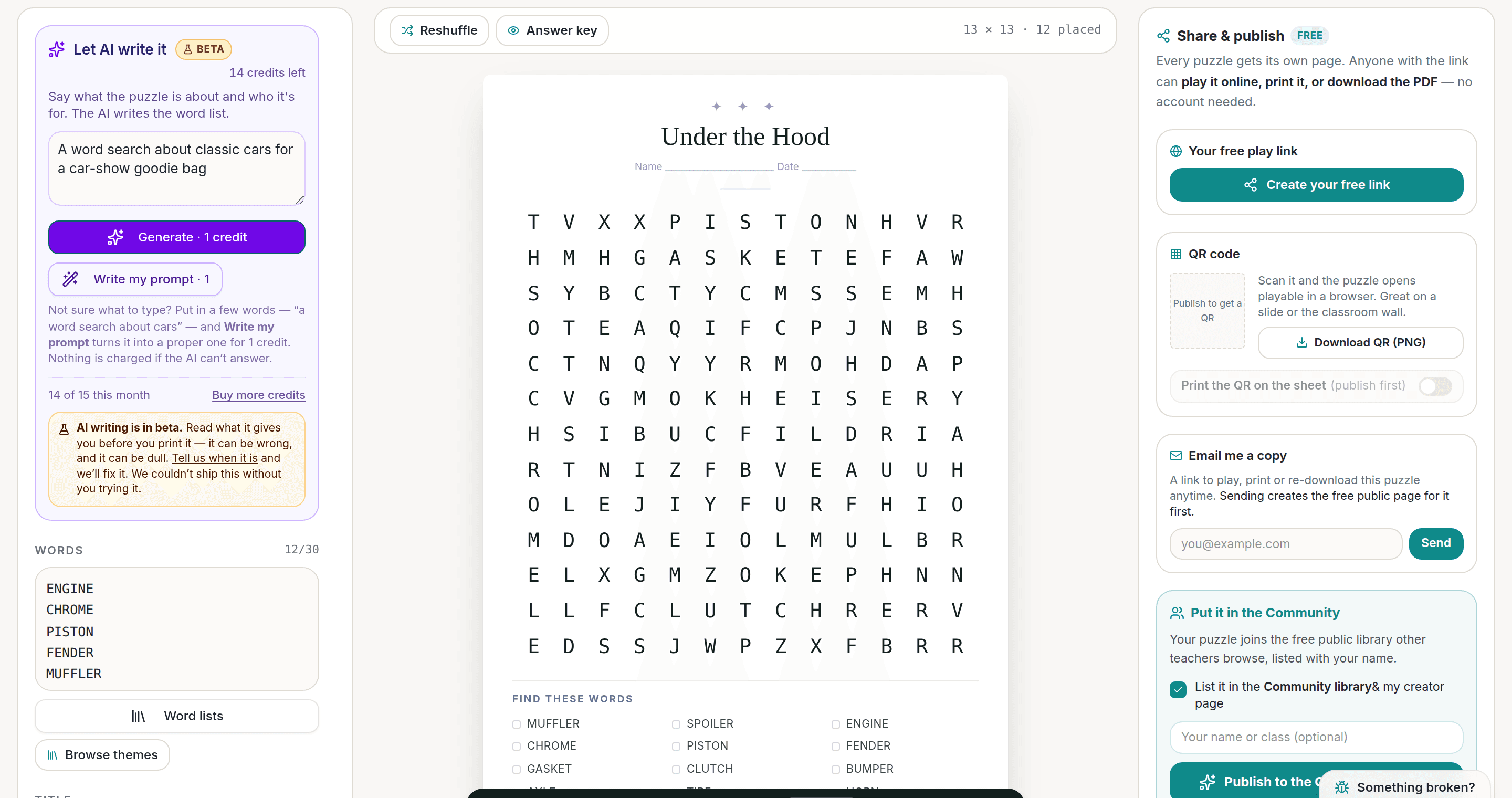
AI Puzzle Generator
Type a topic, get a themed word list and a finished puzzle. Premium also removes the footer credit and adds Word export.
Try the AI generator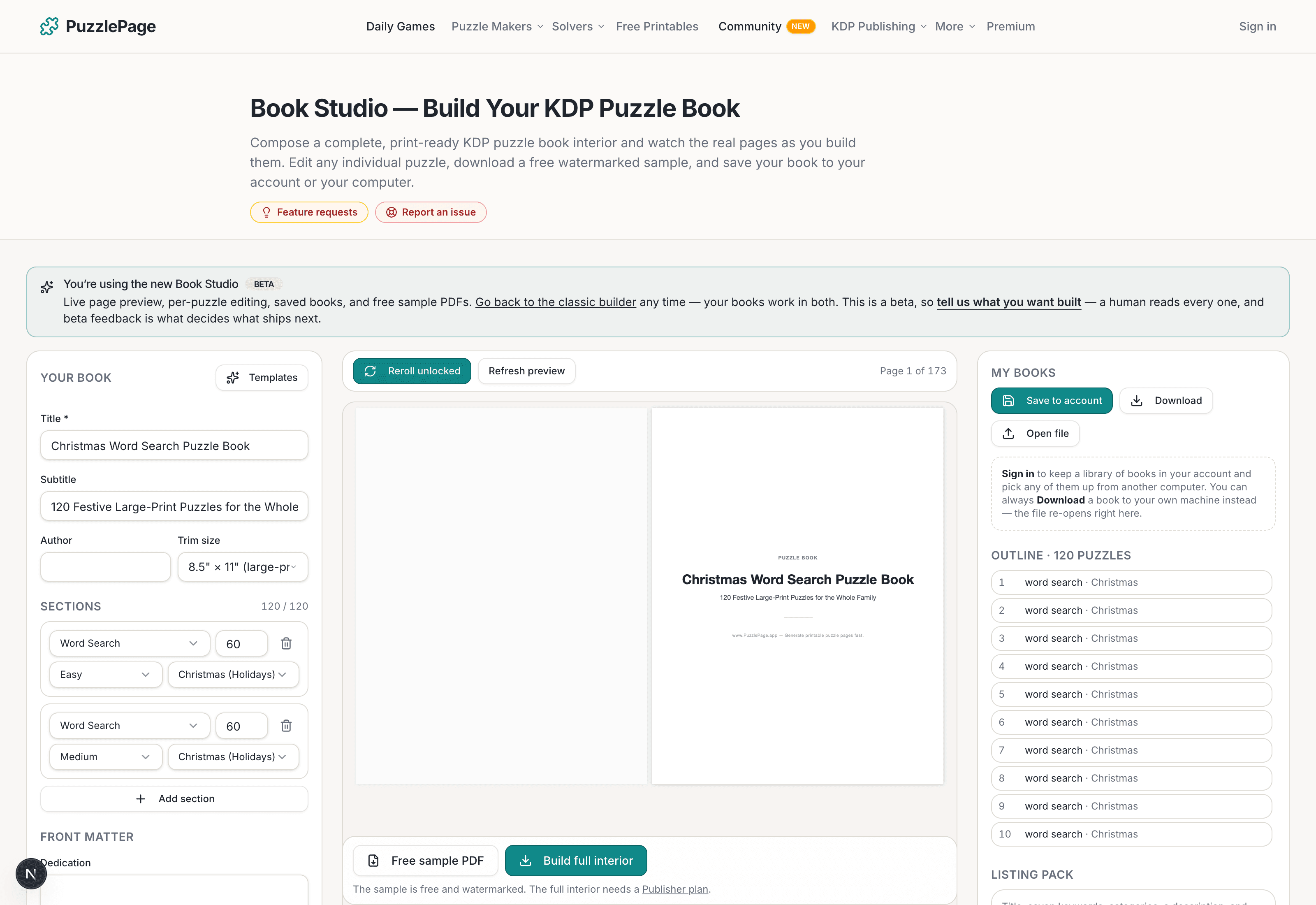
KDP Book Studio
Lay out a full puzzle book for Amazon KDP: templates, trim sizes, page checks and a cover designer.
Start a puzzle book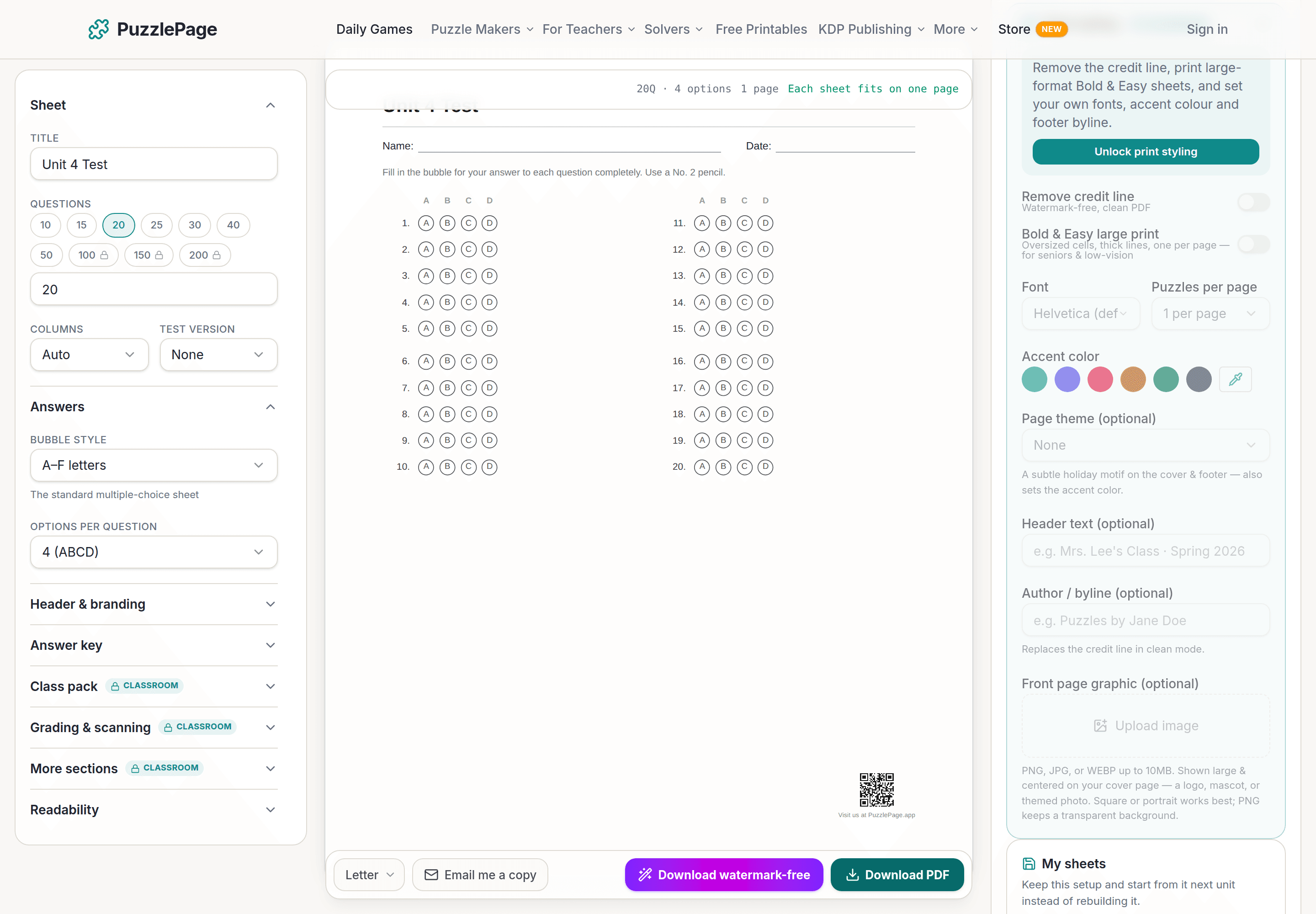
Bubble Sheet Studio
Answer sheets for any test length, with sections, versions, student ID grids and a matching answer key.
Make a bubble sheetPremium removes the footer credit, adds Word export and custom styling across every maker.
See plans →Free daily games
Need a two-minute break? Today's puzzles are live.
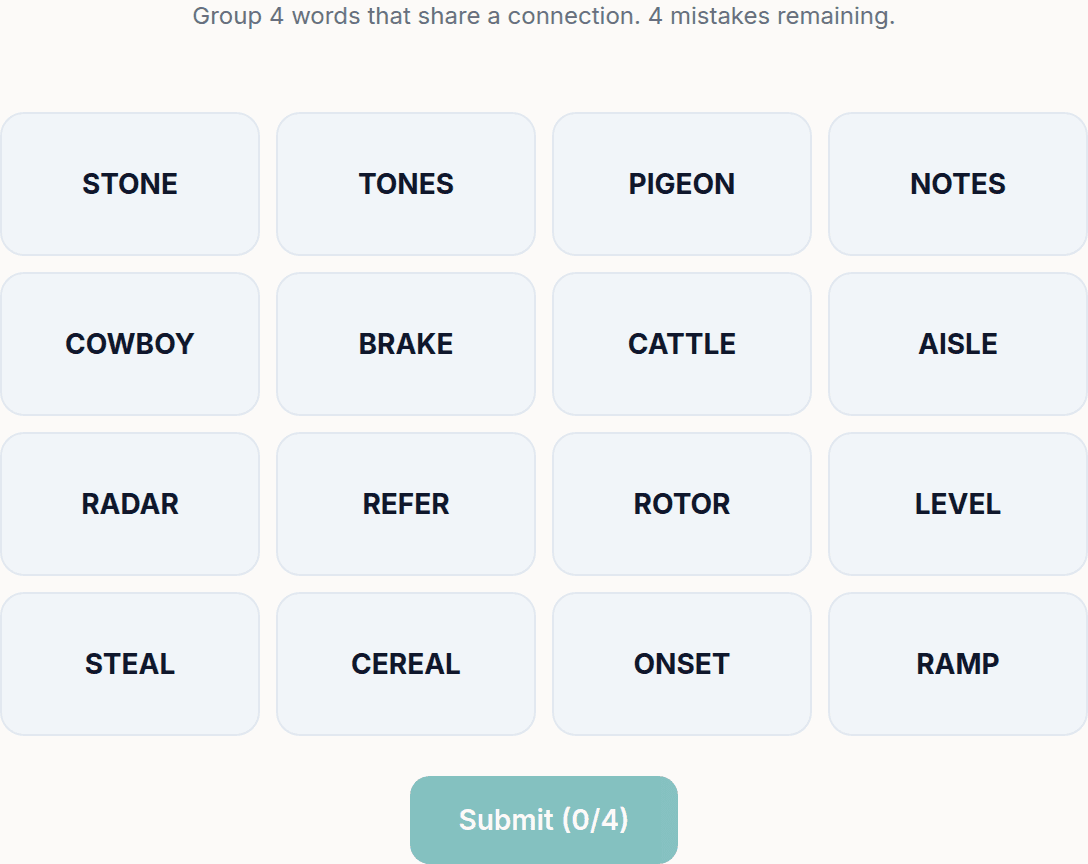
A new Sudoku and a new Connections board every day. No download, no account.
Keep reading
Take the puzzle with you
Free Word Scramble PDF — Memory Lane Scramble
Print-ready · answer key included · unsubscribe anytime
Enjoyed this? Share the puzzle on X
Like puzzles like this? Follow on Pinterest for a new one every day.