Indigenous Peoples' Day Activities: A Respectful Fill-In
Respectful Indigenous Peoples Day activities for October 12, 2026: a fill-in puzzle on Native foods and innovations, trusted sources and Native-authored books.

Word list
- CORN
- BEANS
- CACAO
- CANOE
- KAYAK
- NATION
- POTATO
- SQUASH
- TOMATO
- HAMMOCK
- HOMELAND
- LACROSSE
- LANGUAGE
- SNOWSHOE
- TOBOGGAN
- COMMUNITY
Native Foods and Innovations Fill-In
Foods, tools, games and community words from Indigenous peoples of the Americas
Word List
- 4 letters:
- CORN
- 5 letters:
- BEANS, CACAO, CANOE, KAYAK
- 6 letters:
- NATION, POTATO, SQUASH, TOMATO
- 7 letters:
- HAMMOCK
- 8 letters:
- HOMELAND, LACROSSE, LANGUAGE, SNOWSHOE, TOBOGGAN
- 9 letters:
- COMMUNITY
Free companion PDF
Native Foods and Innovations Fill-In
Foods, tools, games and community words from Indigenous peoples of the Americas. Grab the PDF now and we'll send 10 more printable puzzles, plus a heads-up when new generators or seasonal packs go live. Roughly two emails a month — unsubscribe anytime.
No payment · Letter-size · Answer key included
Prefer to play online? There's a new puzzle every day.
Free daily word games — play instantly. Come back tomorrow for a fresh one.
On this site: Create your own free word fill in puzzle·Browse 100+ free printables·Play today's puzzles
Somewhere in the shared drive there is a coloring page with a feathered headdress on it, and you already know you are not using it this year. Indigenous Peoples' Day falls on Monday, October 12, 2026, and you want an activity that is accurate, respectful and still fun for a room of eight-year-olds or thirteen-year-olds.
This guide offers a fill-in puzzle built from foods, tools and games that Native peoples developed and still use today, with the story behind each word. It also points to sources written with Native communities, so the facts you share hold up.
📌 Key Takeaways
- Indigenous Peoples' Day is observed by many states, cities and school districts on the second Monday of October: October 12 in 2026.
- Frame Native nations in the present tense: they are living communities with their own governments, languages and traditions.
- The puzzle's words each come with an origin students can look up, such as the Three Sisters or the Inuit kayak.
- Avoid costume and headdress crafts; choose books by Native authors and lessons created with Native communities.
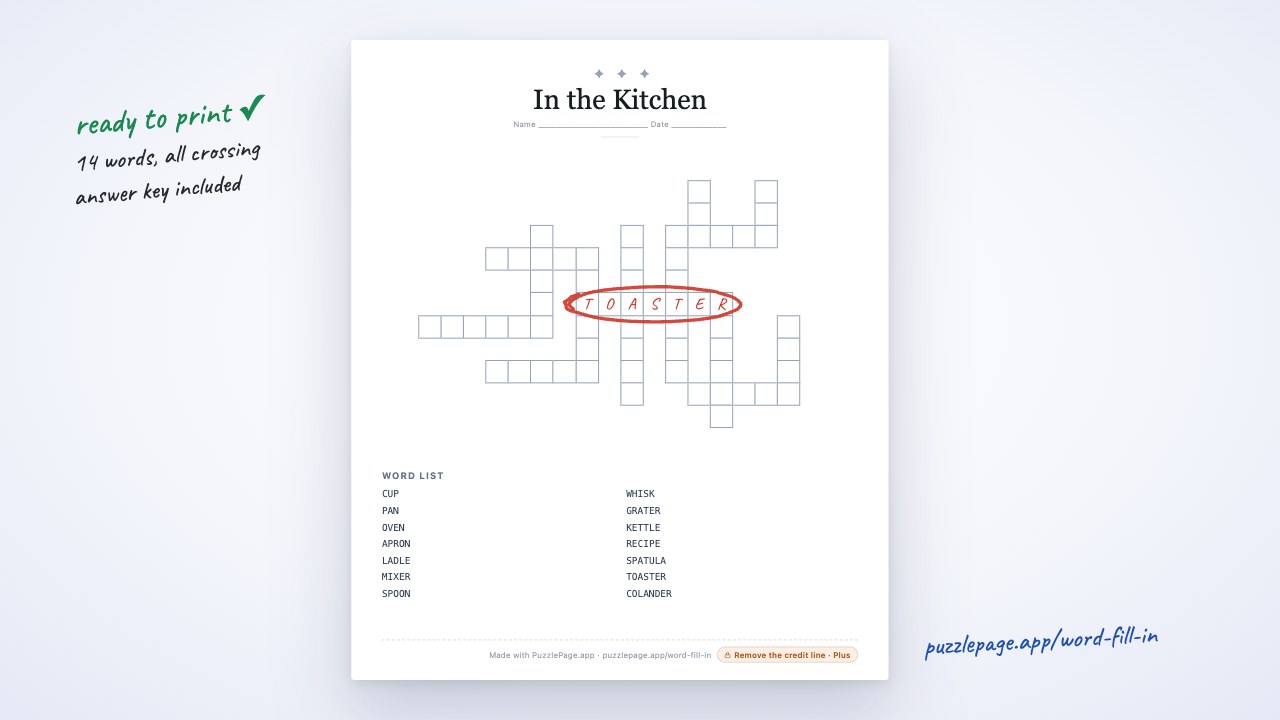 0:52
0:52What Are Good Indigenous Peoples Day Activities for the Classroom?
The best activities teach specific, accurate things about particular Native nations and connect them to students' daily lives. A puzzle of Native foods and innovations, a read-aloud by a Native author, and a lesson from a museum that works with tribal communities all fit that bill in one class period.
The Smithsonian's National Museum of the American Indian runs Native Knowledge 360°, a free K-12 program whose lessons are created with Native communities. It is the most reliable place to check a fact before you teach it.
There are more than 570 federally recognized tribal nations in the United States, each with its own history. Whenever you can, name the nation rather than saying "Native Americans" in general.
Free Word Fill-In PDF — Native Foods and Innovations Fill-In
Print-ready · answer key included · unsubscribe anytime
What Is in the Fill-In Puzzle?
The puzzle uses sixteen words in three groups: foods first cultivated by Indigenous peoples of the Americas, tools and games still used around the world, and words about nationhood and community. Students place each word in the grid by its length, like a crossword without clues.
Foods
CORN, BEANS, SQUASH, POTATO, TOMATO and CACAO. Each was domesticated by Indigenous farmers in the Americas thousands of years ago.
Tools and games
CANOE, KAYAK, SNOWSHOE, TOBOGGAN, HAMMOCK and LACROSSE, all still in everyday use.
Community
NATION, LANGUAGE, HOMELAND and COMMUNITY, the words that keep the focus on living peoples.
Try it at the top of this page in the Play it here tab, then print the same puzzle from the Printable page tab.
Pro Tip
Before students start, ask them to circle every word they used or ate this week. Many students find several, which makes the point about Native innovation better than any lecture.
Where Does Each Word Come From?
Every word in the puzzle has a real origin students can research. Use this table as an answer key for a follow-up discussion, or give each small group two words to report on.
| Word | Origin | Still around today |
|---|---|---|
| CORN, BEANS, SQUASH | The Three Sisters, grown together by the Haudenosaunee and many other nations; beans climb the corn and squash shades the soil | Community and school gardens plant them together |
| CORN | Domesticated from a wild grass in what is now southern Mexico | One of the most widely grown crops on Earth |
| POTATO | First cultivated in the Andes of South America | Grown on every inhabited continent |
| CACAO | Prized by Olmec, Maya and Mexica peoples in Mesoamerica | The source of all chocolate |
| KAYAK | Built by Inuit, Yupik and Unangan peoples of the Arctic; the word comes from the Inuit qajaq | A popular boat worldwide |
| TOBOGGAN | A Mi'kmaq word that came into English through Canadian French | Winter sledding hills everywhere |
| HAMMOCK | From the Taíno word hamaca, in the Caribbean | Backyards and camping trips |
| LACROSSE | Played for centuries by the Haudenosaunee and other nations | Played in schools and colleges across North America |
| CANOE | Birchbark canoes of the Anishinaabe and many northern nations | Still built and paddled today |
The community words need no table. Ask students what makes a group a nation: a government, a homeland, a language and a shared history. Many tribal nations run language programs so children can learn the language of their grandparents.
How Do You Teach Indigenous Peoples' Day Respectfully?
Teach about specific nations, in the present tense, using sources created with Native people. Skip activities that ask students to dress up or act out Native identity, since those turn living cultures into costumes.
- Name the nation: "the Cherokee Nation" or "the Diné (Navajo) people" tells students far more than a general term.
- Use the present tense, and include modern life: tribal governments, businesses, athletes, scientists and artists.
- Replace headdress crafts with a Three Sisters seed-planting or a map of the nations nearest your school.
- If a local tribal nation has an education or cultural office, ask whether they offer classroom resources or visits.
Books written by Native authors do a lot of the work. Three picture books that suit grades K to 5 are We Are Water Protectors by Carole Lindstrom (Anishinaabe and Métis), Fry Bread by Kevin Noble Maillard (Seminole Nation), and We Are Grateful: Otsaliheliga by Traci Sorell (Cherokee Nation).
Pro Tip
Read the book first, then hand out the puzzle. Students will recognize words from the story in the grid, and the puzzle becomes a way to revisit what they just heard.
How Do You Adapt the Puzzle for Different Grades?
One word list works from third grade through middle school. Change what students do after the puzzle, not the puzzle itself.
| Grade | Puzzle | Follow-up |
|---|---|---|
| 3 to 4 | Solve in pairs with the word list read aloud | Circle the words you used this week |
| 5 to 6 | Solve alone | Pick two words and find their origin in a trusted source |
| 7 to 8 | Solve alone, timed | Write a paragraph on one innovation and the nation that developed it |
For a second sheet, the same words work as a word search for younger students or a word scramble for spelling practice. If you want both on one page, the Worksheet Builder can combine them on one page (free to build and preview; the combined PDF needs a Day Pass or a paid plan).
To build your own version around the nations near your school, use the maker at the bottom of this page or the free word fill-in generator. Type your list, preview the grid, and download it with an answer key.
Start publishing today
Build your puzzle book in the KDP Book Builder
Stop assembling puzzle pages by hand. Compose a complete book, watch the real printed pages as you build, and download an interior that is ready to upload to Amazon the same day.
- ✓Complete print-ready interiors, up to 120 puzzles, in one build
- ✓18 puzzle types, difficulty ramps, and every KDP trim size
- ✓Packed answer keys and continuous page numbering, done for you
- ✓A full commercial licence: sell every book you make
Save 10% on your first year
Use code PUBLISH10 on any annual Publisher plan. $149 $134.10 for the first year, a $14.90 saving. Applied automatically at checkout.
Cancel anytime. Every book you build is yours to keep and sell.
Frequently Asked Questions
When is Indigenous Peoples' Day in 2026?
Indigenous Peoples' Day falls on Monday, October 12, 2026. Many states, cities and school districts observe it on the second Monday of October.
What are good Indigenous Peoples' Day activities for kids?
Read a picture book by a Native author, solve a puzzle about foods and innovations like corn, kayaks and lacrosse, and plant or draw the Three Sisters. Each activity teaches something specific and accurate about living Native nations.
What words should be in an Indigenous Peoples' Day puzzle?
Choose words with clear, verifiable origins, such as CORN, POTATO, CACAO, KAYAK, TOBOGGAN and LACROSSE, plus words like NATION and LANGUAGE. Pair each word with its origin so students learn where it comes from.
Where can teachers find accurate Indigenous Peoples' Day lessons?
The Smithsonian's National Museum of the American Indian offers free K-12 lessons through Native Knowledge 360°, created with Native communities. Local tribal education or cultural offices are another excellent source.
Live demo
Make your own word fill-in right here
Swap in your own words (a spelling list, residents' names, a unit's vocabulary) and press Generate. The full maker adds answer keys, size options and PDF export.
More you can make here
One puzzle is the start. Here is the rest of the kit.
 New
NewWorksheet Builder
Put a word search, a cryptogram and a scramble on one page, or build a whole themed packet. Prints with answer keys.
Build a worksheet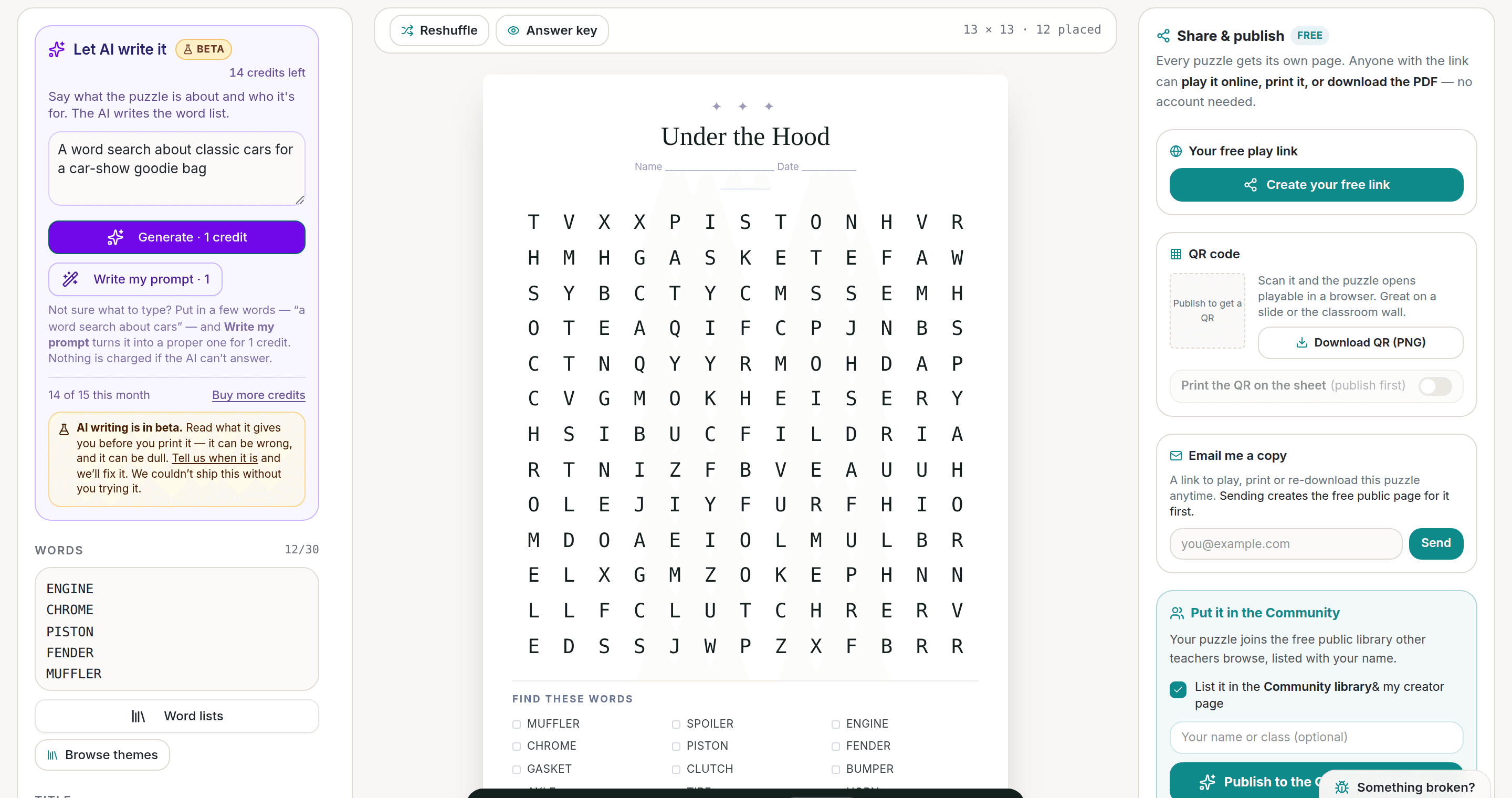
AI Puzzle Generator
Type a topic, get a themed word list and a finished puzzle. Premium also removes the footer credit and adds Word export.
Try the AI generator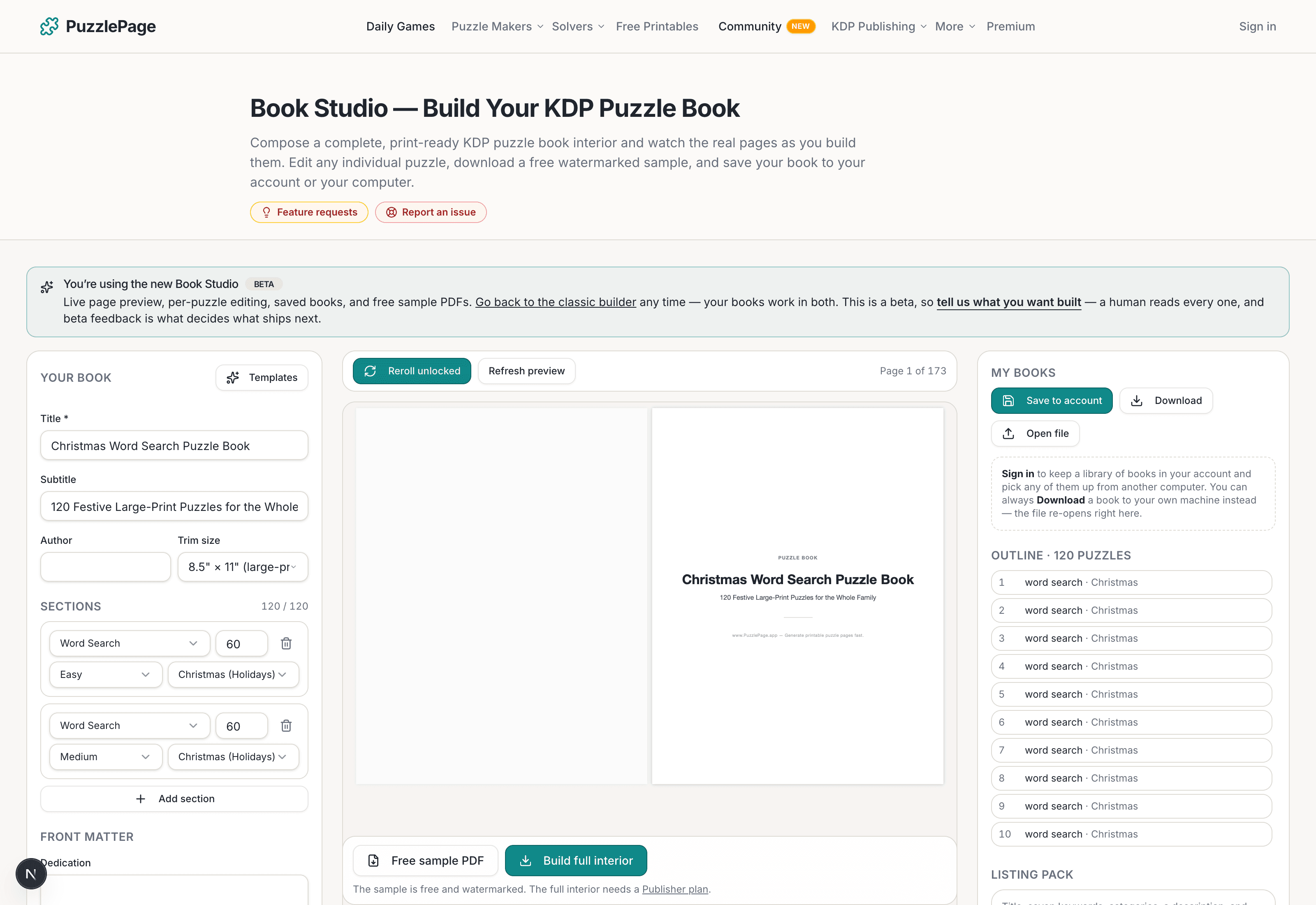
KDP Book Studio
Lay out a full puzzle book for Amazon KDP: templates, trim sizes, page checks and a cover designer.
Start a puzzle book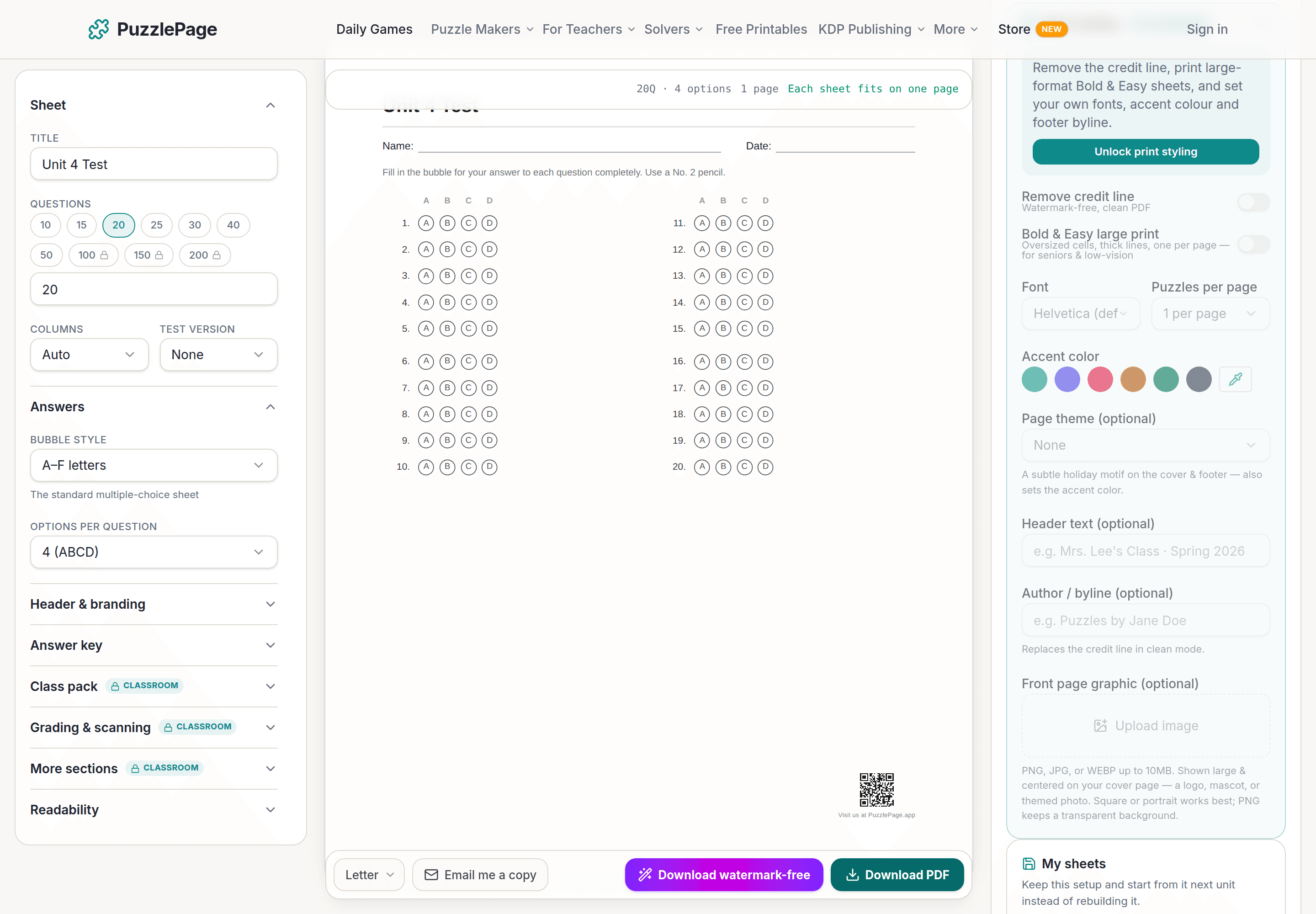
Bubble Sheet Studio
Answer sheets for any test length, with sections, versions, student ID grids and a matching answer key.
Make a bubble sheetPremium removes the footer credit, adds Word export and custom styling across every maker.
See plans →Free daily games
Need a two-minute break? Today's puzzles are live.
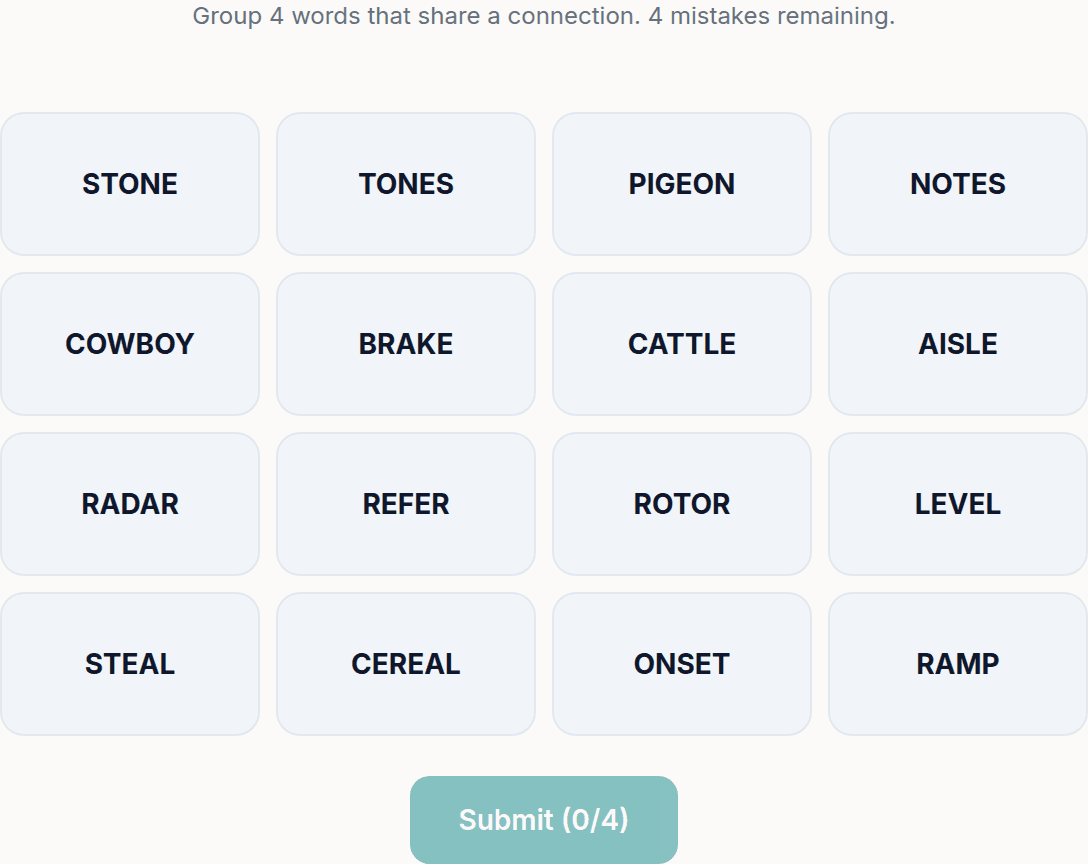
A new Sudoku and a new Connections board every day. No download, no account.
Keep reading
Take the puzzle with you
Free Word Fill-In PDF — Native Foods and Innovations Fill-In
Print-ready · answer key included · unsubscribe anytime
Enjoyed this? Share the puzzle on X
Like puzzles like this? Follow on Pinterest for a new one every day.