Cryptogram vs Cryptoquote vs Cryptoquip: How They Differ
Cryptogram vs cryptoquote vs cryptoquip, explained with a comparison table, how each puzzle is built, and free printable practice sheets you can play here.

Hints
Cryptogram, Cryptoquote and Cryptoquip Practice
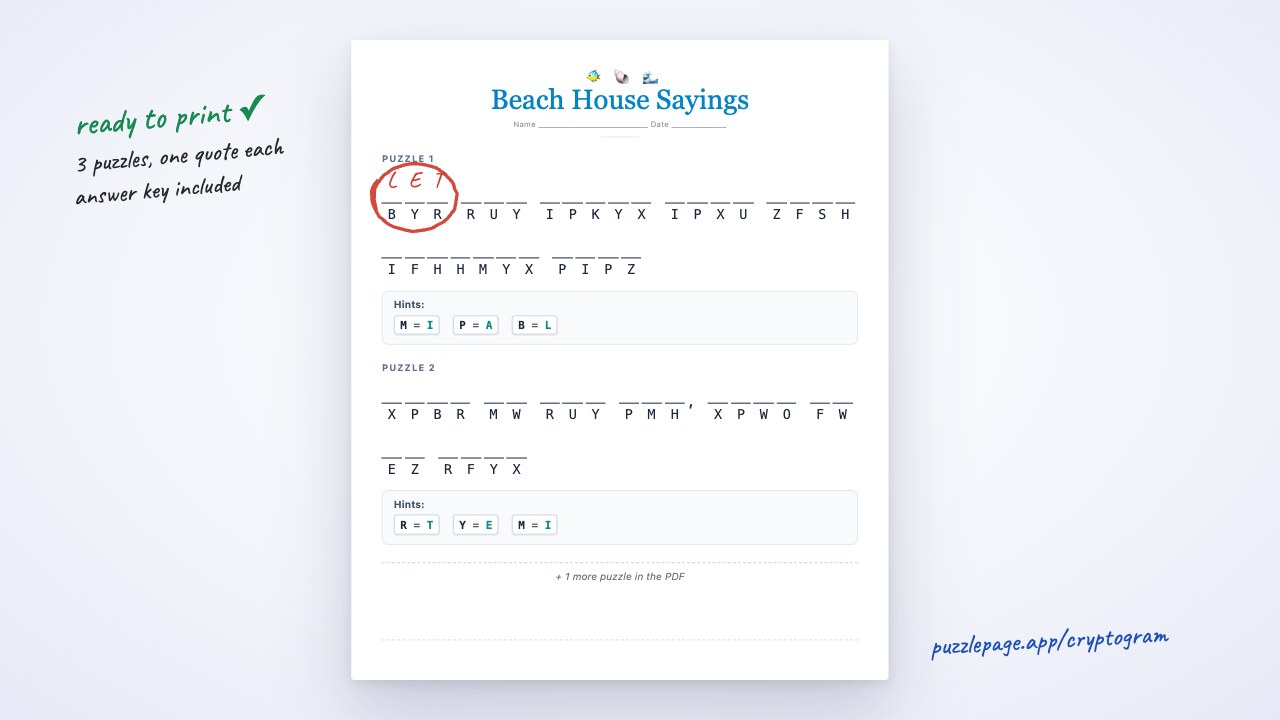
Practice lines in three styles: quotations with authors, puns, and a plain sentence
Phrase 1
Hint: C = I
Phrase 2
Hint: J = H
+ 3 more phrases in the PDF
Free companion PDF
Cryptogram, Cryptoquote and Cryptoquip Practice
Practice lines in three styles: quotations with authors, puns, and a plain sentence. Grab the PDF now and we'll send 10 more printable puzzles, plus a heads-up when new generators or seasonal packs go live. Roughly two emails a month — unsubscribe anytime.
No payment · Letter-size · Answer key included
Prefer to play online? There's a new puzzle every day.
Free daily word games — play instantly. Come back tomorrow for a fresh one.
On this site: Create your own free cryptogram puzzle·Browse 100+ free printables·Play today's puzzles
You finished the newspaper puzzle page, went looking for more, and found three names for what looks like the same thing. Some sites call them cryptograms, the paper calls one a Cryptoquote, and the puzzle beside it is a Cryptoquip with a clue printed underneath.
They are close cousins. This guide gives you one clear definition for each, a comparison table, how each one is built, and practice sheets you can play at the top of this page and print.
📌 Key Takeaways
- Cryptogram is the umbrella term for any letter-substitution puzzle.
- Cryptoquote and Cryptoquip are names of syndicated newspaper features; the first hides a quotation, the second a pun with a clue letter.
- Puzzle clubs use their own names: an Aristocrat keeps word spaces, a Patristocrat removes them.
- The difference in difficulty comes from clues and text type, not from the cipher, which works identically in all three.
 0:58
0:58What Is the Difference Between a Cryptogram and a Cryptoquote?
Every cryptoquote is a cryptogram, but not every cryptogram is a cryptoquote. A cryptogram can hide any sentence, while a cryptoquote always hides a quotation, usually followed by the speaker's name, which gives solvers an extra foothold when they recognize the author.
Cryptoquote and Cryptoquip are the names of daily newspaper features distributed by King Features Syndicate, so they are brand names more than general terms. When people say "cryptoquote" casually, they usually mean any quotation cryptogram.
| Name | Hidden text | Clue given | Word spaces | Where you see it |
|---|---|---|---|---|
| Cryptogram | Any sentence or phrase | Sometimes | Usually kept | Puzzle books, classrooms, apps |
| Cryptoquote | A quotation plus its author | No | Kept | Syndicated newspaper feature |
| Cryptoquip | A pun or joke | One letter, printed below | Kept | Syndicated newspaper feature |
| Aristocrat | Any English text | No | Kept | Puzzle club journals |
| Patristocrat | Any English text | No | Removed, grouped in fives | Puzzle club journals |
The last two names come from the American Cryptogram Association, a hobby group whose journal has run cipher puzzles for decades. Its members sort simple substitution puzzles by whether the word breaks survive, which is the single biggest factor in how hard one feels.
Free Cryptogram PDF — Cryptogram, Cryptoquote and Cryptoquip Practice
Print-ready · answer key included · unsubscribe anytime
What Is a Cryptoquip?
A cryptoquip is a substitution cipher that hides a pun or silly question-and-answer joke, with one letter revealed underneath, such as "G equals R." That clue changes the opening completely: instead of hunting for a foothold, you are handed one.
The pun helps too. Once you decode half the setup, the punchline tends to suggest itself, which makes the second half faster than a quotation of the same length.
Pro Tip
Solve a cryptoquip from the punchline backward once you have a few letters. A joke's final word is often a common word with a twist, and guessing it can crack four or five letters at once.
How Is Each Puzzle Built?
All three are built with the same recipe: pick a text, scramble the alphabet so every letter stands in for a different one, and apply that key to every letter. Only the text and the clues change between them.
- Choose the text: any sentence for a cryptogram, a quotation and author for a cryptoquote, a pun for a cryptoquip.
- Build a cipher key that maps each letter to a different letter, making sure no letter stands for itself.
- Replace every letter in the text with its code letter, keeping spaces and punctuation in place.
- Decide on clues: none, one letter as in a cryptoquip, or a few letters for beginners.
- Print the coded text with blanks above each letter, and keep the answer key separate.
The free PuzzlePage cryptogram maker follows exactly this process. It builds a key where no letter maps to itself, keeps word spaces (Aristocrat style), and lets you pick Easy (3 letters revealed), Medium (1 letter revealed, like a cryptoquip) or Hard (none revealed).
Which Type Is Easiest for Beginners?
Cryptoquips are usually the gentlest start because of the clue letter, followed by cryptoquotes, where a recognizable author helps. Plain cryptograms with no clue and Patristocrats with no word spaces are the hardest.
| Puzzle style | What helps you | Suggested maker setting |
|---|---|---|
| Cryptoquip style | One free letter, a pun that guesses well | Medium (1 letter revealed) |
| Cryptoquote style | The author's name, familiar phrasing | Easy or Medium |
| Plain cryptogram | Word lengths and punctuation only | Hard (no letters revealed) |
| Patristocrat | Letter frequency alone | Not supported; the maker keeps spaces |
The companion sheet at the top of this page mixes the styles: two public-domain quotations with their authors, two puns, and one plain sentence. Every message on the sheet shares one cipher key, so each line you crack gives you letters for the next.
Pro Tip
Start with the shortest line on a shared-key sheet. Short messages have fewer possible readings, and every letter you confirm there carries over to the longer lines.
How Do You Make Your Own Cryptoquote or Cryptoquip?
Make one of each: a quotation with its author for the cryptoquote, and a pun you write yourself for the cryptoquip. Pick the quotation from a work published before 1931 so it is in the public domain in the US.
- Open the cryptogram maker, or use the live maker at the bottom of this page.
- Type a quotation and author on one line, and your pun on the next.
- Choose Medium for a cryptoquip feel, or Easy for younger solvers.
- Download the PDF; the answer key prints on its own page.
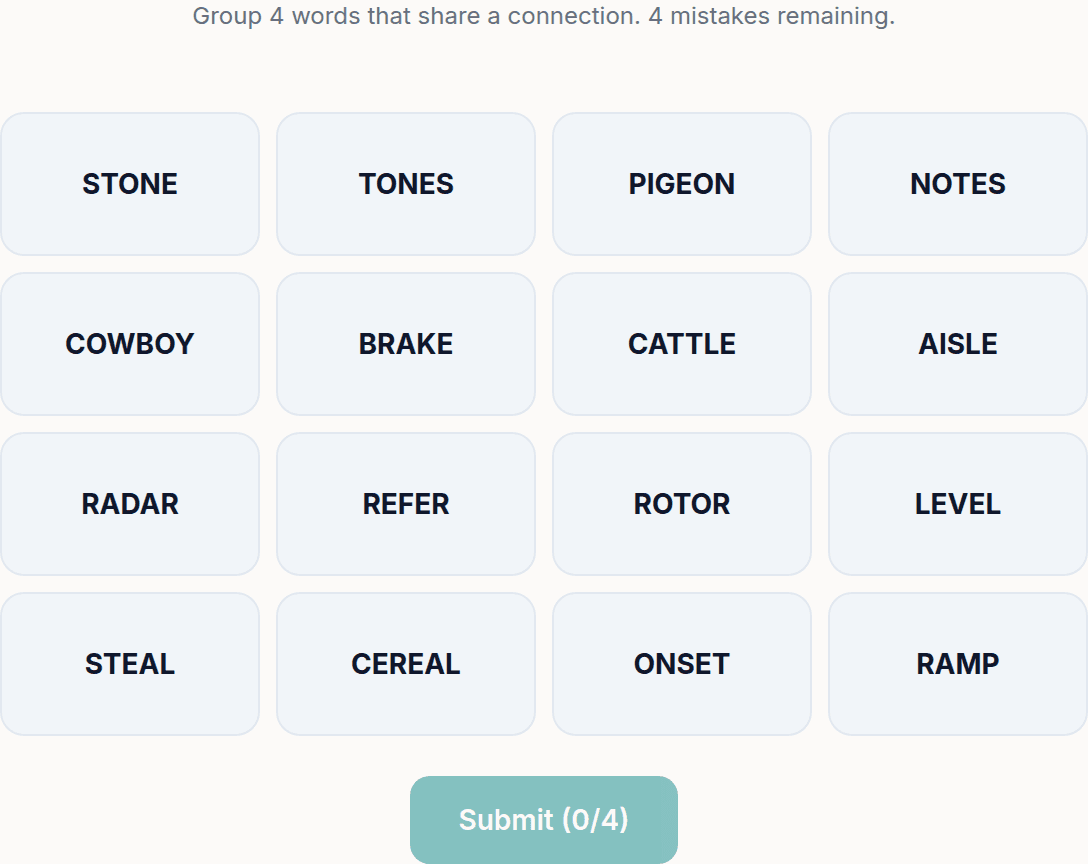
If you like word puzzles with a daily rhythm, the free Connections game and daily Sudoku further down this page scratch the same itch. For a gentler warm-up, a word scramble practices the same pattern-spotting with no cipher at all.
Start publishing today
Build your puzzle book in the KDP Book Builder
Stop assembling puzzle pages by hand. Compose a complete book, watch the real printed pages as you build, and download an interior that is ready to upload to Amazon the same day.
- ✓Complete print-ready interiors, up to 120 puzzles, in one build
- ✓18 puzzle types, difficulty ramps, and every KDP trim size
- ✓Packed answer keys and continuous page numbering, done for you
- ✓A full commercial licence: sell every book you make
Save 10% on your first year
Use code PUBLISH10 on any annual Publisher plan. $149 $134.10 for the first year, a $14.90 saving. Applied automatically at checkout.
Cancel anytime. Every book you build is yours to keep and sell.
Frequently Asked Questions
Is a cryptoquote the same as a cryptogram?
A cryptoquote is one kind of cryptogram. Every cryptogram hides text with a letter-substitution cipher, and a cryptoquote specifically hides a quotation, usually followed by the name of the person who said it.
What is the difference between a cryptoquote and a cryptoquip?
A cryptoquote hides a quotation and gives no clue letters. A cryptoquip hides a pun or joke and prints one decoded letter underneath to help you start.
Are cryptograms, cryptoquotes and cryptoquips solved the same way?
Yes. All three use a simple substitution cipher, so the same strategies work: look for one-letter words, common short words like THE and AND, doubled letters and apostrophes.
Can I make my own cryptoquote puzzle?
Yes. Type any quotation into the free PuzzlePage cryptogram maker, choose how many letters to reveal, and download a printable PDF with a separate answer key page.
Live demo
Make your own cryptogram right here
Swap in your own words (a spelling list, residents' names, a unit's vocabulary) and press Generate. The full maker adds answer keys, size options and PDF export.
More you can make here
One puzzle is the start. Here is the rest of the kit.
 New
NewWorksheet Builder
Put a word search, a cryptogram and a scramble on one page, or build a whole themed packet. Prints with answer keys.
Build a worksheet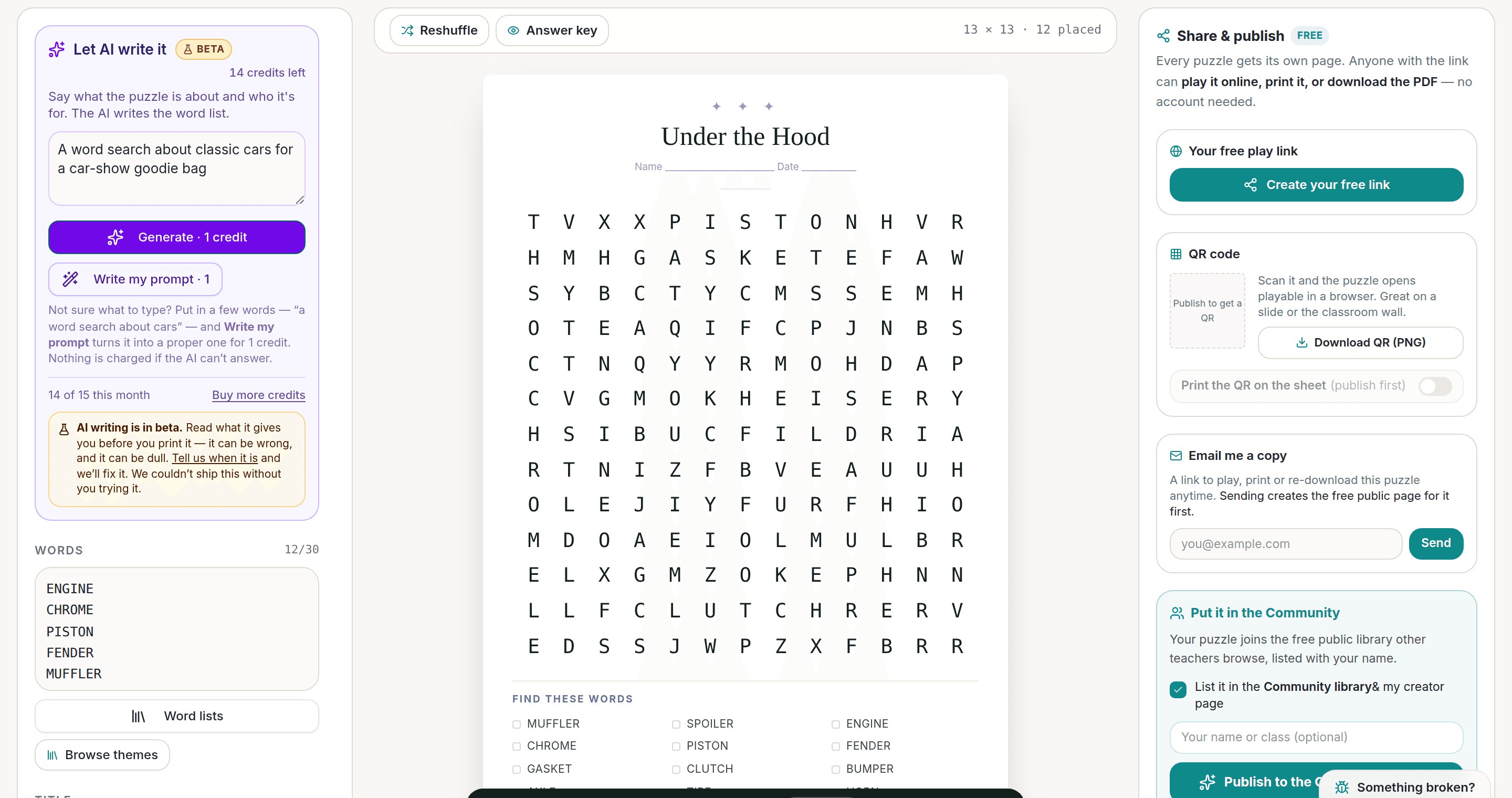
AI Puzzle Generator
Type a topic, get a themed word list and a finished puzzle. Premium also removes the footer credit and adds Word export.
Try the AI generator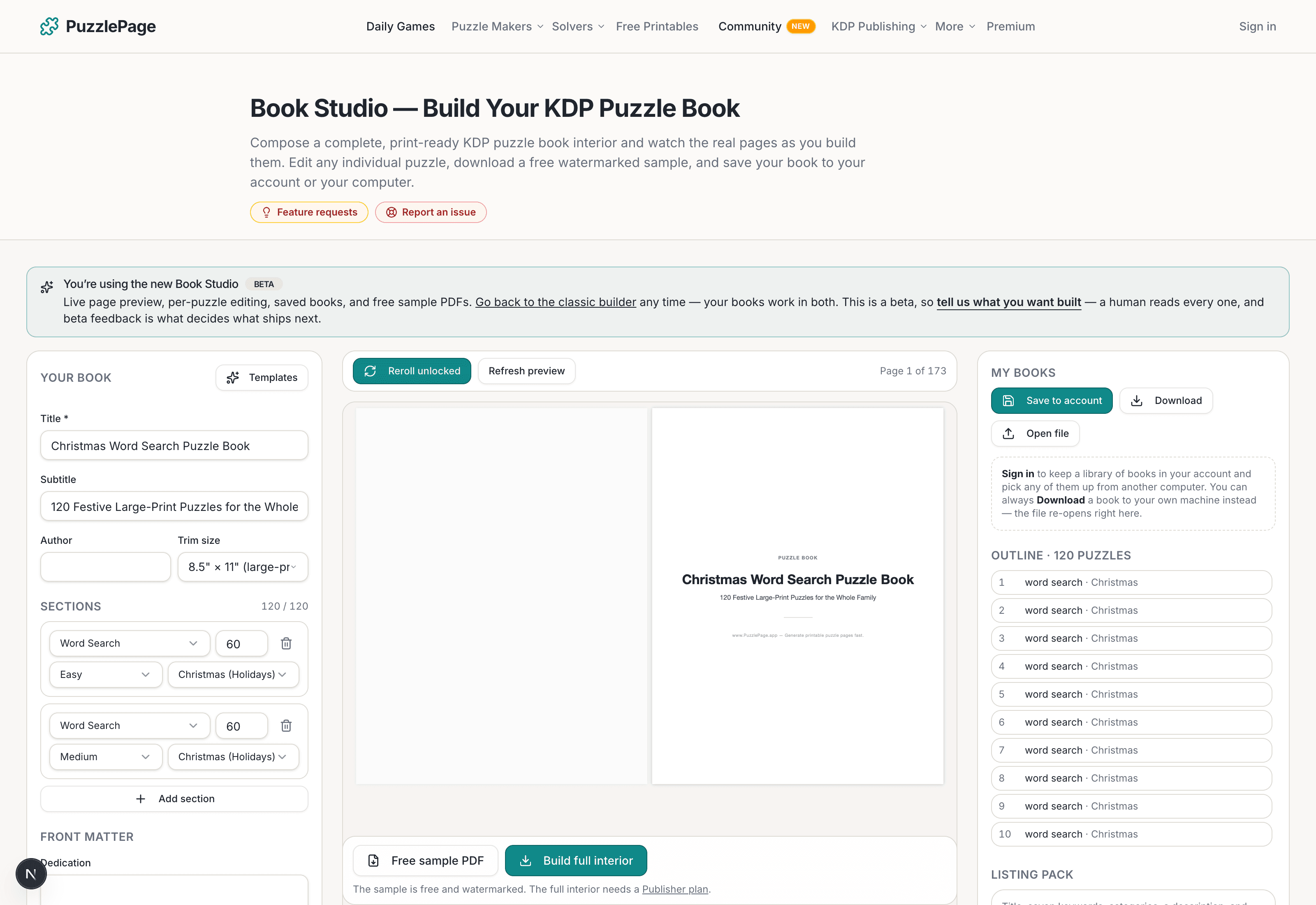
KDP Book Studio
Lay out a full puzzle book for Amazon KDP: templates, trim sizes, page checks and a cover designer.
Start a puzzle book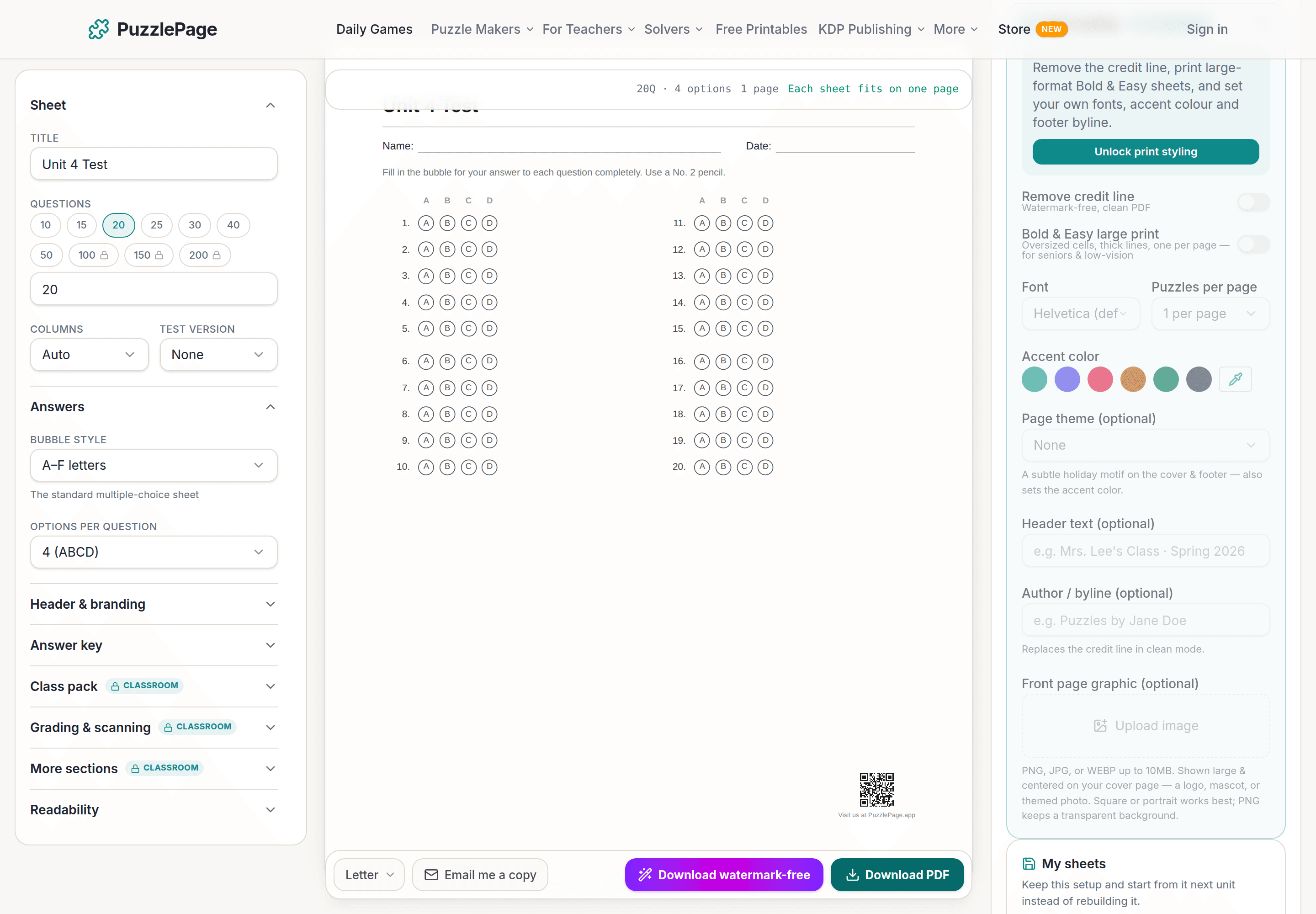
Bubble Sheet Studio
Answer sheets for any test length, with sections, versions, student ID grids and a matching answer key.
Make a bubble sheetPremium removes the footer credit, adds Word export and custom styling across every maker.
See plans →Free daily games
Need a two-minute break? Today's puzzles are live.
A new Sudoku and a new Connections board every day. No download, no account.
Keep reading
Take the puzzle with you
Free Cryptogram PDF — Cryptogram, Cryptoquote and Cryptoquip Practice
Print-ready · answer key included · unsubscribe anytime
Enjoyed this? Share the puzzle on X
Like puzzles like this? Follow on Pinterest for a new one every day.