Play Sudoku Online Free: History, Rules & Strategy
Learn how to play Sudoku with beginner-friendly rules, champion strategy tips, its surprising history, and a free online board. Solve a puzzle in minutes.
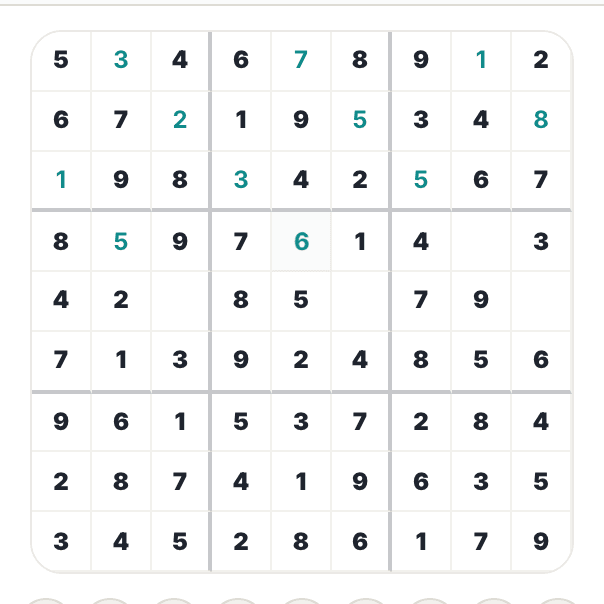
On this site: Play Sudoku Online Free free·Browse 100+ free printables·Play today's puzzles
Nine rows, nine columns, nine little boxes, and a single rule that has hooked hundreds of millions of people: every digit from 1 to 9, exactly once, in every line and every box. No math required, no language barrier, just pure logic. Few puzzles in history have spread as fast or stuck as hard as Sudoku.
📌 Key Takeaways
- Sudoku asks you to fill a 9×9 grid so each row, column, and 3×3 box contains the digits 1–9 with no repeats.
- It needs zero arithmetic, only logical deduction — a good puzzle is always solvable without guessing.
- Designed by American Howard Garns in 1979, refined in Japan by Maki Kaji, and made a global craze in 2004.
- Beginners win by scanning for forced cells; experts use disciplined pencil-marks instead of guessing.
- You can play Sudoku free online right now — no app, no download.
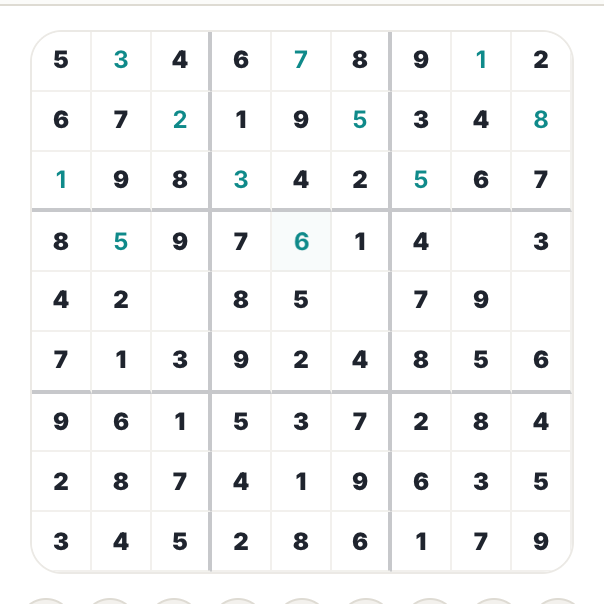
The history of Sudoku
The puzzle feels Japanese, but its modern form was almost certainly born in Indiana. Most evidence points to Howard Garns, a 74-year-old retired architect and freelance puzzle constructor from Connersville, who designed it anonymously. It was first published in 1979 by Dell Magazines under the name “Number Place.” Garns died in 1989, years before his creation conquered the world (source).
The puzzle crossed the Pacific thanks to Maki Kaji, president of the Nikoli puzzle company, who introduced it in the magazine Monthly Nikolist in April 1984. He called it “Suji wa dokushin ni kagiru” — the digits must be single — later shortened to “Sudoku,” meaning single number. Kaji refined the format, insisting on symmetrical clue placement and a limited set of givens, and is now affectionately known as the “Godfather of Sudoku” (source).
The worldwide craze came two decades later. Hong Kong judge Wayne Gould wrote a computer program that could generate unique puzzles on demand; his Sudoku ran in The Conway Daily Sun in New Hampshire in September 2004, then in The Times of London that November, and the obsession went global almost overnight. The deeper roots run further still — to the Latin squares studied by 18th-century mathematician Leonhard Euler (source).
Like this? We send 10 of these every month.
Free printable puzzles, answer keys included — same quality as the ones in this post.
One email. Unsubscribe anytime.
How to play Sudoku
The rules fit in one breath, and you can start a fresh grid on our free Sudoku board in seconds.
- Understand the grid. The board is a 9×9 square divided into nine 3×3 boxes. Some cells already hold numbers (the “givens”).
- Learn the one rule. Every row, every column, and every 3×3 box must contain each digit from 1 to 9 exactly once — no repeats anywhere.
- Scan for forced cells. Pick a digit and look across rows, columns, and boxes. If only one empty cell can legally hold it, place it.
- Work box by box. Find the box with the most givens and ask which numbers are still missing, then find where each can go.
- Use pencil marks. In tougher spots, jot the small list of candidate digits a cell could hold, then eliminate as new numbers appear.
- Never guess. A proper Sudoku has one solution reachable by logic alone. If you’re tempted to guess, you’ve missed a deduction — keep scanning.
- Finish and check. The puzzle is solved when all 81 cells are filled and no digit repeats in any row, column, or box.
What is the easiest way to start a Sudoku?
The easiest start is to scan one digit at a time across the whole grid and place it wherever only a single cell remains legal — this finds “forced” numbers without any guessing.
Strategy & tips
Once forced cells dry up, structured technique takes over. These tactics turn a stuck grid back into a flowing one:
- Crosshatching: For a single box, look at the rows and columns slicing through it to eliminate where a digit cannot go, narrowing it to one cell.
- Naked singles: If a cell’s candidate list shrinks to one number, place it immediately.
- Hidden singles: If a digit can only fit one cell within a row, column, or box — even if that cell has other candidates — it belongs there.
- Pairs and pointing: When two cells in a unit share the same two candidates, those digits are locked to that pair and can be erased elsewhere.
- Warm up first: Start on easy grids to groove the patterns before attacking a hard one cold.
Three-time World Sudoku Champion Thomas Snyder, known as “Dr. Sudoku,” popularized disciplined pencil-marking: rather than scribbling every possibility, write a candidate only when a digit is constrained to exactly two cells in a row, column, or box, and build the solution purely from logic. He advises mastering one technique at a time and warming up on easy puzzles before tackling hard ones (source). That logic-only ethos echoes Maki Kaji himself, who insisted a well-made Sudoku must have a single unique solution and aesthetic symmetry, and should never require guessing (source).
If you enjoy that deductive feel, you’ll likely love our other logic grids — try X-Sudoku for a diagonal twist, the arithmetic-flavored Killer Sudoku, or the picture-forming logic of Nonograms.
Do you need to be good at math to play Sudoku?
No — Sudoku requires no arithmetic at all; the digits are just symbols, and the entire puzzle is solved through logical elimination, so you could swap in nine letters or colors and nothing would change.
Watch a video tutorial
Seeing the scanning technique in motion makes it click. A great primer is “Sudoku For Beginners” by Cracking The Cryptic, the most respected Sudoku channel on YouTube:
Want it even faster? Two more solid walkthroughs are “How To Play Sudoku for Beginners” and “Learn Sudoku in Under 5 Minutes.”
Ready to solve?
The best way to learn Sudoku is to fill in that first forced cell yourself. Jump into a fresh grid and play Sudoku free online — no download, nothing to install, just you and the logic. Craving more variety afterward? Test yourself with Kakuro or our rotating daily puzzles, and see how far your deduction can take you.
Keep reading
Get 10 free puzzles
Get the free 10-puzzle pack
Enter your email and we'll send you 10 print-ready puzzles with answer keys, plus a heads-up when we publish new generators and seasonal puzzle packs. Same quality as the ones on this page.
Roughly two emails a month. No spam, unsubscribe anytime.
Enjoyed this? Share the puzzle on X
Like puzzles like this? Follow on Pinterest for a new one every day.