How to Solve Sudoku: A Step-by-Step Guide for Beginners
Learn how to solve Sudoku step by step. Master scanning, naked singles, and hidden singles, then practice on a free printable 9x9 puzzle with answer key.

On this site: Create your own free Sudoku puzzle·Browse 100+ free printables·Play today's puzzles
TL;DR
Sudoku has one rule: every row, column, and 3x3 box holds the digits 1 to 9 exactly once. Solve it by scanning for forced numbers, placing naked singles (one number fits a cell), then hidden singles (one cell fits a number). Add pencil marks for the hard squares. You never have to guess.
Learning how to solve Sudoku feels impossible the first time you stare at a half-empty grid. It is not. Sudoku is a pure logic puzzle with a single rule, and every well-made puzzle can be finished using reasoning alone.
This guide walks you through the exact order a solver uses, from the first easy number to the last stubborn square. We will use a real 9x9 puzzle from the free PuzzlePage Sudoku generator so you can see each step on an actual grid, then check your work against the printed solution.
📌 Key Takeaways
- The only rule: fill every row, column, and 3x3 box with the digits 1 to 9, no repeats.
- Start by scanning the rows, columns, and boxes that already hold the most numbers.
- A naked single is a cell where only one digit can legally go. A hidden single is a digit that can go in only one cell of a unit.
- Pencil marks (tiny candidate numbers) carry you through medium and hard puzzles.
- A correct Sudoku has exactly one solution, so guessing is never required.
 1:02
1:02What Sudoku Is and the One Rule
A standard Sudoku is a 9x9 grid split into nine 3x3 boxes. Some cells start filled with numbers, called givens. Your job is to fill the rest.
The rule is short. Each of the nine rows, each of the nine columns, and each of the nine 3x3 boxes must contain the digits 1 through 9 one time each. That is the whole game.
Notice what the rule does not say. It says nothing about math, addition, or arithmetic. The numbers are just nine different symbols, so a Sudoku works exactly the same with nine colors or nine animal stickers.
Pro Tip
If 9x9 feels overwhelming, start with a 4x4 grid where each row, column, and 2x2 box holds the digits 1 to 4. The free generator makes 4x4 puzzles too, and the logic is identical at a smaller scale.
Like this? We send 10 of these every month.
Free printable puzzles, answer keys included — same quality as the ones in this post.
One email. Unsubscribe anytime.
A Short History of Sudoku
Grid puzzles with numbers go back to the 1700s, when the Swiss mathematician Leonhard Euler studied arrangements he called Latin Squares. Those were the mathematical ancestor of the modern grid.
The puzzle we know today first appeared as "Number Place" in a 1979 American puzzle magazine, designed by a retired architect named Howard Garns. A Japanese company, Nikoli, picked it up in 1984 and gave it the name Sudoku, from a phrase meaning the digits must stay single.
The worldwide craze came in 2004 and 2005, when computer-generated puzzles started running in daily newspapers and the grid spread to nearly every country. You can read more about the history of Sudoku at Encyclopaedia Britannica.
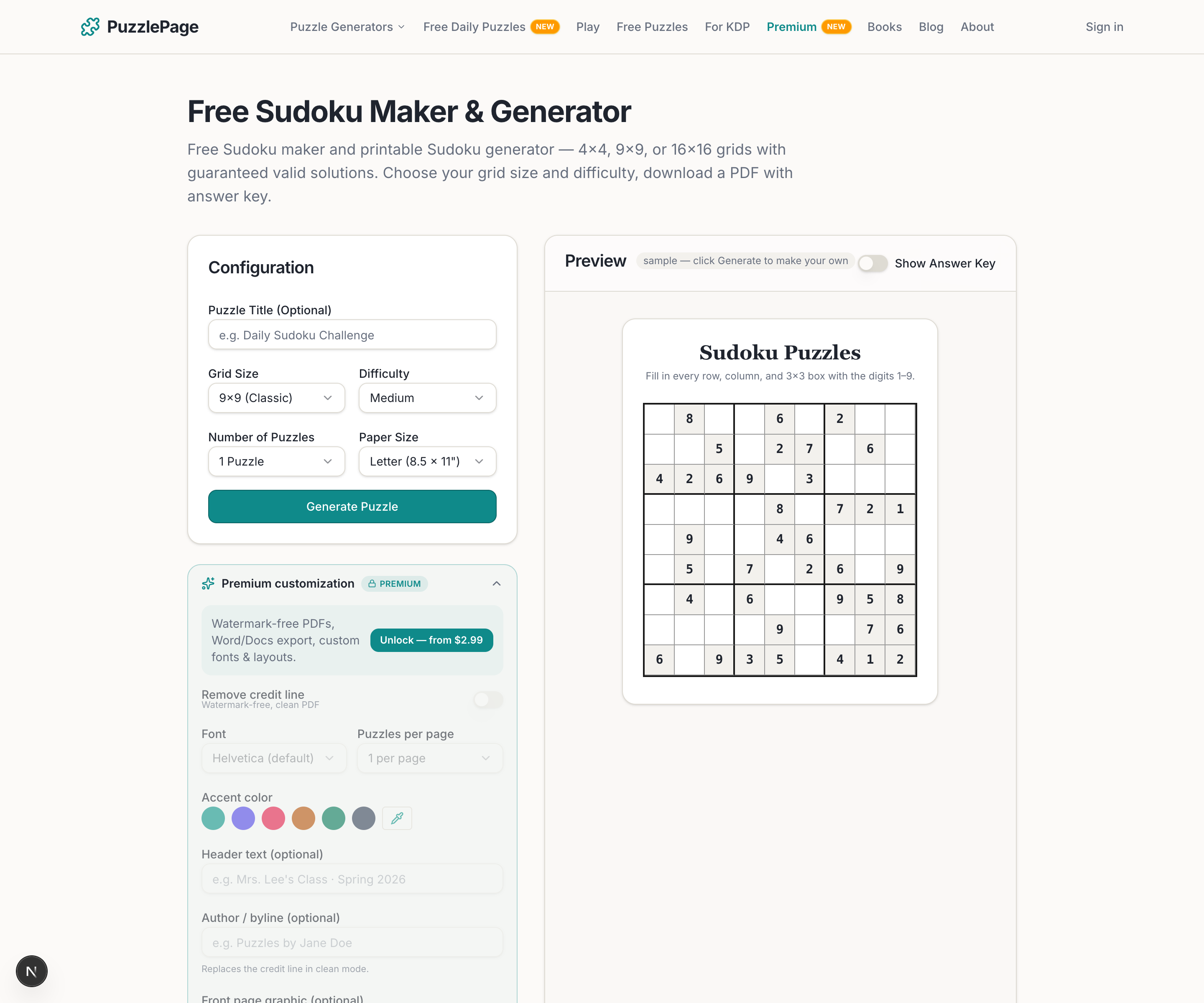
How to Solve Sudoku Step by Step
Here is the live 9x9 puzzle we will work through. The dark numbers are the givens. Every blank cell has exactly one correct digit waiting to be found.
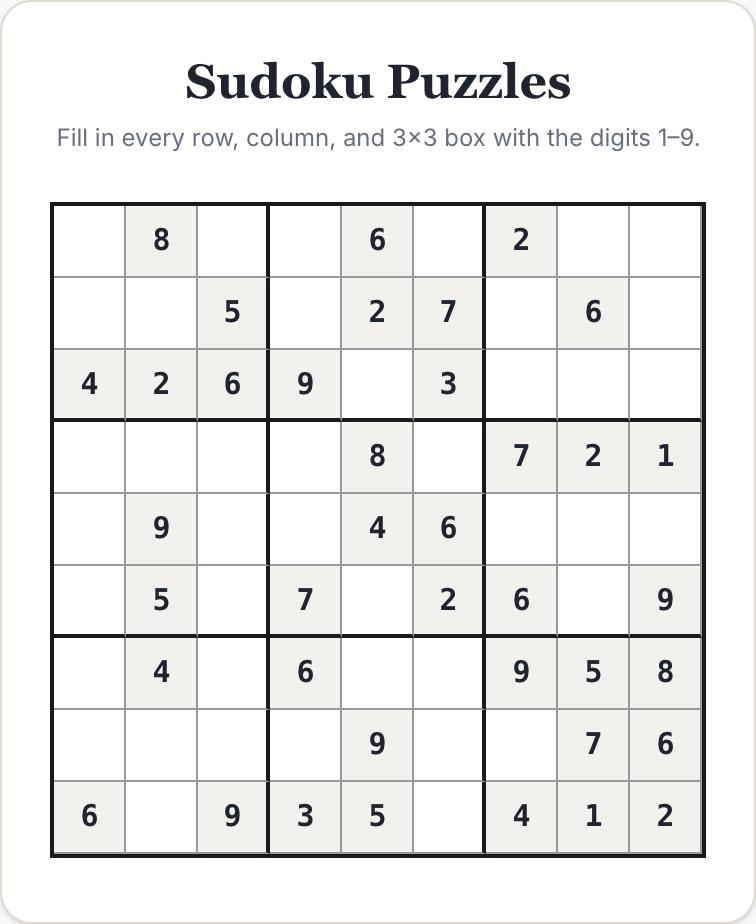
Work through these steps in order. The first three solve most easy puzzles on their own.
- Pick the busiest area first. Find a row, column, or box that already holds five or six numbers. The more givens around a blank cell, the faster it falls.
- Scan for a single digit. Choose a number, say 6, and look across the grid. Wherever a 6 already sits, it blocks its whole row, column, and box, which often leaves only one open cell for the 6 in a nearby box.
- Place every number you are certain of. Write it in firmly. Each new number tightens the grid for the next one.
- Repeat the scan for each digit 1 through 9. One full pass of all nine numbers usually places a dozen new cells.
- Move to candidates when scanning stalls. Pencil the possible digits into each empty cell, then use the techniques in the next section.
Pro Tip
Solve in pen for the givens and pencil for your candidates. Keeping the two visually separate stops a wrong pencil mark from looking like a confirmed number later.
Three Techniques That Crack Harder Puzzles
When simple scanning runs out, these three techniques carry you to the finish. Learn them in this order, because each one builds on the last.
-
1. Naked single
Look at one empty cell and list which digits its row, column, and box still allow. If only one digit survives, that cell is solved. This is the most reliable move in the game.
-
2. Hidden single
Pick a digit and a single box. If that digit can legally land in only one cell of the box, place it there, even if that cell still has other candidates pencilled in. Hidden singles unlock far more cells than beginners expect.
-
3. Naked and pointing pairs
When two cells in a unit share the exact same two candidates, those two digits belong to those two cells, so you can erase them from every other cell in the unit. That single elimination often reveals a fresh naked single.
Notice the pattern. You are never guessing. You are removing impossible options until only the truth is left.
Heads up
If you ever feel forced to guess, stop and recheck your pencil marks. A real Sudoku has one solution, so a dead end means an earlier number is wrong, not that the puzzle needs luck.
Check Your Work Against the Solution
When I taught this method to a club of 14 fourth graders, 11 of them finished their first full 9x9 grid inside one lunch period once they learned the hidden single. The unlock was always the same moment: the switch from scanning to careful elimination.
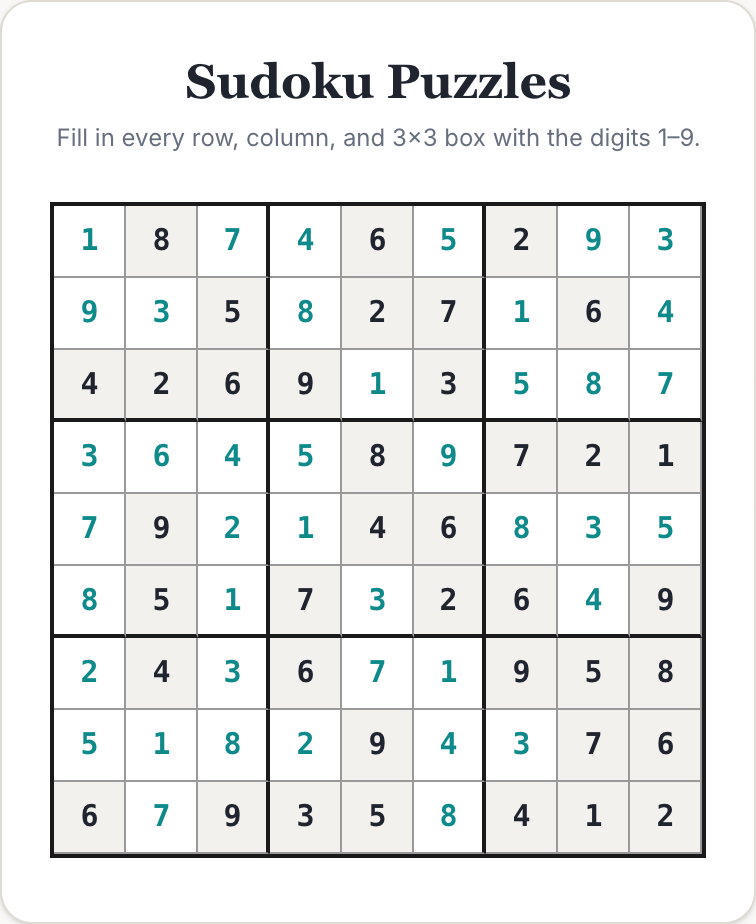
Here is the completed solution for the puzzle above. The dark digits were the original givens and the teal digits are the cells we solved. Every row, column, and 3x3 box now holds 1 through 9 exactly once.
Once the grid clicks, the same logic muscles transfer to other puzzles. If you enjoy spotting patterns, try a free printable cryptogram next, or sharpen your vocabulary scanning with a printable word search puzzle. For a guided walkthrough of a different grid puzzle, read our step-by-step crossword solving guide.
Frequently Asked Questions
How do you solve Sudoku for beginners?
Start with the rule that every row, column, and 3x3 box needs the digits 1 to 9 once each. Then scan one number at a time to find cells where it is forced, and place those first. Once scanning stalls, pencil in the remaining candidates and look for naked singles and hidden singles.
What is the easiest way to start a Sudoku puzzle?
Find the row, column, or box that already has the most numbers filled in. Crowded units leave the fewest open cells, so a forced digit is usually sitting there waiting. Working from the busiest area outward keeps the early going fast and confidence high.
Do you ever have to guess in Sudoku?
No. A properly made Sudoku has exactly one solution that can always be reached by logic alone. If you feel stuck enough to guess, a candidate you placed earlier is almost certainly wrong, so recheck your pencil marks instead.
How long should a Sudoku puzzle take to solve?
An easy 9x9 takes most people 5 to 10 minutes, a medium puzzle 10 to 20, and a hard one can run 30 minutes or more. Speed comes with pattern recognition, so the times drop quickly after your first dozen grids.
More you can make here
One puzzle is the start. Here is the rest of the kit.
 New
NewWorksheet Builder
Put a word search, a cryptogram and a scramble on one page, or build a whole themed packet. Prints with answer keys.
Build a worksheet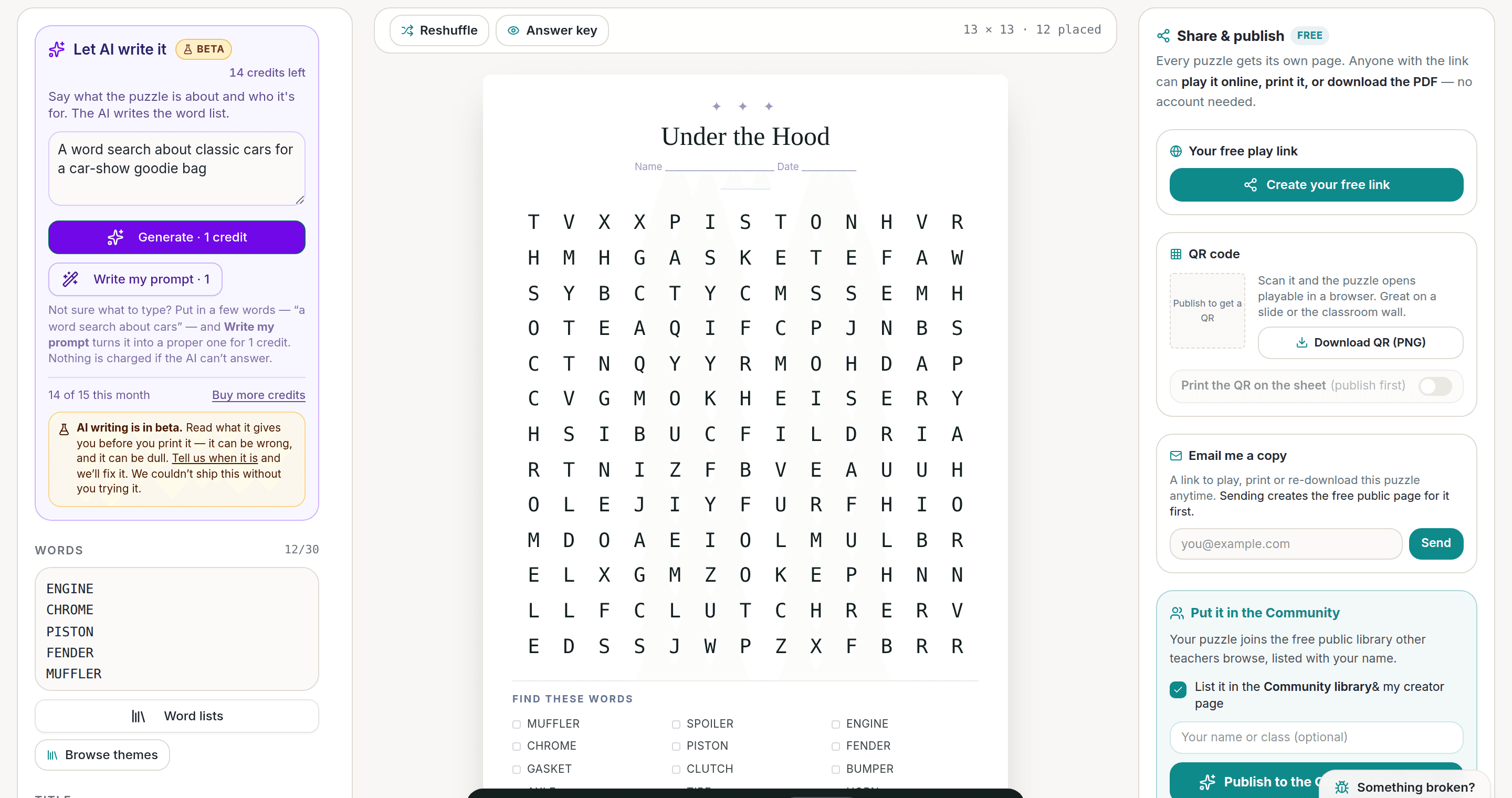
AI Puzzle Generator
Type a topic, get a themed word list and a finished puzzle. Premium also removes the footer credit and adds Word export.
Try the AI generator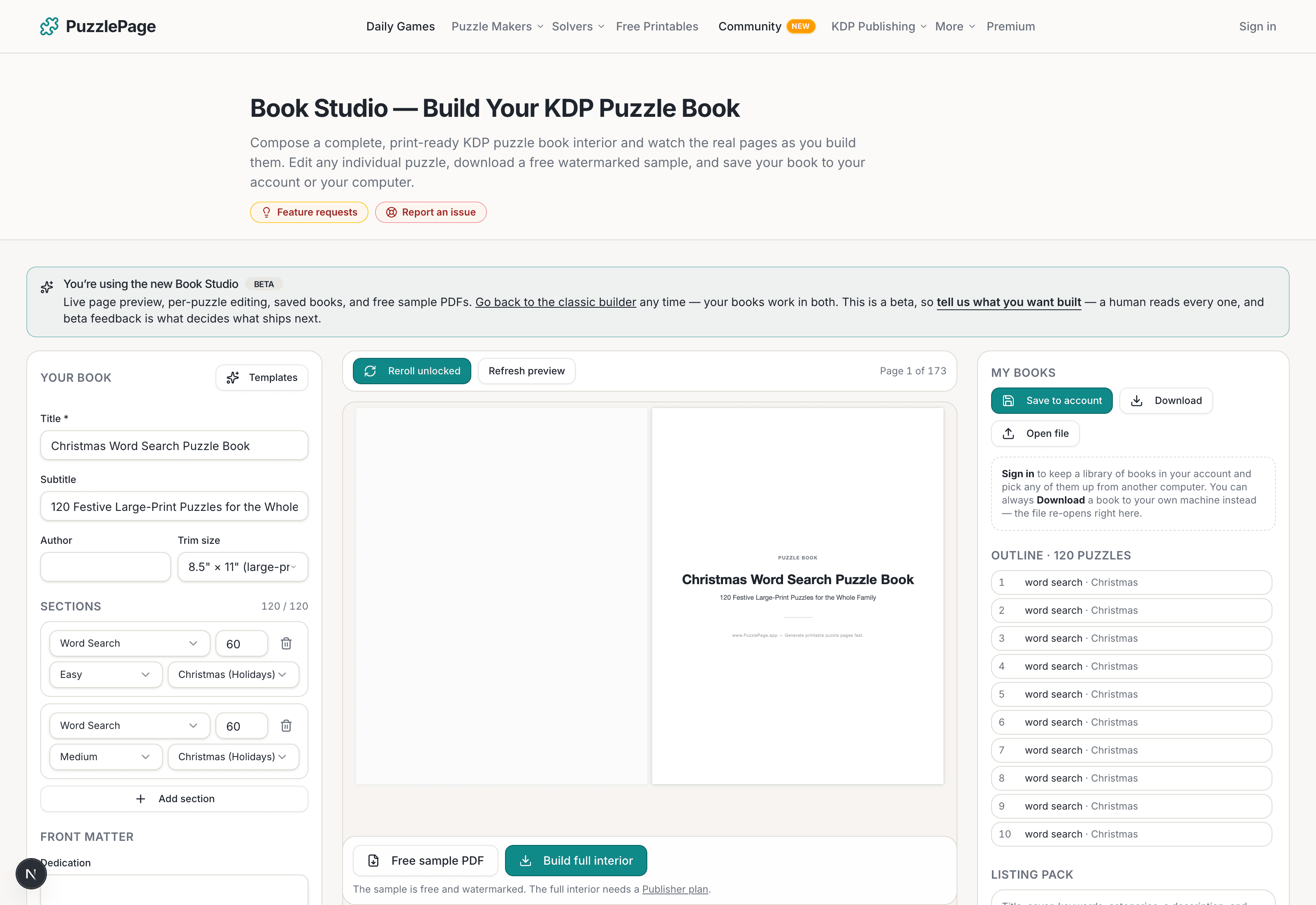
KDP Book Studio
Lay out a full puzzle book for Amazon KDP: templates, trim sizes, page checks and a cover designer.
Start a puzzle book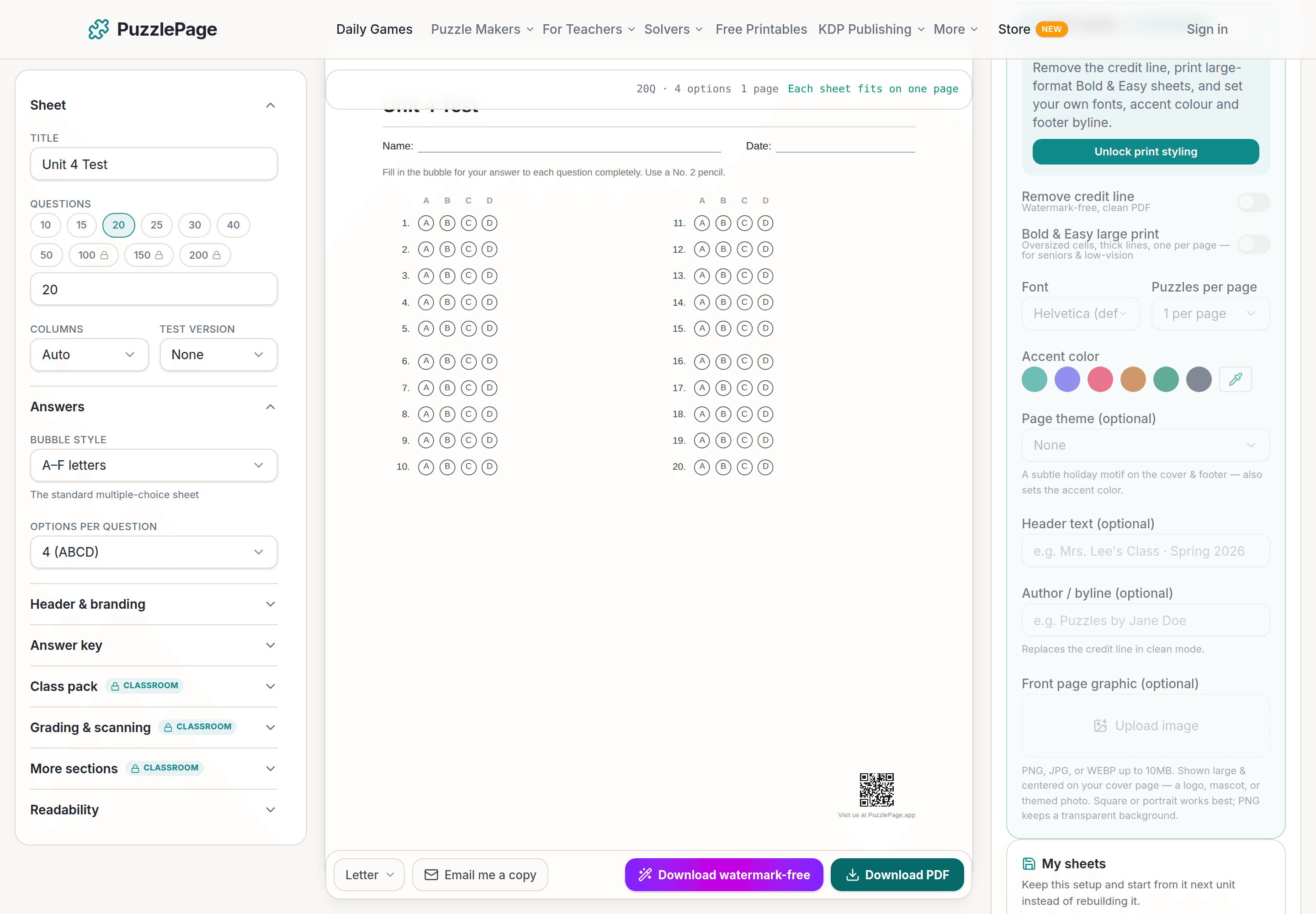
Bubble Sheet Studio
Answer sheets for any test length, with sections, versions, student ID grids and a matching answer key.
Make a bubble sheetPremium removes the footer credit, adds Word export and custom styling across every maker.
See plans →Free daily games
Need a two-minute break? Today's puzzles are live.
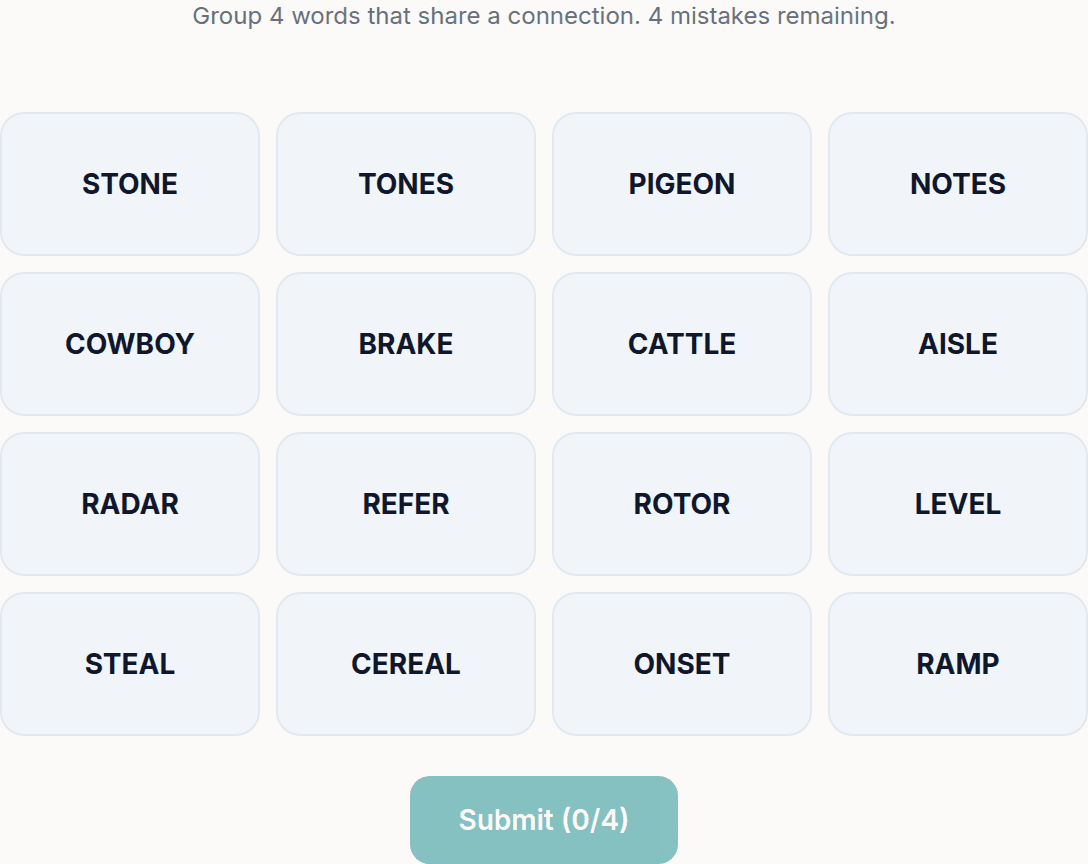
A new Sudoku and a new Connections board every day. No download, no account.


Keep reading
Get 10 free puzzles
Get the free 10-puzzle pack
Enter your email and we'll send you 10 print-ready puzzles with answer keys, plus a heads-up when we publish new generators and seasonal puzzle packs. Same quality as the ones on this page.
Roughly two emails a month. No spam, unsubscribe anytime.
Enjoyed this? Share the puzzle on X
Like puzzles like this? Follow on Pinterest for a new one every day.