Sudoku for Kids: Free Printable 4x4 and 6x6 Puzzles
Sudoku for kids starts with easy 4x4 grids and builds to 6x6. Learn the best age to begin, simple solving tips, and print free puzzles in seconds today.

On this site: Play and print Sudoku free·Browse 100+ free printables·Play today's puzzles
Sudoku looks like a math puzzle, but there is not a single sum involved. That surprise is exactly why it makes such a good first logic puzzle for young children.
The trick is to start small. A gentle 4 by 4 grid gives kids the full experience of sudoku without the crowded, intimidating look of the classic 9 by 9 board.
📌 Key Takeaways
- Start kids on a 4 by 4 grid using the numbers 1 to 4, then progress to 6 by 6 before the full 9 by 9.
- A 4 by 4 grid has just 16 cells, compared with 81 in a 9 by 9, so it feels far less crowded.
- Sudoku is pure logic and needs no arithmetic, which builds patience, pattern-spotting, and number recognition.
- For pre-readers, swap the numbers for shapes or colors so the logic still works.
- 4 by 4 suits ages 5 to 7 and 6 by 6 suits ages 7 to 9.
 1:02
1:02What age can kids start sudoku?
Most kids can start sudoku around age 5 with a 4 by 4 grid, since that is when number recognition and simple pattern-spotting begin to click. By ages 7 to 9, many children are ready for a 6 by 6 board and its slightly longer chains of logic.
These are guidelines, not rules. A curious four-year-old who loves matching games might jump in early, especially if you use shapes or colors instead of numbers.
Research on early learners suggests that puzzle play supports the reasoning skills schools care about, and you can read more about building logic and number sense in young children at Edutopia.
Like this? We send 10 of these every month.
Free printable puzzles, answer keys included — same quality as the ones in this post.
One email. Unsubscribe anytime.
Is 4 by 4 sudoku easier for beginners?
Yes, a 4 by 4 sudoku is much easier for beginners because it has just 16 cells versus 81 in a full 9 by 9 grid. Fewer cells mean fewer choices, so a child can see the whole puzzle at a glance and finish it in a few minutes.
The smaller board also uses only the numbers 1 to 4, which lightens the memory load. Kids track four options per row instead of nine, and that difference feels enormous to a new solver.
Play and print in one place
Generate a 4 by 4 or 6 by 6 board, solve it on screen, or print it for the kitchen table.
Play and print Sudoku free →How do you teach kids to solve sudoku?
Teach kids to solve sudoku by showing them one rule at a time: each number can appear only once in every row, column, and small box. Start them on the line that already has the most numbers filled in, because it has the fewest blanks to figure out.
Here is a simple, kid-friendly method that works on any grid size:
- Scan each row, column, and box. Look for a line that is almost full and ask which number is missing.
- Start with the fullest line. The row, column, or box with the most numbers is the easiest place to lock in a correct answer.
- Fill the sure thing. When only one number can fit a cell, write it in and move on.
- Use light pencil marks. Jot tiny candidate numbers in a corner so kids can test ideas without committing.
- Repeat and celebrate. Each filled cell unlocks the next, so cheer every correct number to keep momentum.
Pro Tip
For pre-readers, print the 4 by 4 grid with four colors or four simple shapes instead of numbers. The logic stays identical, and children who cannot yet read numbers can still solve the whole puzzle.
I printed a stack of 4 by 4 puzzles for my daughter's second-grade class of 22, and 18 kids finished their first grid inside six minutes. The room went quiet in the best possible way as they leaned into the logic.
Pro Tip
Keep a pencil with a good eraser nearby. Letting kids erase freely removes the fear of a wrong guess and turns each try into learning instead of pressure.
Once your child enjoys sudoku, mix in other quiet logic activities to keep the streak going. A printable maze from the maze generator stretches the same careful, step-by-step thinking in a different shape.
Why sudoku for kids builds real logic
Sudoku for kids builds real logic because every answer comes from reasoning rather than guessing. A child has to eliminate what cannot go in a cell until only one option remains, and that is the core of deductive thinking.
It also grows patience and number recognition without any arithmetic at all. Since there is nothing to add or subtract, kids who dislike math often love sudoku, which quietly makes numbers feel friendly.
Printed sudoku gives kids a calm, screen-free activity for car rides, waiting rooms, and quiet afternoons. One folded sheet and a pencil travel anywhere, which makes the puzzle an easy yes for busy parents.
To broaden the fun, pair sudoku with a word activity for balance. A themed printable word search works the eyes and vocabulary while sudoku works the reasoning muscles.
Which grid size should you print first?
Match the grid to the child, not the calendar, because kids grow into these puzzles at their own pace. The quick comparison below shows where each board fits best.
| Grid | Cells | Numbers | Best ages | Feel |
|---|---|---|---|---|
| 4 by 4 | 16 | 1 to 4 | 5 to 7 | gentle first steps |
| 6 by 6 | 36 | 1 to 6 | 7 to 9 | a real stretch |
| 9 by 9 | 81 | 1 to 9 | 10 and up | the classic board |
Print two or three copies of the size you choose so a child can try again without pressure. A fresh grid removes the fear of a smudge or a wrong guess.
When every cell fills in without a struggle, move up one size. That steady climb in difficulty keeps kids proud and curious instead of stuck.
Frequently Asked Questions
What age can kids start sudoku?
Most children can begin around age 5 with a simple 4 by 4 grid, which matches when number recognition and basic pattern-spotting develop. By ages 7 to 9 many are ready for a 6 by 6 board, and pre-readers can start even earlier using shapes or colors in place of numbers.
Is 4x4 sudoku easier for beginners?
Yes. A 4 by 4 sudoku has only 16 cells compared with 81 in a 9 by 9, and it uses just the numbers 1 to 4. That smaller size means fewer choices, less memory load, and a puzzle a beginner can finish in a few minutes.
Does sudoku require math?
No. Sudoku is pure logic and never asks you to add, subtract, or do any arithmetic. The numbers are simply symbols, so you could replace them with shapes or colors and the puzzle would work exactly the same way.
How do I print sudoku for kids free?
Open a free sudoku generator, choose a 4 by 4 or 6 by 6 grid, and print the page straight from your browser. Sudoku for kids prints cleanly in black and white, so a single sheet of paper and a pencil are all you need.
More you can make here
One puzzle is the start. Here is the rest of the kit.
 New
NewWorksheet Builder
Put a word search, a cryptogram and a scramble on one page, or build a whole themed packet. Prints with answer keys.
Build a worksheet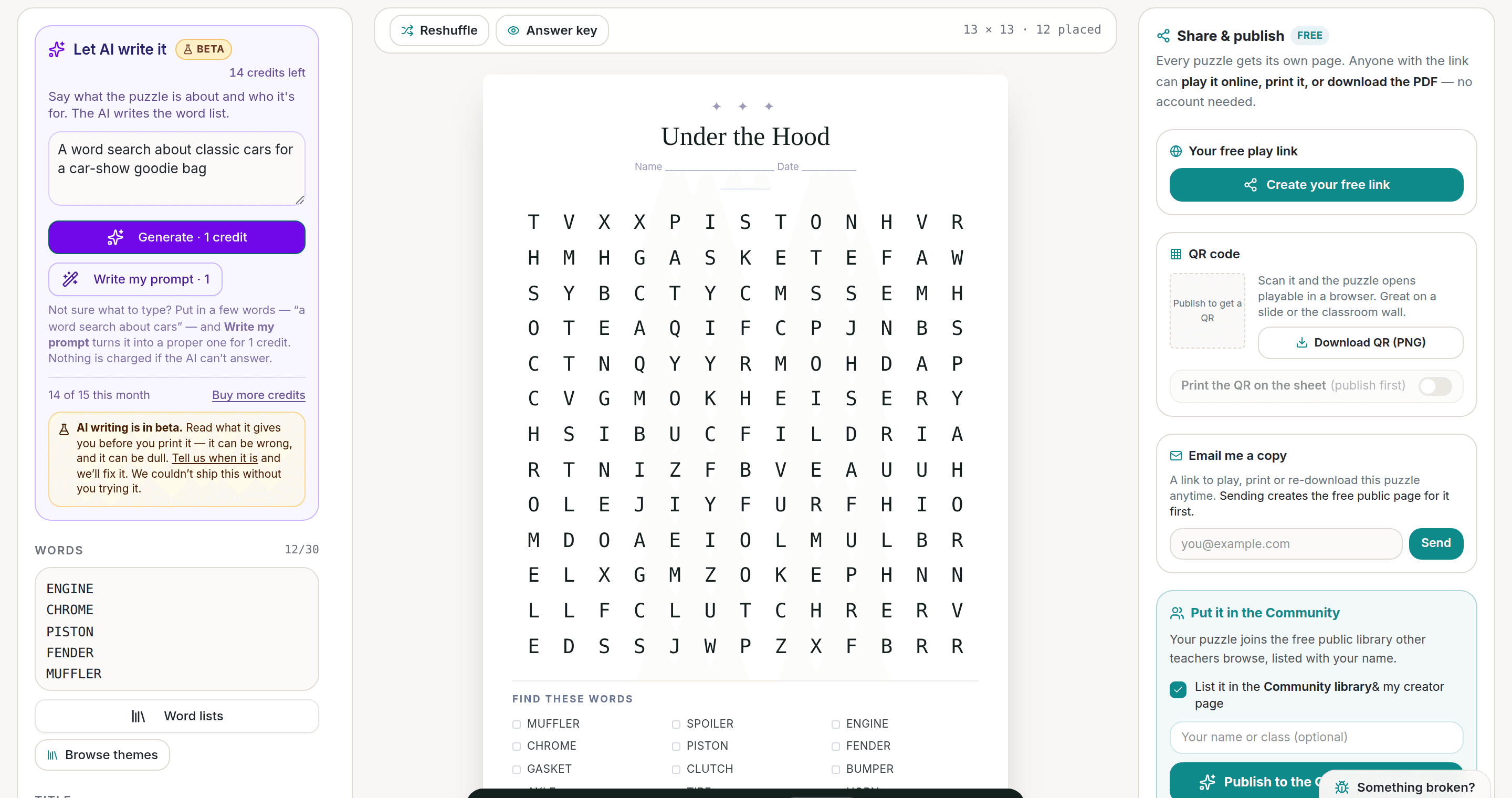
AI Puzzle Generator
Type a topic, get a themed word list and a finished puzzle. Premium also removes the footer credit and adds Word export.
Try the AI generator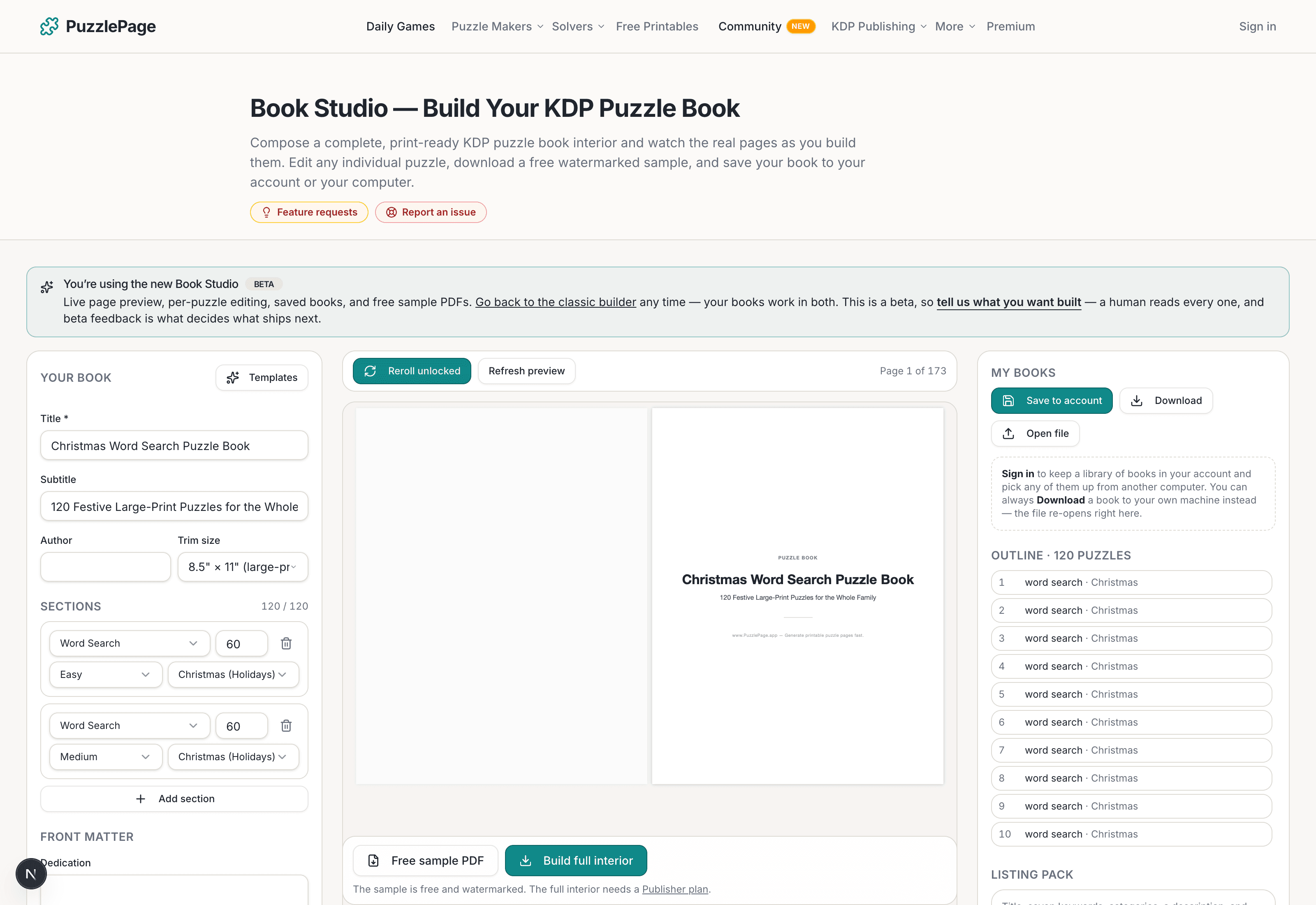
KDP Book Studio
Lay out a full puzzle book for Amazon KDP: templates, trim sizes, page checks and a cover designer.
Start a puzzle book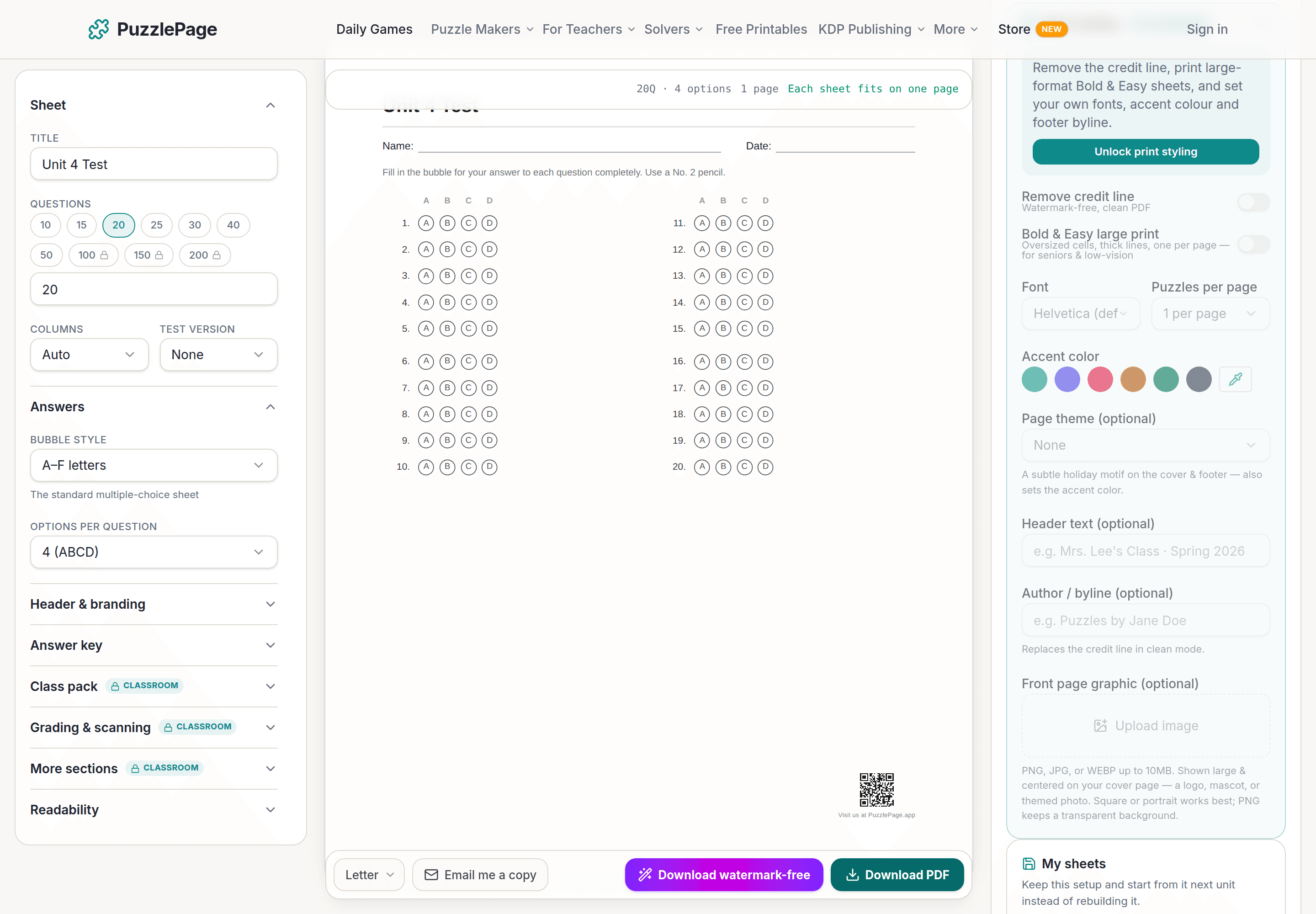
Bubble Sheet Studio
Answer sheets for any test length, with sections, versions, student ID grids and a matching answer key.
Make a bubble sheetPremium removes the footer credit, adds Word export and custom styling across every maker.
See plans →Free daily games
Need a two-minute break? Today's puzzles are live.
A new Sudoku and a new Connections board every day. No download, no account.
Keep reading
Get 10 free puzzles
Get the free 10-puzzle pack
Enter your email and we'll send you 10 print-ready puzzles with answer keys, plus a heads-up when we publish new generators and seasonal puzzle packs. Same quality as the ones on this page.
Roughly two emails a month. No spam, unsubscribe anytime.
Enjoyed this? Share the puzzle on X
Like puzzles like this? Follow on Pinterest for a new one every day.