How to Solve a Crossword Puzzle: Beginner's Guide
Learn how to solve a crossword puzzle step by step. Master gimmes, crossing letters, and wordplay clues, then practice on a free printable crossword with answer key.

On this site: Create your own free crossword puzzle·Browse 100+ free printables·Play today's puzzles
TL;DR
A crossword puzzle is a grid where Across and Down answers share crossing letters. Start with the clues you are certain of, write in those answers, then use the letters they create to unlock the harder ones. Match the grammar of every clue to its answer, watch for abbreviations and question-mark wordplay, and work one section at a time.
Knowing how to solve a crossword puzzle is one of those skills that looks intimidating from the outside and obvious once you have a system. The grid is not random: every row of letters does double duty, appearing in both an Across and a Down answer, so each letter you place hands you a head start on two clues at once.
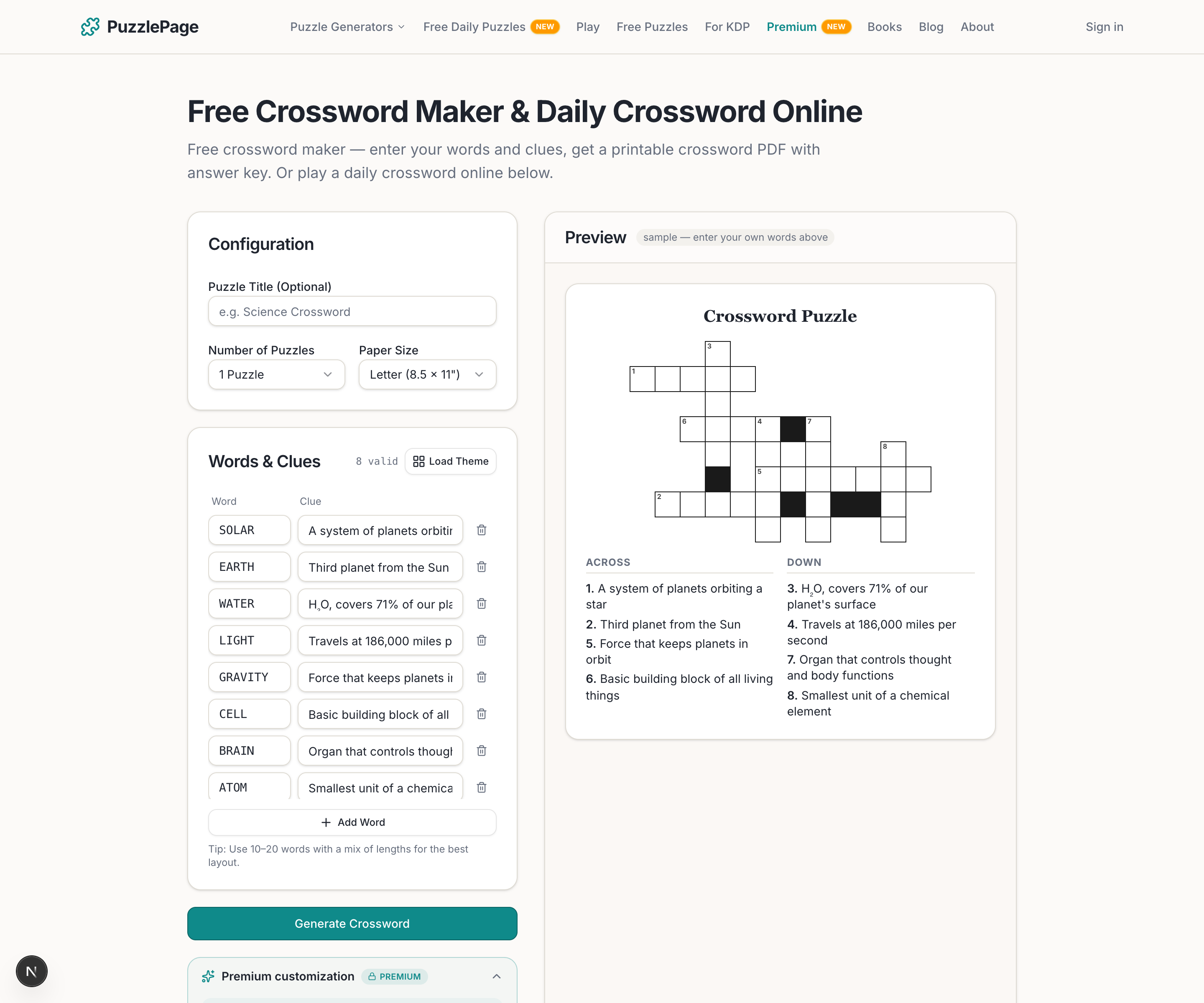
This guide walks through a real science- and space-themed crossword made with the free PuzzlePage crossword generator. You will see exactly how a beginner cracks the first few answers and uses the crossing letters to build momentum from there.
Key Takeaways
- Every letter in the grid sits at the intersection of one Across and one Down answer.
- Start with fill-in-the-blank clues and the shortest answers: they are almost always the easiest.
- Match the grammar: plural clues give plural answers, and a clue's tense matches its answer's tense.
- Abbreviations in a clue signal an abbreviated answer; a question mark signals wordplay or a pun.
- Work one corner at a time and use a pencil so wrong guesses stay erasable.
 1:02
1:02What a Crossword Puzzle Is and How the Grid Works
A crossword grid is a square of black and white cells. White cells hold one letter each, and black cells act as separators. Numbered white cells mark the start of an Across answer, a Down answer, or both.
The clue list is split into two columns: Across and Down. Clue 2 Across tells you to fill in the letters running left to right from the cell numbered 2, and Clue 3 Down tells you to fill letters running top to bottom from the cell numbered 3. Where an Across answer and a Down answer share a cell, their letters must agree.
That shared-letter rule is the engine of the whole puzzle. Place one right answer and you get free letters in every crossing answer. Place one wrong answer and those same crossings will block you.
Pro Tip
Count the squares before you write. If a blank is five letters long, any word you are considering must be exactly five letters. Length is the fastest filter for cutting wrong guesses.
Like this? We send 10 of these every month.
Free printable puzzles, answer keys included — same quality as the ones in this post.
One email. Unsubscribe anytime.
A Short History of the Crossword
The first crossword was created by Arthur Wynne and published on December 21, 1913, in the New York World. It was called a "Word-Cross" and had a diamond shape rather than the rectangular grid we know today. You can read more about the origins of the crossword puzzle at Encyclopaedia Britannica.
A national craze arrived in 1924 when a brand-new publisher called Simon and Schuster released the first crossword collection. The book sold out and launched a puzzle obsession that swept the country. The New York Times resisted for years before finally adding its own puzzle in 1942, and it has run one every day since.
How to Solve a Crossword Puzzle Step by Step
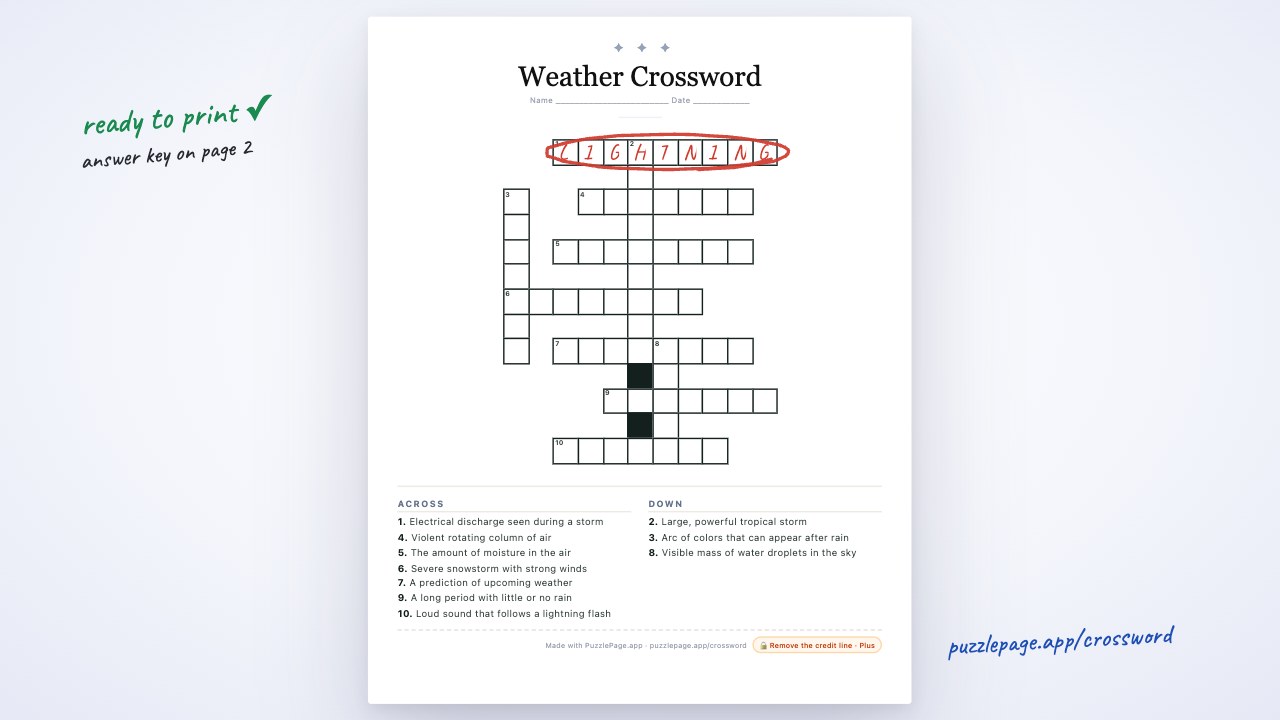
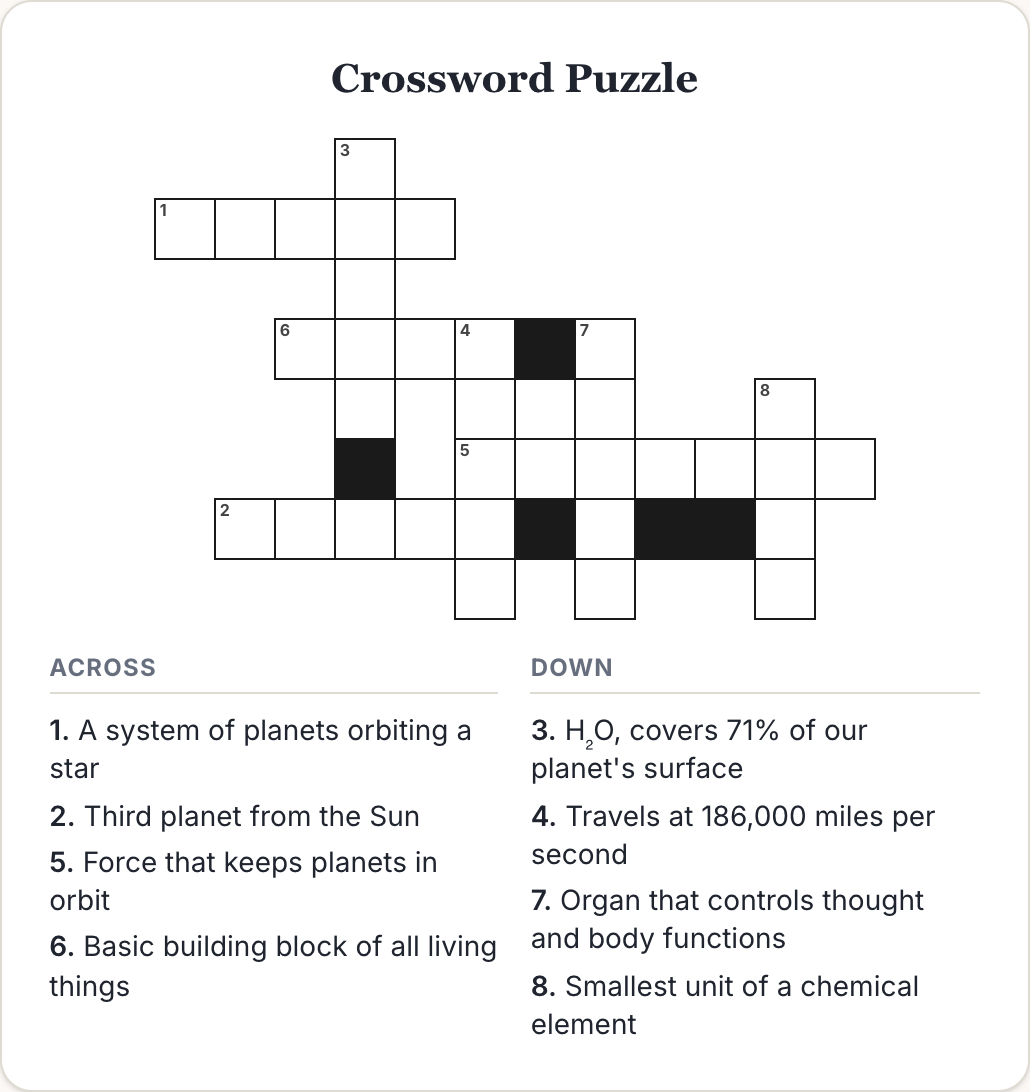
Here is the science-and-space crossword we will work through. The numbered cells mark where each answer begins, and the clue lists below the grid tell you what to fill in.
Work through these six steps in order. Steps one and two alone will fill in the majority of an easy puzzle.
- Collect the gimmes first. Scan every clue for fill-in-the-blank phrasing and for very short answers (three letters or fewer). These nearly always have an obvious answer. In our puzzle, 2 Across ("Third planet from the Sun") is almost certainly EARTH, and 8 Down ("Smallest unit of a chemical element") is ATOM. Write those in.
- Use crossing letters to crack harder clues. EARTH gives you an E where 3 Down intersects, and ATOM gives you an A. Look at 3 Down: "H2O, covers 71% of our planet's surface." A five-letter water word starting with W and containing an E? WATER fits perfectly, and the E in the third position confirms it.
- Match the grammar every time. A plural clue gives a plural answer, usually ending in S. A past-tense clue gives a past-tense answer. If the clue says "Runs," the answer is not "Run." This single rule eliminates a surprising number of wrong candidates.
- Read abbreviation signals. If a clue uses an abbreviation such as "Dr." or a state's short name, the answer is abbreviated too. The grid will not spell out the full word. This rule prevents a lot of head-scratching over a blank that refuses to fit.
- Handle question-mark clues last. A clue ending in a question mark signals wordplay or a pun, not a straight definition. These clues are trickier and their answers often rely on letters you have already placed. Save them for after the surrounding answers are in.
- Work one section at a time. Pick a corner, fill every Across and Down answer you can in that region, then move to an adjacent corner. Jumping around the grid makes it harder to see how crossing letters connect. Use a pencil so you can erase without frustration.
Pro Tip
When you have several letters of a crossing answer already placed, say it aloud and let your brain pattern-match. Native speakers recognize common English letter sequences almost automatically, which surfaces the right word faster than pure logic.
Reading Crossword Clue Types
Every clue in a crossword belongs to one of a small set of types. Recognizing the type tells you the strategy before you even start thinking of words.
-
Definition clues
The most common type: the clue is simply a synonym or short description of the answer. "Force that keeps planets in orbit" means GRAVITY. Read these literally and match the part of speech.
-
Fill-in-the-blank clues
A sentence with one word removed: "___ sapiens" gives HOMO. These are reliably easy because most people recall the missing word right away. Always answer fill-in-the-blank clues first.
-
Wordplay clues (ending in a question mark)
The question mark signals a pun, double meaning, or lateral thinking. The literal reading is a red herring. Work these after you have crossing letters to guide you.
-
Abbreviation clues
An abbreviation in the clue means the answer is also abbreviated. "Org. for pilots" gives FAA, not the full agency name. The grid's letter count is the final check.
Heads up
If an answer you are confident about creates a crossing letter that makes no sense in the crossing word, your confident answer is wrong. Trust the grid: every intersection must work in both directions.
Putting It All Together
When I ran a puzzle workshop for a group of 12 middle-schoolers, every single one finished the science-and-space crossword above once they understood one thing: write in the answers you know for certain before touching the hard clues.
The moment EARTH went into 2 Across and ATOM went into 8 Down, the crossing letters practically spelled out WATER and LIGHT on their own. That cascade is the satisfying rhythm of how to solve a crossword puzzle: easy answers unlock medium ones, medium ones unlock hard ones, and the grid fills itself.
Once the crossword clicks, the same pattern-recognition skills transfer naturally to other word puzzles. Try sharpening your vocabulary with a free printable word search puzzle, or shift to a pure logic challenge with a free printable Sudoku puzzle. For a deep walkthrough of Sudoku's step-by-step method, read our step-by-step Sudoku guide.
Frequently Asked Questions
How do you solve a crossword puzzle for beginners?
Start by filling in every answer you are certain of, especially fill-in-the-blank clues and short three-letter words. Use the crossing letters those answers provide to chip away at the harder clues. Knowing how to solve a crossword puzzle comes down to that one habit: easy answers first, crossing letters second.
What is the best way to start a crossword puzzle?
Scan the entire clue list once and circle every clue that gives you an immediate, confident answer. Write those in before you think about anything else. The letters they place in the grid will make the remaining clues far easier to crack.
What does a question mark mean at the end of a crossword clue?
A question mark signals that the clue relies on wordplay, a pun, or a secondary meaning rather than a direct definition. The literal reading of the clue is intentionally misleading. Save these clues for after you have placed crossing letters from the surrounding answers.
How long does it take to get good at crossword puzzles?
Most beginners can finish an easy themed crossword within 15 to 30 minutes after learning the basic techniques. Speed and confidence grow quickly because the same clue conventions and common short words appear repeatedly across many puzzles. A dozen puzzles is usually enough to feel genuinely comfortable.
Live demo
Make your own crossword right here
Swap in your own words (a spelling list, residents' names, a unit's vocabulary) and press Generate. The full maker adds answer keys, size options and PDF export.
More you can make here
One puzzle is the start. Here is the rest of the kit.
 New
NewWorksheet Builder
Put a word search, a cryptogram and a scramble on one page, or build a whole themed packet. Prints with answer keys.
Build a worksheet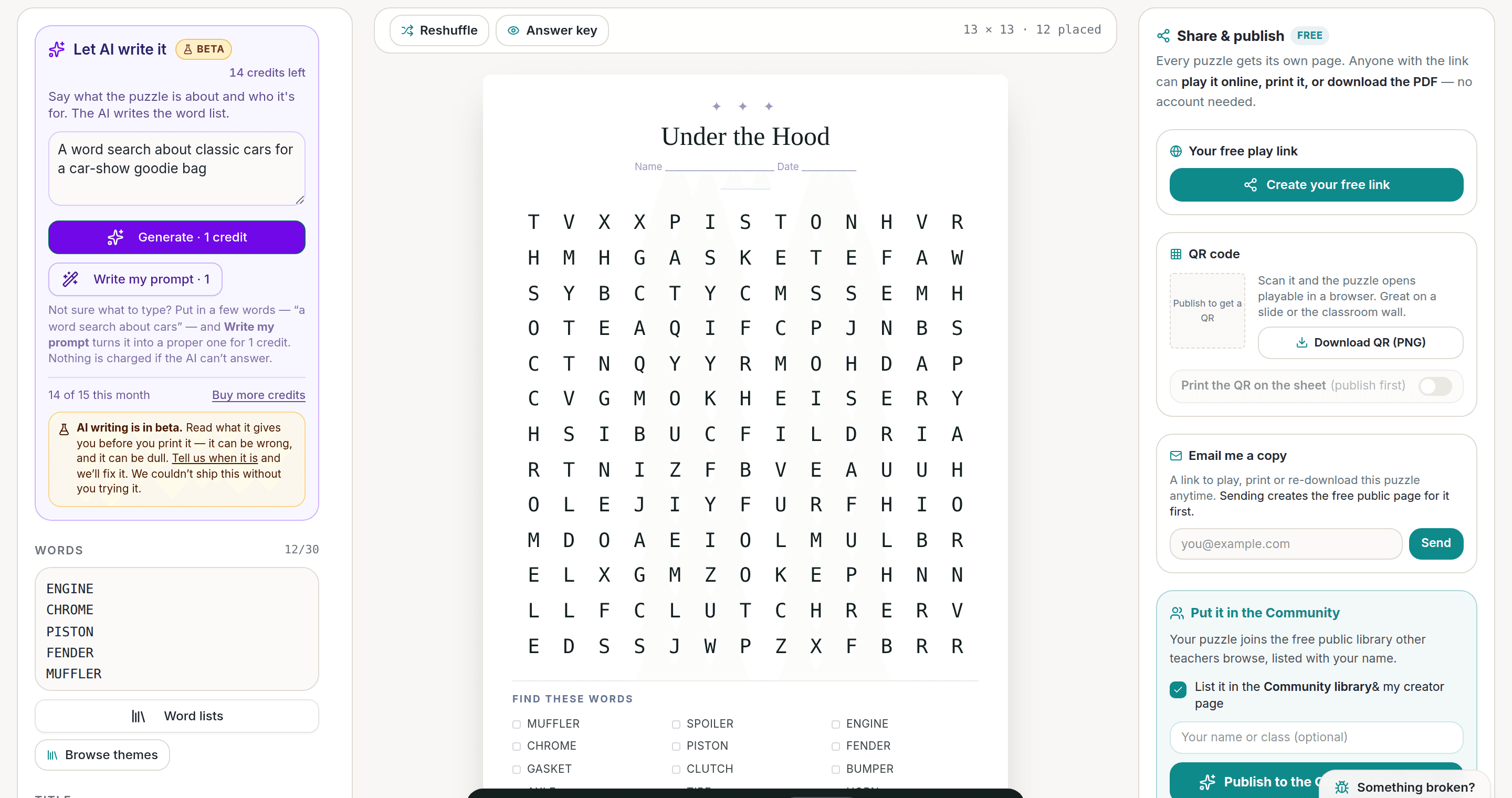
AI Puzzle Generator
Type a topic, get a themed word list and a finished puzzle. Premium also removes the footer credit and adds Word export.
Try the AI generator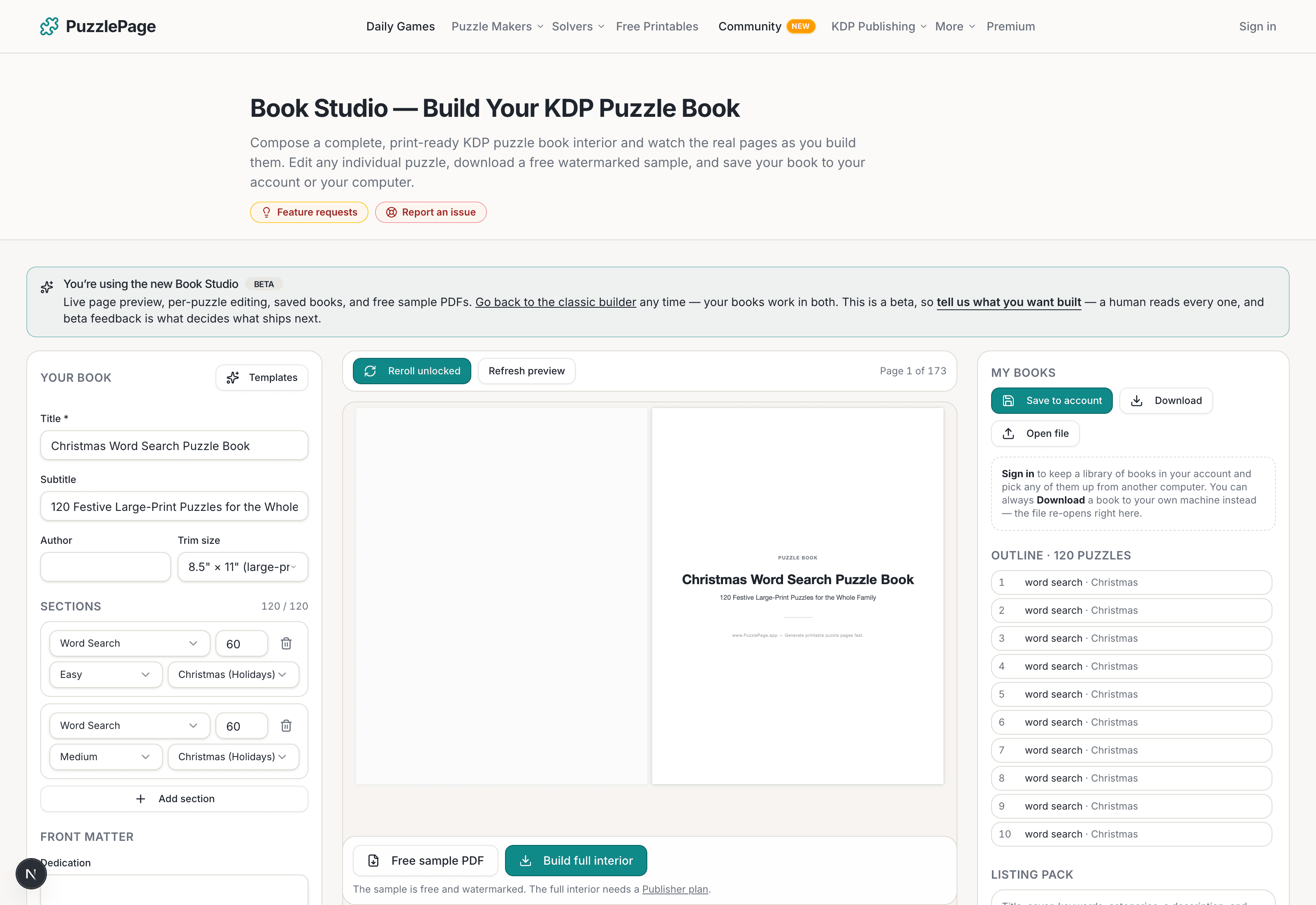
KDP Book Studio
Lay out a full puzzle book for Amazon KDP: templates, trim sizes, page checks and a cover designer.
Start a puzzle book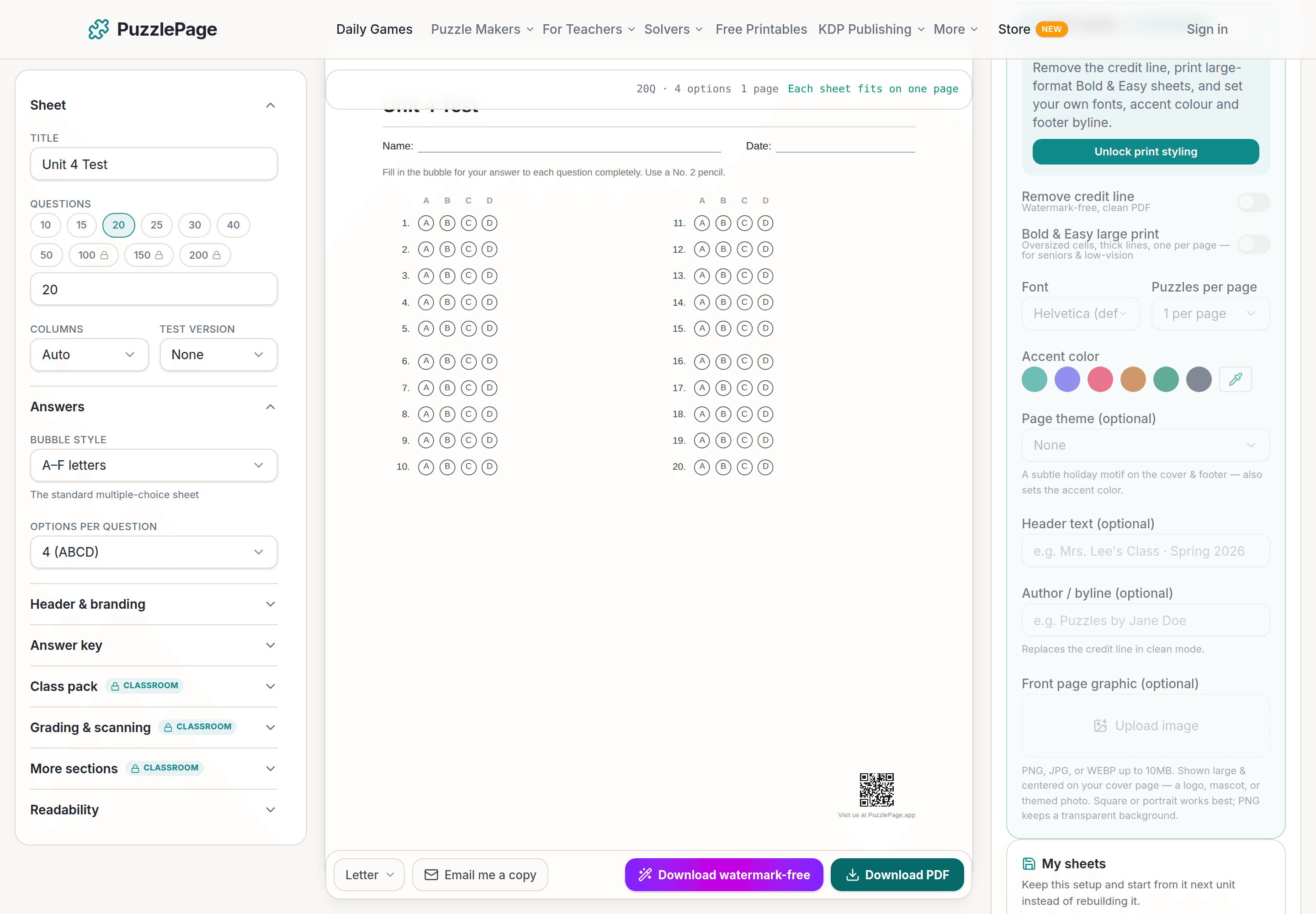
Bubble Sheet Studio
Answer sheets for any test length, with sections, versions, student ID grids and a matching answer key.
Make a bubble sheetPremium removes the footer credit, adds Word export and custom styling across every maker.
See plans →Free daily games
Need a two-minute break? Today's puzzles are live.
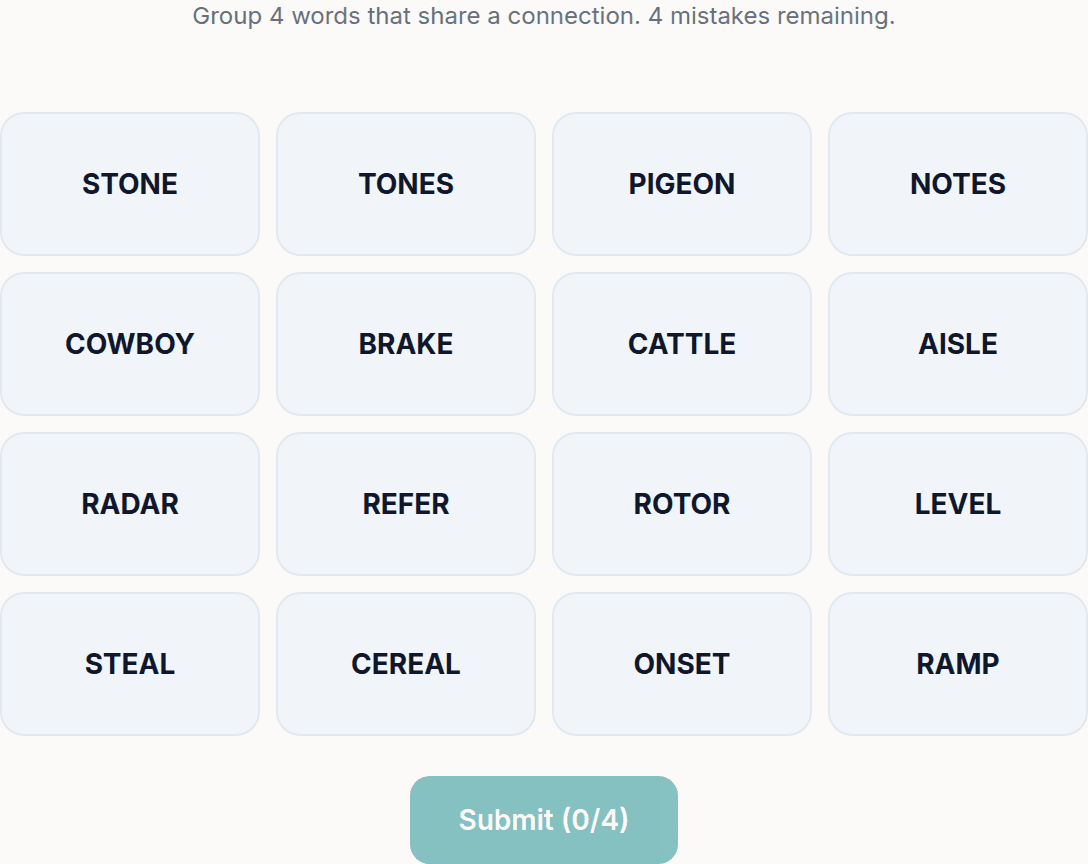
A new Sudoku and a new Connections board every day. No download, no account.


Keep reading
Get 10 free puzzles
Get the free 10-puzzle pack
Enter your email and we'll send you 10 print-ready puzzles with answer keys, plus a heads-up when we publish new generators and seasonal puzzle packs. Same quality as the ones on this page.
Roughly two emails a month. No spam, unsubscribe anytime.
Enjoyed this? Share the puzzle on X
Like puzzles like this? Follow on Pinterest for a new one every day.