Puzzle Generator Licence: What You Can Legally Sell on KDP
Puzzles you generate here carry a commercial print licence: sell them in KDP paperbacks, no royalty, no attribution. What it covers and what it does not.

Free to try
Build this book free in the PuzzlePage Book Studio
18 puzzle types, KDP margins and a full-wrap cover. Download the first 10 pages and the cover free.
Find these words
- AMAZON
- CATALOG
- CATEGORY
- COMMERCIAL
- COPYRIGHT
- GENERATOR
- KEYWORDS
- LICENSE
- PRINTABLE
- PROFIT
- PUBLISH
- RESALE
- ROYALTY
- TEMPLATE
Drag across the grid to trace each hidden word.
Commercial-Use Word Search
14 terms for publishing generator puzzles commercially
Word List
- COMMERCIAL
- GENERATOR
- PRINTABLE
- COPYRIGHT
- TEMPLATE
- KEYWORDS
- CATEGORY
- LICENSE
- ROYALTY
- PUBLISH
- CATALOG
- RESALE
- AMAZON
- PROFIT
Free companion PDF
Commercial-Use Word Search
14 terms for publishing generator puzzles commercially. Grab the PDF now and we'll send 10 more printable puzzles, plus a heads-up when new generators or seasonal packs go live. Roughly two emails a month — unsubscribe anytime.
No payment · Letter-size · Answer key included
For publishers: Build a book free in the Studio·Ready-made book templates·KDP calculators·Books made here
If you've searched "free puzzle generator for KDP" in 2026, you've already hit the wall most KDP self-publishers hit: half the free tools watermark the PDF, half restrict commercial use, and almost none support the four paper sizes Kindle Direct Publishing actually wants. This guide walks through what to look for, why it matters, and exactly which free generators (PuzzlePage's and others) clear every bar.
📌 Key Takeaways
- A KDP-ready puzzle generator must hit three bars: a clean puzzle page, full commercial license, and at least one KDP paper size (6×9 or 7×10)
- Cryptogram books are the highest-margin KDP puzzle category — low competition, strong evergreen demand, fast to fill 100+ pages
- 8.5×11 (US Letter) wins for large-print senior editions; 6×9 wins for compact pocket puzzle books
- The free tier of PuzzlePage handles batch sizes up to 10 puzzles per generation — enough to build a 100-puzzle book in 10 download cycles
- Check Amazon autocomplete and the bestseller lists for low-competition niches before you publish, then assemble the whole book in the PuzzlePage Book Studio
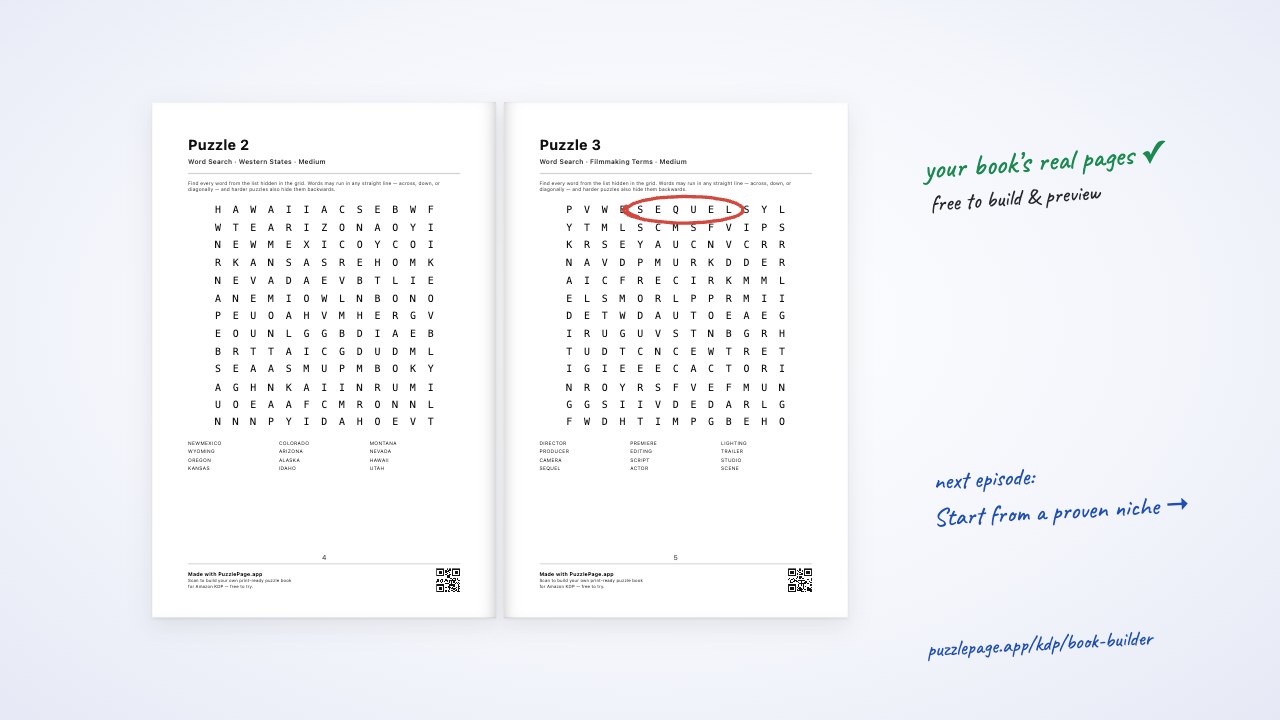 1:33
1:33What "free puzzle generator for KDP commercial use" actually requires
The phrase gets searched at high volume because three specific things have to align — and most free tools only hit one or two:
1. A clean page
If the generator stamps a logo or large watermark across the puzzle itself, you can't upload it to KDP directly. Some publishers crop the watermark in Photoshop, but Amazon's quality team has been rejecting KDP uploads with cropped page edges since mid-2024. The cleanest path is a generator that keeps the puzzle grid clear. A small credit line in the page footer is easy to trim or replace in your final layout; a watermark stamped across the grid is not.
A note on PuzzlePage: the free tier keeps the puzzle grid completely clean but adds a small "Made with PuzzlePage.app" credit line at the bottom of each page. A fully watermark-free export for commercial books is available with Premium ($2.99 day pass or $6.99/month).
2. Explicit commercial use license
Most free puzzle makers are silent on commercial rights, which is a problem — Amazon's content guidelines require you to "have the necessary rights to all content you publish". Silence isn't a license. You want a generator whose terms explicitly grant commercial use, in writing, before you publish 50 books off it.
3. KDP-supported paper sizes
KDP accepts paperback trims at standard sizes — 5×8, 5.25×8, 5.5×8.5, 6×9, 6.14×9.21, 6.69×9.61, 7×10, 7.44×9.69, 7.5×9.25, 8×10, 8.25×11, and 8.5×11. For puzzle books, the four that matter are 6×9 (compact paperback), 7×10 (large activity book), 8.5×11 (oversize / large-print), and A4 (international). A generator that exports only Letter size locks you out of the most popular KDP trim.
Free Word Search PDF — Commercial-Use Word Search
Print-ready · answer key included · unsubscribe anytime
The three bars, applied to common free puzzle generators
| Tool | Clean page | Commercial | KDP sizes | Best for |
|---|---|---|---|---|
| PuzzlePage | Grid clean; small footer credit* | ✓ | ✓ (4 sizes) | All 6 puzzle types, batch up to 10 |
| Book Bolt (paid) | ✓ | ✓ | ✓ (all sizes) | High-volume publishers, keyword research |
| Most "free" generators | ✗ | unclear | Letter only | Quick worksheets, not KDP |
| Microsoft Word templates | ✓ | ✓ | manual | One-off books, slow workflow |
*PuzzlePage's free tier keeps the puzzle grid completely clean and adds a small "Made with PuzzlePage.app" credit line in the page footer. A fully watermark-free export is available with Premium ($2.99 day pass or $6.99/month).
The 6 puzzle types worth publishing on KDP in 2026
Each category has its own niche dynamics. The volumes here track to current Amazon BSR data for activity book subcategories.
Word search books
Still the largest category by sales volume, but also the most competitive. The bestselling sub-niches in 2026: large-print word search for seniors, themed word search (cats, gardening, Christmas), and Bible word search. Free word search generators are everywhere — the differentiator is theme curation, not the generator itself.
Cryptogram books
The fastest-growing category by sales velocity in 2024 and 2025. Lower competition than word search, higher margins per book, and the format is endlessly variable (quotes from US presidents, cryptograms for teachers, dog-themed cryptograms, etc.). If you're starting fresh on KDP in 2026, cryptograms are the highest-EV bet. Use the PuzzlePage cryptogram maker with a curated quote list.
Sudoku books
The most competitive category — the top 20 sellers have been the same for years. New entrants struggle unless they nail a specific niche: large-print for low-vision solvers, 16×16 for experts, or themed Sudoku-plus-trivia hybrid books.
Crossword books
Custom themed crosswords (Trivia Crosswords for Sports Fans, etc.) have a small but loyal audience. The hard part is writing clues — most generators only handle the grid. Worth the effort if you have domain expertise; not the right category if you're picking by demand alone.
Word scramble (jumble) books
Solid mid-tier category. Lower competition than word search, strong gift-giving demand (puzzle books for kids, brain games for adults). The word scramble maker handles bulk generation in any theme.
Word fill-in (Kriss-Kross) books
Underrated. The category sits between word search and crossword in difficulty, with significantly less competition than either. Easier to fill than crosswords (no clue writing), more challenging to solve than word search. Best for activity books where you want puzzle variety on consecutive pages.
Pro Tip
If you're launching a new KDP niche, build a mixed-puzzle activity book first (the Big Variety template in the Book Studio is a quick start) (word search + cryptogram + word scramble + fill-in, all on one theme). Variety reduces buyer fatigue and the production cost is similar to a single-puzzle book. Mixed activity books also rank in more categories than single-puzzle ones.
The KDP-ready production workflow, step by step
- Pick a niche and trim size. 6×9 for compact paperbacks, 8.5×11 for large-print senior editions. Most niches favor one or the other — research the top 10 books in your category and match what's working.
- Generate 100–300 puzzles in batches. PuzzlePage's free tier allows 10 puzzles per generation. A 100-puzzle book is 10 download cycles; a 300-puzzle book is 30.
- Combine PDFs. Use Adobe Acrobat, PDFsam, or macOS Preview to merge puzzle pages and answer-key pages into one continuous file.
- Add a title page, intro, and TOC. A clean title page and a 1-page introduction signals quality to KDP reviewers and to readers leaving reviews.
- Design a cover. Canva, KDP Cover Creator, or Book Brush. Stay in your niche's visual language — large-print covers want big titles and high contrast; themed covers want clear theme cues at thumbnail size.
- Upload to KDP. Set categories (3 are now allowed), pick keywords (Amazon autocomplete is free, and the PuzzlePage Book Studio can draft all 7 for you), and price competitively — start a new book at $5.99–$7.99 paperback, $0–$2.99 Kindle.
- Iterate. Watch sales for 30 days. If a niche is working, publish the second volume immediately — same theme, fresh puzzles. Series compound.
Common KDP mistakes that the wrong generator causes
- Skinny margins. Some free generators export PDFs with 0.25" margins. KDP's spec is 0.375" inside (gutter) and 0.25" outside. Always confirm margins before uploading.
- Wrong DPI. Grids that look fine on screen at 72 DPI print fuzzy at 6×9. The PDF needs to be vector or 300 DPI raster. PuzzlePage's PDFs are vector — they print crisp at any size.
- Missing answer keys. A puzzle book without answers gets a 1-star review every time. Always include the answer key as separate pages at the back of the book.
- Watermarks across the grid. A logo or watermark stamped over the puzzle is the fastest rejection from KDP's quality team. A small footer credit line is easy to trim or replace in your final layout; a watermark over the puzzle is not.
Where to start
If you're ready to publish in 2026, the fastest start is to build the book free in the Book Studio and download the first 10 pages and the cover. After that, the dedicated PuzzlePage for KDP page has the rest: every generator is linked, the workflow is documented, and the four KDP paper sizes are wired into every export. Start with cryptograms if you're new (highest margin, lowest competition); start with large-print word search if you want volume.
Free to try
Try the Book Studio free: first 10 pages and cover, no card
Build the whole book in your browser, watch the real printed pages as you go, and download the first 10 pages plus the cover to check them before you decide anything.
- ✓18 puzzle types with difficulty ramps and answer keys
- ✓KDP trim sizes and margins checked as you build
- ✓A matching full-wrap cover, spine included
- ✓Download the first 10 pages and the cover free
Build first, decide later. You only pay when you want the full interior.
Live demo
Make your own word search right here
Swap in your own words (a spelling list, residents' names, a unit's vocabulary) and press Generate. The full maker adds answer keys, size options and PDF export.
More you can make here
One puzzle is the start. Here is the rest of the kit.
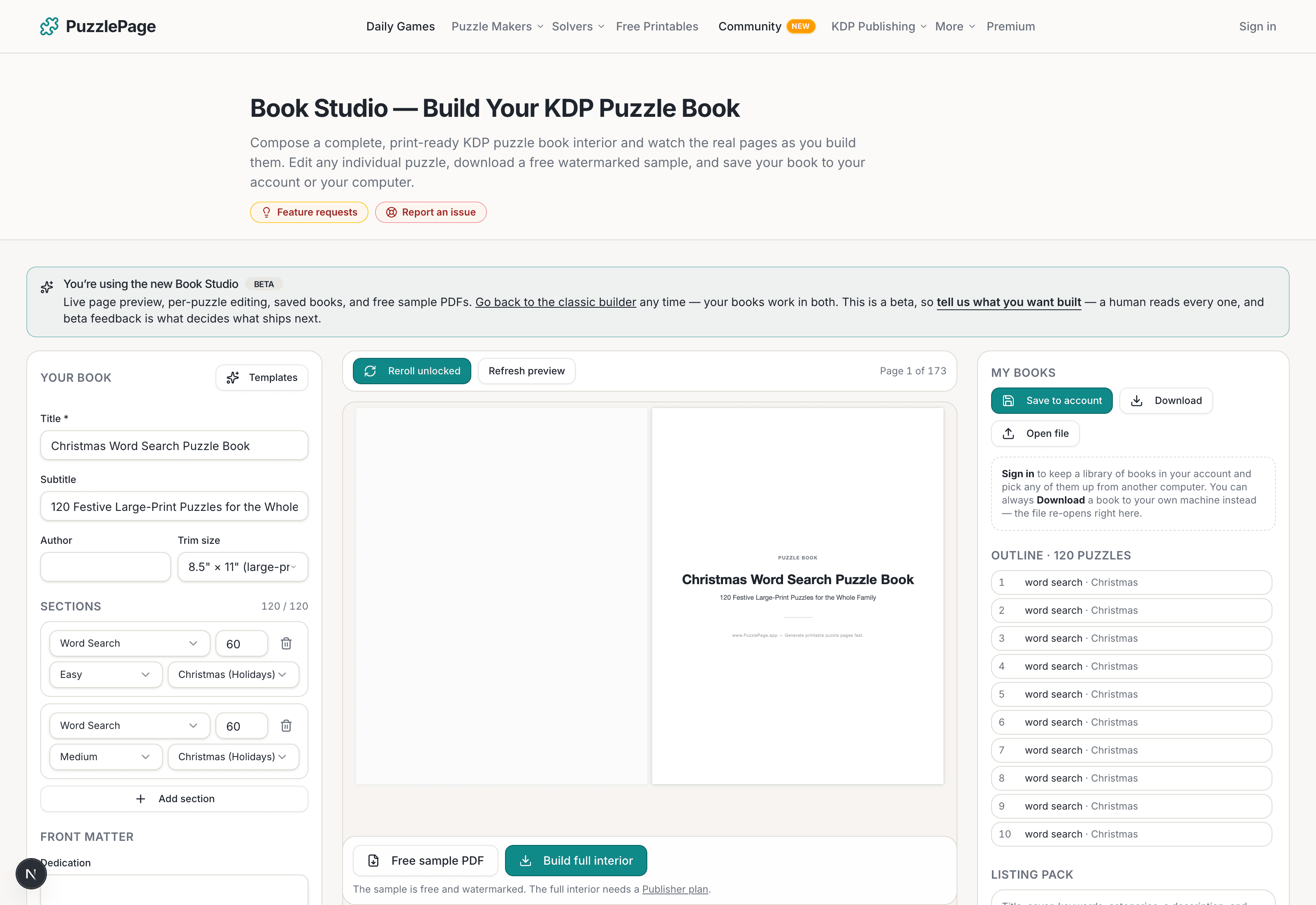
KDP Book Studio
Lay out a full puzzle book for Amazon KDP: templates, trim sizes, page checks and a cover designer.
Start a puzzle book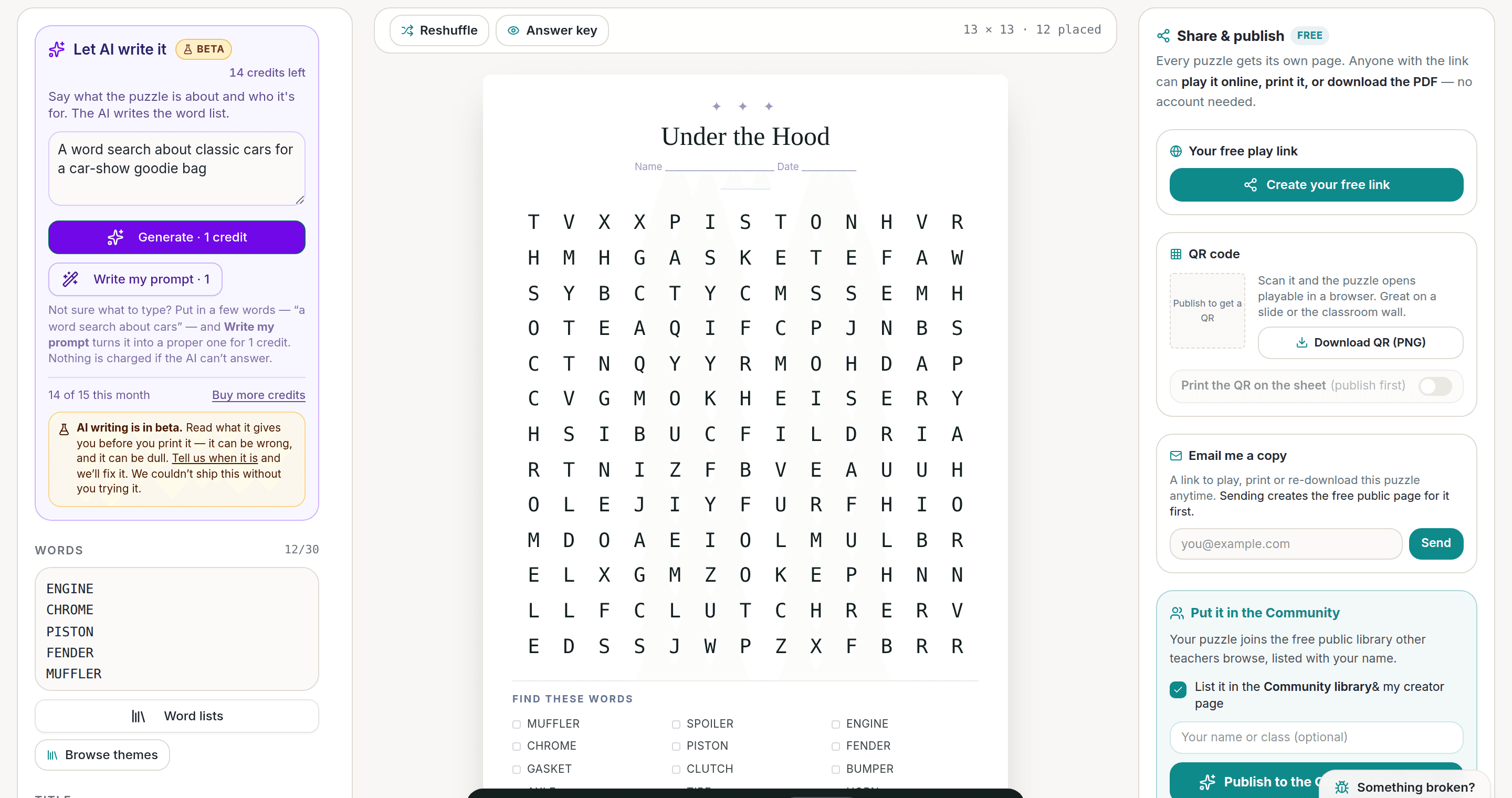
AI Puzzle Generator
Type a topic, get a themed word list and a finished puzzle. Premium also removes the footer credit and adds Word export.
Try the AI generator New
NewWorksheet Builder
Put a word search, a cryptogram and a scramble on one page, or build a whole themed packet. Prints with answer keys.
Build a worksheet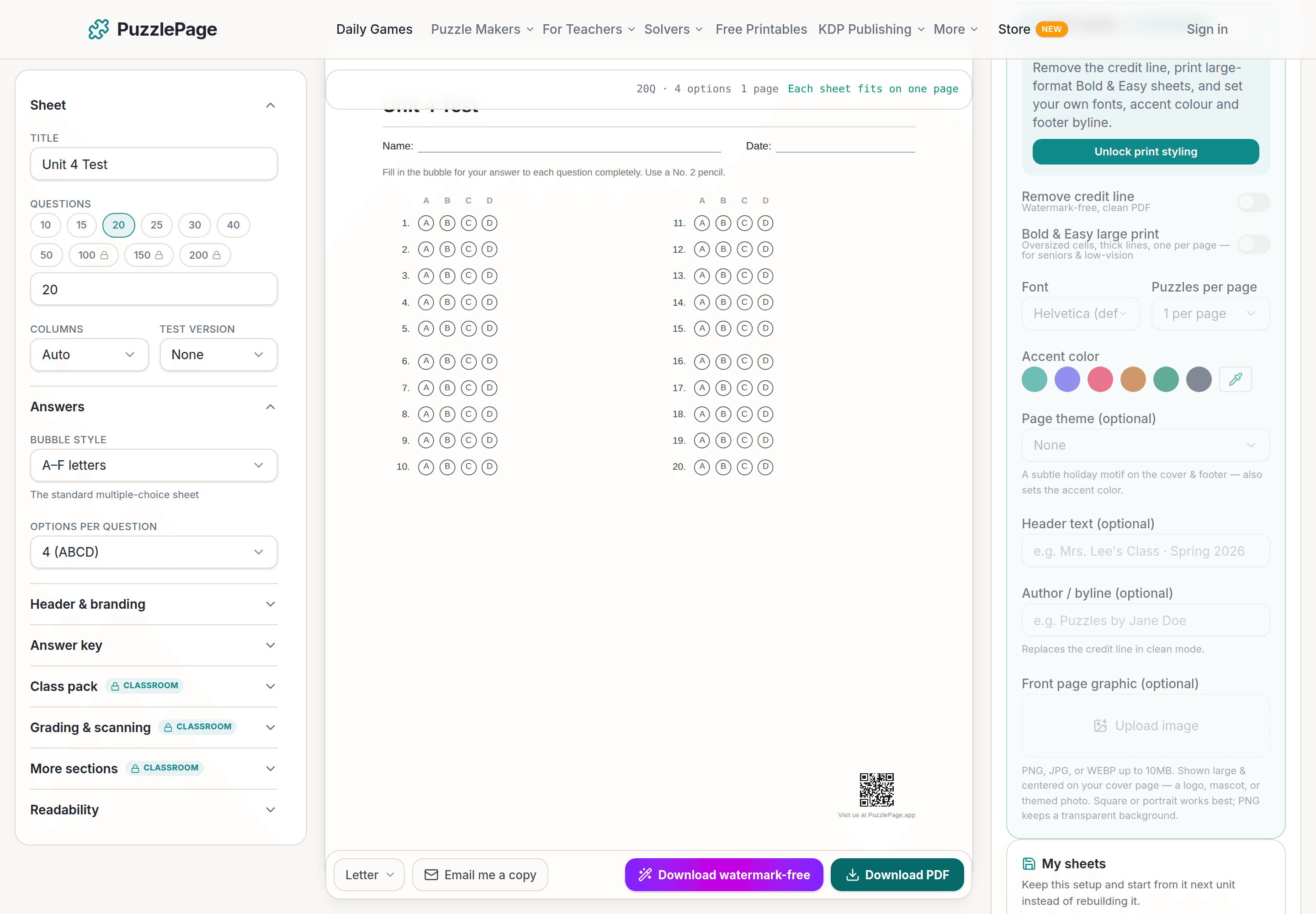
Bubble Sheet Studio
Answer sheets for any test length, with sections, versions, student ID grids and a matching answer key.
Make a bubble sheetPublisher plans unlock full print-ready interiors and covers, with a commercial licence to sell every book.
See plans →Free daily games
Need a two-minute break? Today's puzzles are live.
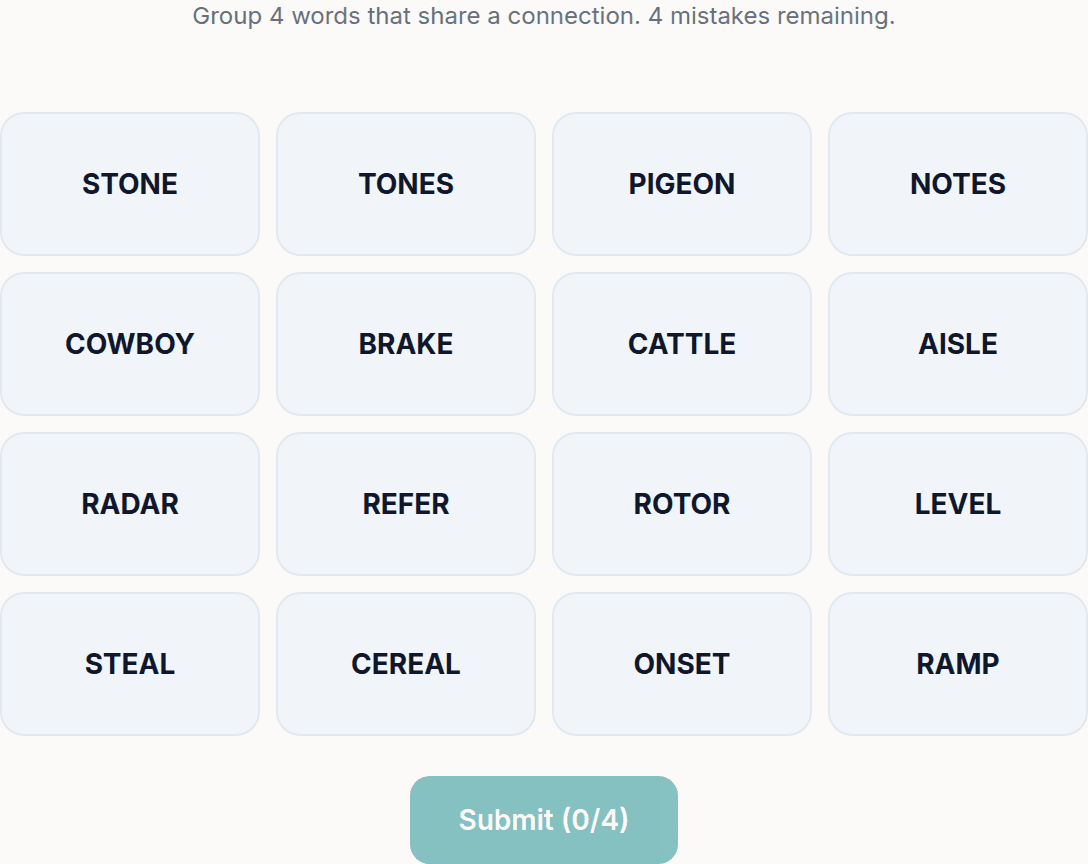
A new Sudoku and a new Connections board every day. No download, no account.


Keep reading
Take the puzzle with you
Free Word Search PDF — Commercial-Use Word Search
Print-ready · answer key included · unsubscribe anytime
Ready to build?
Build this book free in the PuzzlePage Book Studio
18 puzzle types, KDP margins and a full-wrap cover. Download the first 10 pages and the cover free.
Or start from a ready-made book template, or see books other publishers made here.
Enjoyed this? Share the puzzle on X
Like puzzles like this? Follow on Pinterest for a new one every day.