Low Competition KDP Puzzle Niches: 2026 Data Guide
Low competition KDP puzzle niches in 2026: just 18 top listings say cryptograms against 438 for word. See the supply gap, the demand check, and the screen.

Free to try
Build this book free in the PuzzlePage Book Studio
18 puzzle types, KDP margins and a full-wrap cover. Download the first 10 pages and the cover free.
For publishers: Build a book free in the Studio·Ready-made book templates·KDP calculators·Books made here
A thin shelf is only interesting if somebody is standing in front of it. That single sentence is the whole argument of this post, and it is where most niche research goes wrong.
Publishers see a puzzle type with almost no competing titles and read it as a green light. Sometimes it is. Sometimes the shelf is thin because nobody ever wanted the book.
This guide walks the supply numbers, the demand numbers, and the honest test that separates the two. Our catalog of 36 puzzle books on Amazon leans hard into these narrow spaces, so the examples here are titles we actually publish.
📌 Key Takeaways
- Among top puzzle sellers, 438 listings use "word", 226 use "sudoku", 113 use "crossword", and only 18 use "cryptograms".
- A low listing count alone proves nothing. Cross-check it against search demand before you call a niche underserved.
- Cryptogram searches clear 30,000 a month and kakuro puzzle book is reported near 36,635 a month, both against thin catalogs.
- The 2026 trend is hyper-specific adult activity books written for one job or one identity rather than for everyone.
- Large print acts as a multiplier on any niche, with "Bold and Easy" reported at plus 45% year over year and a $1 to $3 price premium.
 1:25
1:25Why is a low listing count not proof of a low competition niche?
A low listing count is a supply measurement, and supply alone tells you nothing about whether money is on the table. Empty shelves have two very different causes, and they look identical from the outside.
The first cause is genuine underservice. Buyers are searching, the format is real, and publishers have simply piled into the easier categories instead.
The second cause is that the category is dead. No one searches for it, no one buys it, and the handful of titles that exist are the graveyard of people who did not check first.
Both look like opportunity in a keyword tool. The only way to separate them is to hold the supply number next to a demand number and see whether the two disagree.
When supply is low and demand is low, walk away. When supply is low and demand is high, you have found something worth a weekend.
Pro Tip
Write both numbers on the same line before you decide anything: competing titles on the left, monthly searches on the right. If you cannot fill in the right-hand side, you do not have a niche yet. You have a hunch.
Like this? We send 10 of these every month.
Free printable puzzles, answer keys included — same quality as the ones in this post.
One email. Unsubscribe anytime.
Which puzzle types show the widest supply and demand gap?
Cryptograms show the widest gap of any major puzzle type, and kakuro is not far behind. Both have real, measurable search demand sitting against a catalog that barely registers.
Start with the supply side. A keyword survey of top puzzle sellers found 438 listings using "word" in the word search and word scramble family, 226 using "sudoku", 113 using "crossword", and just 18 using "cryptograms".
Eighteen. Against 438. That is not a rounding difference, it is a structural absence, and it is the single most useful number in this post.
Now bring in demand, because the supply number on its own would be a trap. Sudoku, word search, crossword and cryptogram searches are each reported above 30,000 a month in the United States.
Read that carefully. Cryptograms pull search volume in the same band as crosswords while carrying roughly one sixth of the crossword listing count.
Kakuro tells a similar story from a different angle. The term "kakuro puzzle book" is reported at roughly 36,635 searches a month, which is a serious number for a puzzle type most publishers cannot spell.
Compare all of that to "puzzle books for adults" at roughly 96,873 a month. That is the crowded head term, the one every generic title is fighting over, and it is the last place a new publisher should plant a flag.
| Puzzle type | Top-seller listings using the term | Reported monthly US searches | What the gap suggests |
|---|---|---|---|
| Word search and word scramble ("word") | 438 | 30,000+ | Heavy supply. Win only on a narrow audience angle. |
| Sudoku | 226 | 30,000+ | Crowded, but buyers repeat. Sub-niche it. |
| Crossword | 113 | 30,000+ | Moderate supply, high build cost per volume. |
| Cryptograms | 18 | 30,000+ | Widest gap on the board. Demand confirms it is not dead. |
| Kakuro | Not in the top-seller keyword survey | ~36,635 ("kakuro puzzle book") | Thin catalog against a real number. Verify before building. |
| Generic "puzzle books for adults" | Effectively the whole category | ~96,873 | The head term. Highest volume, lowest odds. |
One caution before you get excited. The 438 to 18 spread is a keyword survey of top sellers, not a census of every book on Amazon, so treat it as a strong signal rather than an exact inventory.
The direction of the signal is what matters. Whatever the precise counts, cryptograms are dramatically underbuilt relative to how often people search for them.
If the cryptogram gap fits your plan, build a cryptogram book free in the Book Studio and check the first 10 pages before you commit.
How do you tell an underserved niche from a dead one?
You tell them apart by refusing to accept a supply number without a demand number attached. That is the entire discipline, and almost nobody practices it.
Run four checks in order, and stop the moment one fails. Each one is cheap, and each one kills more bad ideas than the last.
- Search volume exists. Someone is typing this into Amazon or Google in meaningful numbers, not a few hundred times a month.
- The top 10 books sit under BSR 100,000. If the best sellers in a category are ranked badly, the category itself is not moving copies.
- There are fewer than roughly 200 competing titles. Above that, you are buying a fight rather than an opening.
- The existing books are beatable. Thin page counts, cramped type, no series, and covers that look like a template all count as beatable.
The BSR check is the one that does the real work. A dead niche and an underserved niche both have few titles, but only the underserved one has titles that are actually selling.
If a category has eight books and every one of them ranks past a million, the shelf is thin for a reason. Nobody is buying, and your book will be the ninth to find that out.
If a category has eight books and three of them hold respectable ranks with mediocre execution, that is the shape of an opening. Demand is proven and the incumbents are not defending it well.
Cross-checking is the whole method. Our niche research and validation walkthrough covers the mechanics of running these checks in more detail.
Why do hyper-specific profession niches convert better?
They convert because a book written for one job answers a question a generic collection cannot. The 2026 trend is hyper-specific adult activity books, and the mechanism behind it is recognition.
A shopper looking for a gift is not looking for puzzles. They are looking for evidence that you understand the person they are buying for.
A generic cryptogram book asks that shopper to do the translation work themselves. A cryptogram book about their sister's actual job does the work for them, and that is the moment the sale closes.
This is the strategy our own catalog is built on. Our niche cryptogram titles are written for teachers, for nurses and healthcare workers, for IT professionals and engineers, for stage managers, for sound operators, for flight attendants and aviation crew, for parents, for dads, for college freshmen, for cruise fans, and for cat and dog owners.
None of those is "puzzle books for adults". Every one of them is a person with a specific vocabulary, a specific set of grievances, and someone in their life looking for a gift that lands.
The stage manager book is a useful example of how narrow you can safely go. It is built around the language of calling a show, which means it is either exactly right for you or completely irrelevant, and that binary is the point.
Notice also that the profession angle stacks on top of the puzzle-type gap rather than competing with it. A cryptogram book for flight attendants sits in an underbuilt format and an underbuilt audience at the same time.
Pro Tip
Pick a profession you can already speak the language of, or one you can research honestly. Insider vocabulary is what makes a niche book feel written rather than generated, and a reader in that job spots the difference on the first page.
The trade-off is real and worth stating plainly. A narrower audience means a smaller ceiling, and you are betting that a higher conversion rate on a small pool beats a terrible conversion rate on a big one.
That bet is not a guarantee. It is a structural argument, and outcomes still vary book to book.
Which puzzle formats are most underbuilt right now?
Word fill-in and niche coloring are the two formats reported as strong performers in early 2026 while catalog coverage stayed thin. Cryptograms remain the widest gap by the listing numbers, and kakuro is the interesting outsider.
Word fill-in deserves more attention than it gets. It is a crossword-adjacent experience without the clue-writing burden, which makes it far cheaper to produce at volume than a real crossword book.
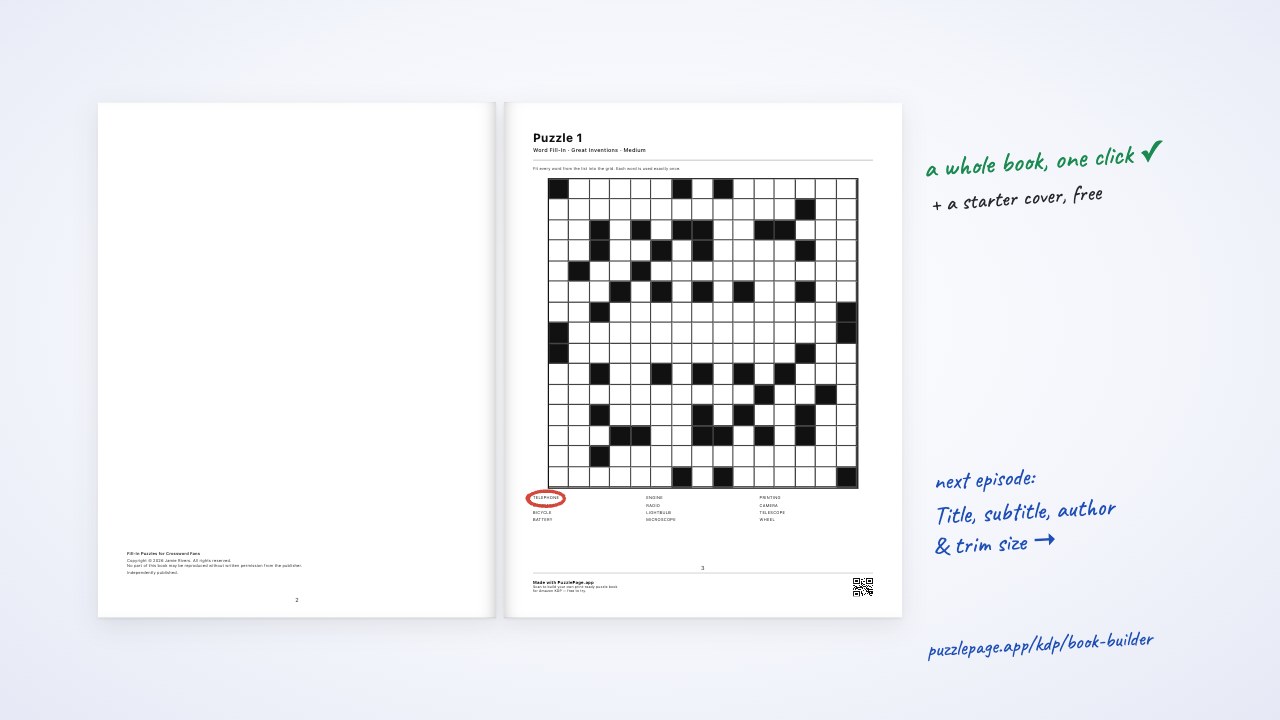
The competition on fill-ins is low and the format is genuinely satisfying to solve. We build fill-ins into several of our multi-format titles, and you can build a whole fill-in book from the Word Fill-In template in the Book Studio or generate single pages free with our word fill-in maker.
Niche coloring is the other reported early-2026 mover, specifically mosaic and pixel styles. Those are underserved because most coloring publishers default to florals and mandalas.
Kakuro is the honest wild card here. The reported search number is large, the catalog is thin, and that combination is exactly the pattern this post is about, but a big search number is not the same as a proven buying audience.
Treat kakuro as a hypothesis rather than a conclusion. Run the BSR check on the existing kakuro titles before you build anything, because the demand signal is reported rather than verified in a sales report.
If the check passes, make this book from the Kakuro Cross Sums template.
The broader context supports the category either way. Puzzle books are reported above $450M annually on Amazon and growing around 13% year over year, and Circana reported growth across screen-free categories in Q1 2026.
Does large print change the math on any niche?
Large print is the closest thing to a free multiplier in this business, and it works on top of any niche you have already chosen. It is not a niche itself, it is a format decision that raises the value of the niche underneath it.
The reported numbers on "Bold and Easy" large print are the clearest evidence: roughly plus 45% year over year, two to three times higher click-through, and a $1 to $3 price premium.
Read that middle number again. Two to three times the click-through means large print earns more attention from the same search impression, which is a compounding advantage on every title you list.
Large-print sudoku for seniors is called out specifically as a strong sub-niche. It combines motivated buyers, lower competition than standard sudoku, and strong gifting dynamics.
Gifting is the underrated part of that list. A gift buyer is not comparison shopping on price the way a solver is, and large print is a visible signal of thoughtfulness on a shelf.
Our own catalog leans on this hard. The Large Print Brain Games sudoku series runs five titles, including separate easy and medium-to-hard editions built for seniors in extra-large print.
Our Decode and Inspire cryptogram series does the same thing five titles deep, and it includes large-print and extra-large-print editions of the same underlying book. That is not a trick, it is two genuinely different products for two readers with different eyes.
The 24 to 110 page flat printing band makes this easier than it sounds. Amazon charges a flat $2.30 to print a black-ink paperback anywhere in that range, so setting your type larger and your grids roomier costs you nothing until you cross 110 pages.
Those printing figures are Amazon's published rates for the Amazon.com marketplace with black ink, from Amazon KDP. They can change over time and differ by marketplace, so check them against your own title before you price.
Pro Tip
If you are already under 110 pages, spend the free pages on bigger type rather than more puzzles. A 30-page book and a 110-page book both cost $2.30 to print, so cramped layout is a choice you are not being paid for.
How do you score a low competition niche before building?
Score it on five dimensions and refuse to build anything that fails the demand check, no matter how empty the shelf looks. The scorecard below is the one we actually reason through.
The point of a scorecard is to stop you falling in love with a single number. A niche with no competition and no demand scores worse than a niche with moderate competition and proven buyers.
| Check | Green light | Yellow light | Walk away |
|---|---|---|---|
| Demand | Clear, repeatable monthly search volume | Volume exists but is seasonal | No measurable search at all |
| Supply | Well under ~200 competing titles | Near the ~200 line | Hundreds of entrenched titles |
| Proof of sales | Top 10 comfortably under BSR 100,000 | Mixed ranks in the top 10 | Top 10 ranked past a million |
| Incumbent quality | Thin, generic, no series, weak covers | One strong publisher, rest average | Polished series with deep reviews |
| Series depth | You can list ten volumes today | You can list four or five | The idea ends at book one |
About those BSR numbers. Amazon does not publish sales data, so every BSR-to-sales figure you have ever read is an estimate built from other people's guesses.
The rough conversions in common use are approximately BSR 50,000 for around 5 sales a day and approximately BSR 100,000 for around 1 sale a day. Those are estimates only, they vary by category and season, and you should never build a plan that depends on them being exact.
Use BSR as a yes-or-no signal instead. It answers "is anything selling here", which is the only question you actually need it to answer.
The pricing context is worth holding alongside the scorecard. The $10 to $20 band holds roughly 50.7% of puzzle book listings, reported at 659 ASINs, which tells you where the market has already settled.
Can you list ten volumes in the niche?
If the answer is no, the niche is a book rather than a business. This is the last filter and it disqualifies more clever ideas than any of the others.
Series structure is where the compounding lives. Volumes feed each other through read-through and the Also-Bought loop, so a buyer who finishes volume one has somewhere to go.
A single title in an underserved niche has no such engine. It sells what it sells, and every new sale has to be won from scratch.
Run the test literally. Open a document, write the numbers one through ten, and name a volume next to each one before you design a single page.
Our Passive Aggressive series is a decent illustration of how the test plays out. The concept is a snarky cryptogram voice, and the volumes are simply new professions: office workers, healthcare, aviation crew, parents.
The engine is the voice, not the audience, which is why the series can keep going. Every new profession is a new volume without a new idea.
The Tech Week Survival series works the same way inside theater. Stage managers got one volume, sound operators got another, and the shared world does the connective work.
Compare that to a niche that ends at book one. If your idea is one clever title and nothing behind it, you can still publish it, but do not confuse it with a catalog.
You can build every interior for a ten-volume plan free. We make all 36 of our books with our own generators, and you can start a volume in the Book Studio, try the cryptogram maker, or browse our published catalog to see how the series stack up.
What can still go wrong in a low competition niche?
Plenty, and pretending otherwise would be dishonest. A thin shelf improves your odds, it does not hand you a result.
The most common failure is the one this whole post is designed to prevent: an empty category that was empty because it was dead. You did the supply research, skipped the demand research, and published into silence.
The second failure is the beatable incumbent who turns out not to be. A book that looks generic may have three years of reviews and an ad budget behind it, and neither of those shows up in a listing count.
The third failure is a niche too narrow to sustain a series. You win the search term, you sell some copies, and then you discover volume two does not exist.
The fourth is execution. An underserved niche filled badly is still a badly filled niche, and cramped type inside a large-print promise gets found out in the reviews.
None of this is a reason to avoid low competition niches. It is a reason to run the checks, describe your book truthfully, and treat any specific outcome as unknown until the market tells you.
If you want the wider view of which niches are moving in 2026, our best-selling KDP puzzle niches guide covers the broader landscape, and our sudoku niche breakdown goes deep on the crowded end of the market.
📚 Build Your Book in the PuzzlePage Book Studio
If you are serious about a KDP catalog, the PuzzlePage Book Studio turns your puzzles into a complete, print-ready interior with answer keys, page numbers and a matching full-wrap cover, all in one place. Download the first 10 pages plus the cover free, then pick a KDP plan when you are ready to publish.
Start a Free Book →Free to try
Try the Book Studio free: first 10 pages and cover, no card
Build the whole book in your browser, watch the real printed pages as you go, and download the first 10 pages plus the cover to check them before you decide anything.
- ✓18 puzzle types with difficulty ramps and answer keys
- ✓KDP trim sizes and margins checked as you build
- ✓A matching full-wrap cover, spine included
- ✓Download the first 10 pages and the cover free
Build first, decide later. You only pay when you want the full interior.
Frequently Asked Questions
What are the lowest competition KDP puzzle niches in 2026?
Cryptograms show the widest supply gap, with only 18 of the surveyed top listings using the term against 438 for word puzzles, while cryptogram searches still clear 30,000 a month. Word fill-in, kakuro, and niche coloring such as mosaic and pixel are also reported as thinly covered.
How do I know a low competition niche is not just a dead one?
Check demand before you celebrate thin supply. A workable niche has measurable monthly searches, a top 10 sitting under BSR 100,000, and fewer than roughly 200 competing titles. If the few existing books all rank badly, the shelf is empty because nobody is buying.
Is a kakuro puzzle book worth publishing on KDP?
The signal is promising but unproven. The term kakuro puzzle book is reported near 36,635 searches a month against a very thin catalog, which is the pattern you want, but you should verify that existing kakuro titles are actually selling before you build a series around it.
Does large print really make a niche puzzle book sell better?
Large print is reported as a strong multiplier rather than a niche of its own. Bold and Easy formats are reported at plus 45% year over year with two to three times the click-through and a $1 to $3 price premium, and large-print sudoku for seniors is called out for motivated buyers and gifting demand.
A low-competition niche still needs a clean interior. See which parts of the puzzle generator are free for KDP.
More you can make here
One puzzle is the start. Here is the rest of the kit.
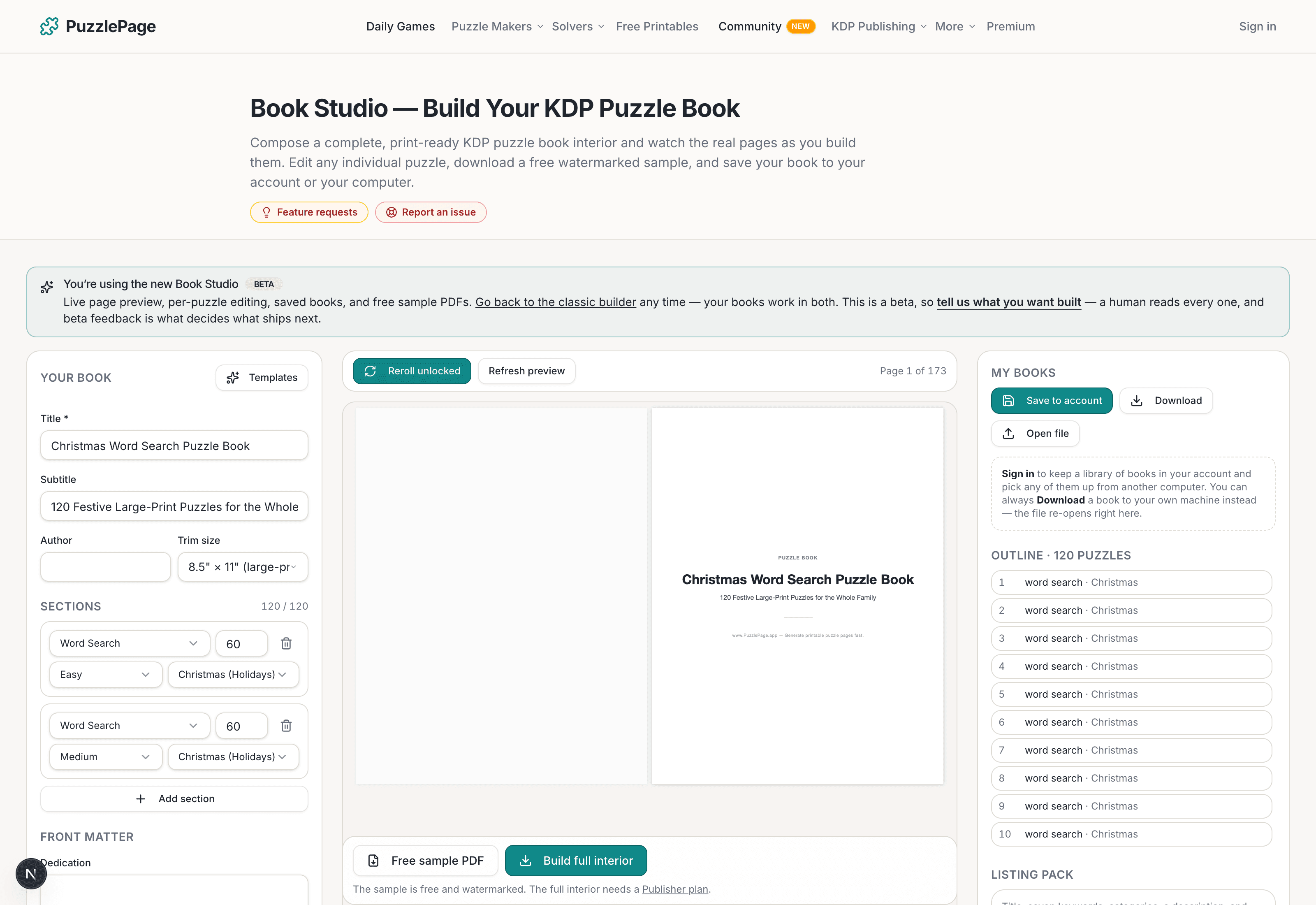
KDP Book Studio
Lay out a full puzzle book for Amazon KDP: templates, trim sizes, page checks and a cover designer.
Start a puzzle book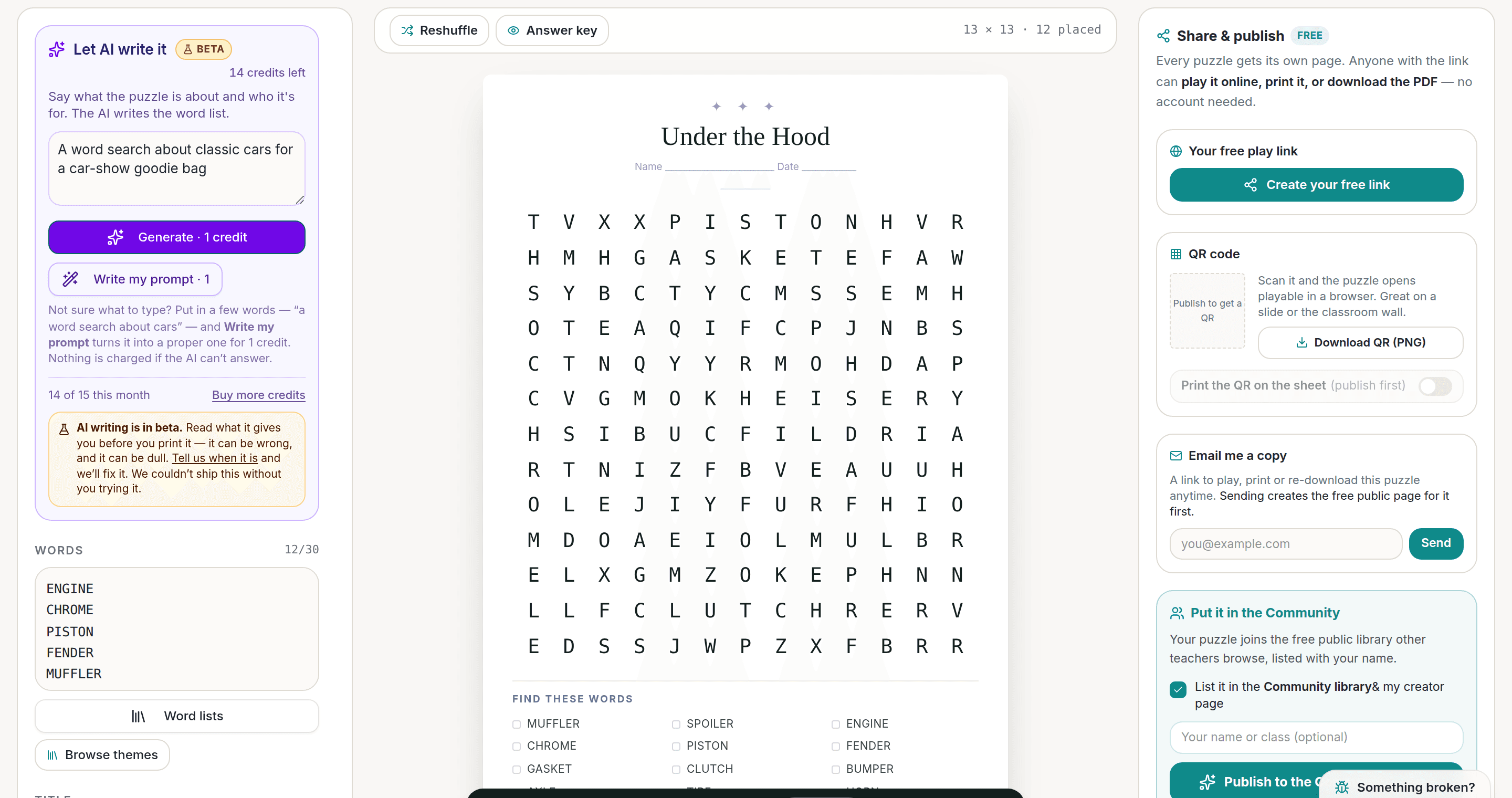
AI Puzzle Generator
Type a topic, get a themed word list and a finished puzzle. Premium also removes the footer credit and adds Word export.
Try the AI generator New
NewWorksheet Builder
Put a word search, a cryptogram and a scramble on one page, or build a whole themed packet. Prints with answer keys.
Build a worksheet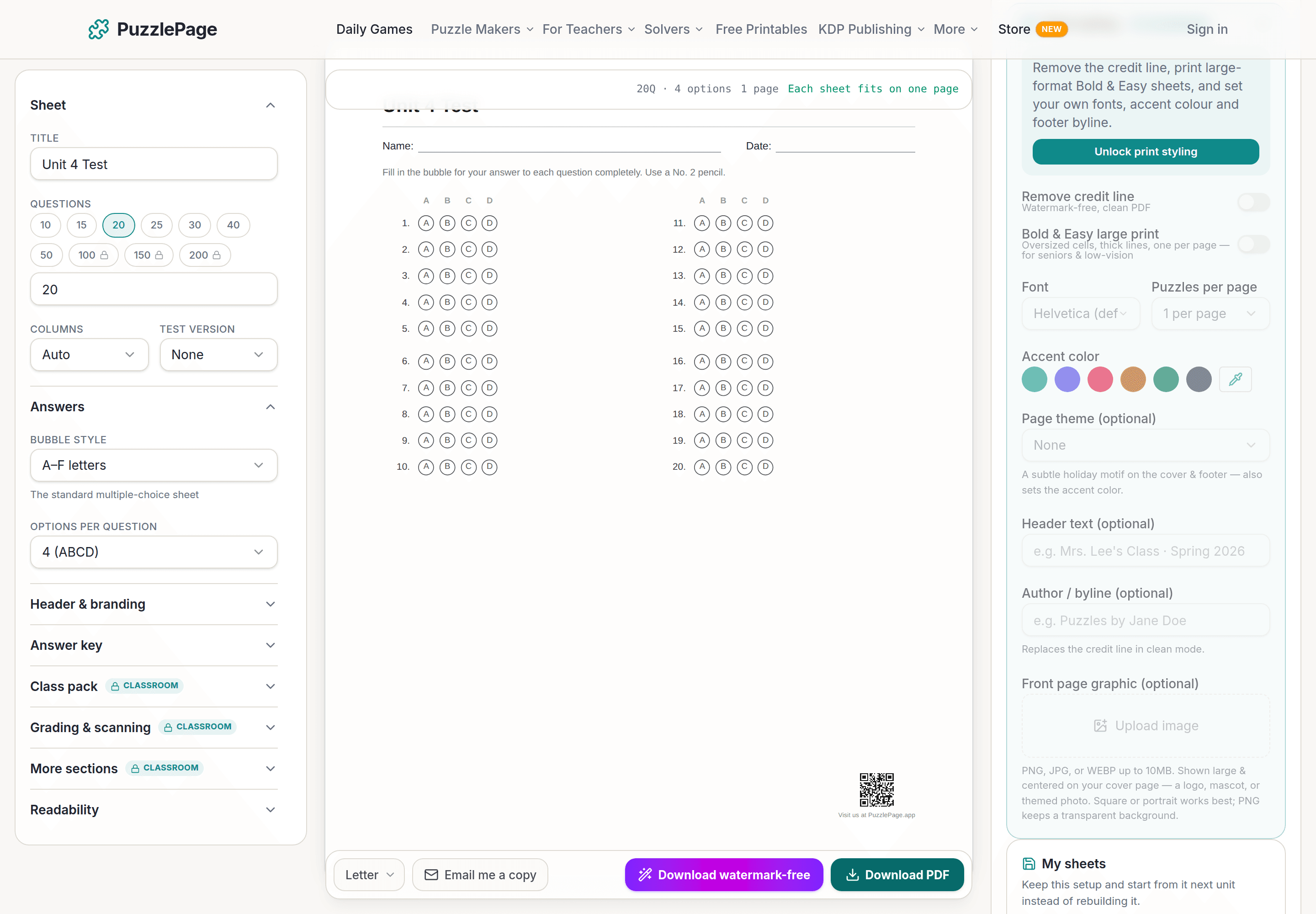
Bubble Sheet Studio
Answer sheets for any test length, with sections, versions, student ID grids and a matching answer key.
Make a bubble sheetPublisher plans unlock full print-ready interiors and covers, with a commercial licence to sell every book.
See plans →Free daily games
Need a two-minute break? Today's puzzles are live.
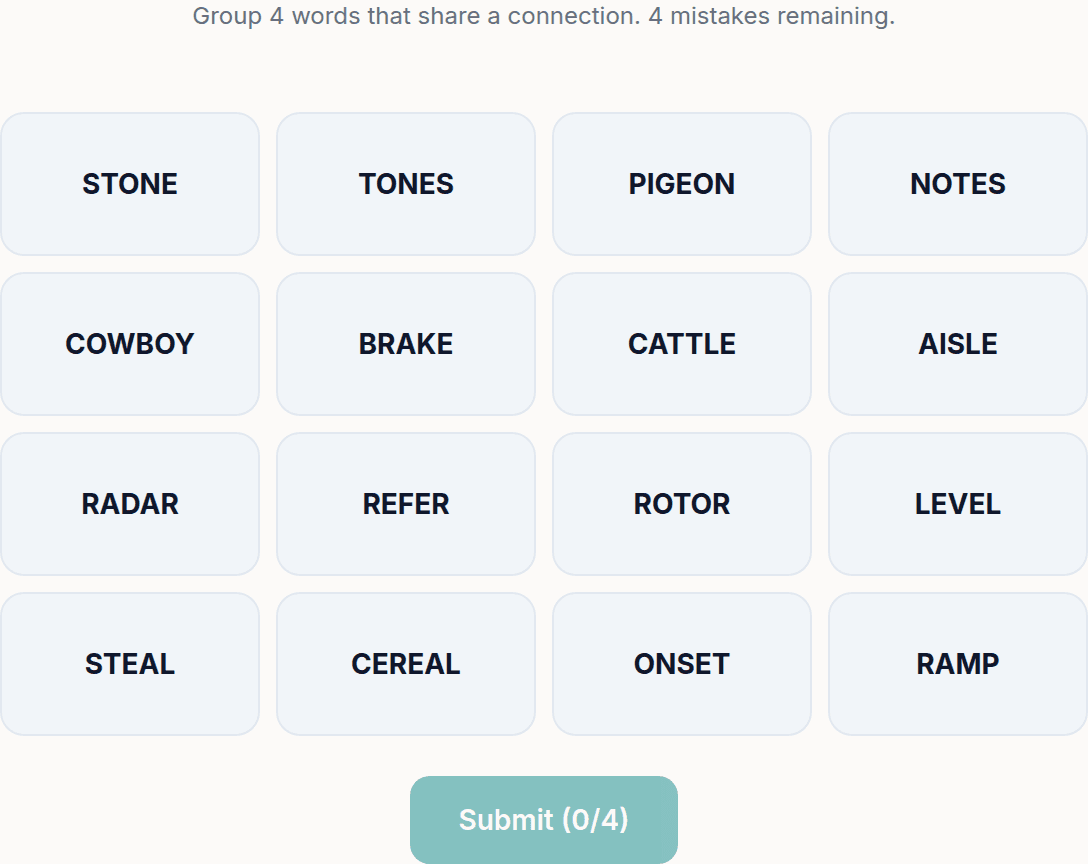
A new Sudoku and a new Connections board every day. No download, no account.


Keep reading
Get 10 free puzzles
Get the free 10-puzzle pack
Enter your email and we'll send you 10 print-ready puzzles with answer keys, plus a heads-up when we publish new generators and seasonal puzzle packs. Same quality as the ones on this page.
Roughly two emails a month. No spam, unsubscribe anytime.
Ready to build?
Build this book free in the PuzzlePage Book Studio
18 puzzle types, KDP margins and a full-wrap cover. Download the first 10 pages and the cover free.
Or start from a ready-made book template, or see books other publishers made here.
Enjoyed this? Share the puzzle on X
Like puzzles like this? Follow on Pinterest for a new one every day.