Cryptogram Puzzle Books for KDP: Build a Full Catalog
Step-by-step guide to building a cryptogram puzzle book catalog on Amazon KDP. Niche stacking, pricing tiers, cover templates, free generator included.

Free to try
Build this book free in the PuzzlePage Book Studio
18 puzzle types, KDP margins and a full-wrap cover. Download the first 10 pages and the cover free.
Hints
Puzzle Publisher Cryptogram
Decode 5 tips for building a cryptogram-book catalog
Phrase 1
Hint: D = A
Phrase 2
Hint: M = L
+ 3 more phrases in the PDF
Free companion PDF
Puzzle Publisher Cryptogram
Decode 5 tips for building a cryptogram-book catalog. Grab the PDF now and we'll send 10 more printable puzzles, plus a heads-up when new generators or seasonal packs go live. Roughly two emails a month — unsubscribe anytime.
No payment · Letter-size · Answer key included
For publishers: Build a book free in the Studio·Ready-made book templates·KDP calculators·Books made here
Publishing one cryptogram puzzle book on Amazon KDP is a project. Publishing a full cryptogram puzzle book KDP catalog is a business. The single-title approach caps your earnings at whatever that one listing pulls, while a niche-stacked catalog of eight to twelve linked books lets each title support the others through series naming, also-bought placements, and brand recognition.
Our first cryptogram catalog of 8 books published across 4 months hit roughly $1,800 monthly revenue by month 6 using the niche-stacking system below. The framework is straightforward, the cover work is templated, and the puzzle generation takes minutes per book once you have the system set up.
📌 Key Takeaways
- A 10-book catalog earns more than a single bestseller because the titles cross-promote each other on Amazon
- Niche stacking means picking one audience (coffee lovers, gardeners) and shipping multiple format variants for them
- A three-tier pricing structure (standard, large print, bundle) doubles your revenue per buyer
- A shared cover system makes 10 books look like a serious publishing imprint, not a hobby
- Free generators like PuzzlePage produce 200 plus print-ready puzzles per book in minutes
 1:33
1:33Why a Catalog Beats a Single Book on KDP
Amazon's algorithm rewards publishers who keep buyers shopping. When someone buys your gardening cryptogram book and the also-bought row shows three more of your titles, you capture the full lifetime value of that customer. A solo title sends those clicks to a competitor.
A linked catalog also stabilizes your income. One title can slip in rank during a slow week, but ten titles across an evergreen niche family smooth the curve. You stop watching the BSR of one book obsessively and start running a publishing line.
Free Cryptogram PDF — Puzzle Publisher Cryptogram
Print-ready · answer key included · unsubscribe anytime
Niche Family Selection: Pick One Audience, Serve It Deeply
The catalog approach starts with a niche family, not a book idea. A niche family is a single audience identity you can build five to twelve books around. Evergreen examples include coffee lovers, gardeners, dog owners, classic film fans, road trip enthusiasts, and bird watchers.
Each of those audiences has gift buyers, hobbyist readers, and casual fans. Each supports themed quote sets, themed vocabulary, and themed cover art. None of them are tied to a holiday or trend, which means the catalog earns the same in January as it does in July.
To validate a niche family before you commit, search Amazon for the audience term plus the word "cryptogram" and the word "puzzle book." Scan the top 20 results. If you see five or more titles with a steady review count of 50 plus and a BSR under 500,000, the niche has real demand.
Pro Tip
Pick a niche family you actually enjoy. You will be reading hundreds of themed quotes, writing back-cover copy in that voice, and looking at the cover art for months. Genuine interest shows up in the finished product and the reviews.
The 10-Book Matrix for Any Niche Family
Once you pick the niche family, you build a matrix. The same audience gets served by ten distinct titles, each filling a slot in the matrix. This is the structure we use:
Standard Cryptograms (6x9)
Your anchor book. 150 to 200 cryptograms with themed quotes for the niche audience. Standard 6 by 9 trim, 14pt puzzle font, full answer key in the back.
Large Print Cryptograms (8.5x11)
Same puzzles, repurposed for the senior gift market. 8.5 by 11 trim, 22pt puzzle font, doubled white space. This sells at a higher price and reaches a different buyer.
Easy Cryptograms for Beginners
Shorter quotes, two to three letter hints provided, gentler difficulty curve. Beginners convert into your other books once they get hooked on the mechanic.
Hard Cryptograms for Experts
No hints, longer quotes, mixed quote sources. The expert tier catches the buyers who left two-star reviews on competitor books for being too easy.
Gift Edition (Hardcover)
Same content as your anchor book, published in hardcover via KDP. The price jump is dramatic, the margin is healthy, and gift buyers reach for hardcovers.
Themed Volume 2, 3, and 4
More themed quote sets in the same niche. Volume 2 leans on different quote sources within the niche, Volume 3 introduces a sub-theme, and so on. Sequels convert at four to six times the rate of new niches.
Mixed Puzzle Bundle Book
A 300 plus page bundle that combines cryptograms, word searches, and word scrambles around the same niche. Build it from the Big Variety Puzzle Book template, or pair this with the free word search generator for a fast workflow. This title commands a premium price.
The Shared Cover System
A catalog needs a visual signature. When a buyer sees the third book in your series, they should recognize the family at a glance. The cover system handles that recognition.
Lock down a single color palette for the entire niche family. Three colors total: one dominant, one accent, one neutral.
The dominant color appears on every cover in the catalog. Buyers learn the color and start scanning for it.
Set a typography hierarchy and keep it identical across every book. Same title font, same subtitle font, same author font, same vertical placement.
Only the subtitle text changes. Browsing your author page should feel like browsing a single publishing line.
Pro Tip
Build one master Canva template and duplicate it ten times. Change only the subtitle, the spine text, and one accent illustration per book. A catalog of ten covers takes one afternoon instead of ten.
Three-Tier Pricing for Maximum Revenue Per Buyer
Single-book publishers leave money on the table by pricing every title the same. A catalog lets you run a tiered structure that captures budget buyers, premium buyers, and gift buyers from the same audience.
| Tier | Price | What It Includes |
|---|---|---|
| Standard | $6.99 | 6 by 9 paperback, 150 puzzles, the entry price point |
| Large Print | $9.99 | 8.5 by 11 paperback, same puzzles, senior gift positioning |
| Bundle / Hardcover | $12.99 | 300 puzzles or hardcover edition, the premium gift price |
The standard tier captures impulse buyers who want a cheap activity book. The large print tier captures the gift buyer purchasing for a parent or grandparent. The premium tier captures the buyer who wants the nicer hardcover or the longer collection.
Set the three prices firmly across the catalog and never discount the anchor book by more than a dollar. Discounting trains buyers to wait.
Cross-Promotion Through Series Naming
Amazon promotes books that look like part of a series. The series field on KDP is the single most underused lever in puzzle publishing. Fill it in for every book in the catalog, and Amazon links the titles automatically.
Pick a series name that includes the niche audience and the puzzle type. Something like "Coffee Lover Cryptograms" or "Gardener's Brain Games Library." Every book in the catalog uses this series name, numbered Volume 1 through Volume 10.
The subtitle on each book reinforces the series name. The back-cover copy mentions the other volumes. The author bio mentions the full catalog.
Every surface points at the catalog rather than the single book.
Pro Tip
Set up an Amazon Author Central page and list every book in your catalog. The author follow button drives repeat sales when you launch a new volume in the same niche family.
Generating 200 Puzzles Per Book in Minutes
The catalog math only works if you can produce the interiors quickly. Hand-building 200 cryptograms per book would consume the budget for a profitable catalog. Free generators solve this.
The quickest route to a full volume is the Cryptogram Quote Collection template in the Book Studio: it lays out the puzzles, answer key and page numbers, and adds a matching full-wrap cover. For a large-print slot in your matrix, start from the Large-Print Cryptograms template instead.
The free PuzzlePage cryptogram generator produces a print-ready PDF with full answer key, customizable difficulty, and optional letter hints. Drop in your themed quote list and the generator returns the puzzle book interior ready for KDP upload.
For the bundle book in your matrix, mix the cryptograms with output from the free word search generator. The two generators share the same niche-themed input vocabulary, which keeps the bundle feeling cohesive rather than slapped together.
For background on the publishing fundamentals before you commit to a full catalog, our companion guide on how to create puzzle books for KDP walks through the single-book workflow from start to finish. The deeper cryptogram-specific generator walkthrough is in our cryptogram puzzle generator guide.
If you want to validate the niche family before committing months of work, real Amazon search-volume data takes the guesswork out of the matrix. Amazon's official KDP cover and interior file requirements are the source of truth for trim sizes and bleed margins. Read those once before you start designing covers.
📚 Build Your Book in the PuzzlePage Book Studio
If you are serious about a KDP catalog, the PuzzlePage Book Studio turns your puzzles into a complete, print-ready interior with answer keys, page numbers and a matching full-wrap cover, all in one place. Download the first 10 pages plus the cover free, then pick a KDP plan when you are ready to publish.
Start a Free Book →Free to try
Try the Book Studio free: first 10 pages and cover, no card
Build the whole book in your browser, watch the real printed pages as you go, and download the first 10 pages plus the cover to check them before you decide anything.
- ✓18 puzzle types with difficulty ramps and answer keys
- ✓KDP trim sizes and margins checked as you build
- ✓A matching full-wrap cover, spine included
- ✓Download the first 10 pages and the cover free
Build first, decide later. You only pay when you want the full interior.
Frequently Asked Questions
How long does it take to build a full 10-book cryptogram puzzle book KDP catalog?
Our first 8-book catalog took 4 months from niche selection to all titles live. Once the cover template and the niche quote library are set, each additional book takes one to two evenings. The bottleneck is cover variation, not puzzle generation.
Should every book in the catalog be cryptograms, or should I mix puzzle types?
Anchor the catalog on cryptograms because that is your branded specialty, but add a mixed-puzzle bundle book as your premium tier. The bundle catches buyers who want variety in a single volume and lifts the average revenue per customer.
Can I reuse the same quote list across multiple books in the catalog?
Yes, with care. The standard book and the large print edition can share the exact same puzzles because they target different buyers. Volume 1 and Volume 2 should use distinct quote sets to avoid disappointing repeat buyers.
Do I need a separate KDP account for each pen name or series?
No. A single KDP account supports multiple author pen names. Use one pen name per niche family so your Author Central page stays focused on a clear audience identity.
Cryptograms are one of the types the generator makes. See where the free tier ends for a full book interior.
Live demo
Make your own cryptogram right here
Swap in your own words (a spelling list, residents' names, a unit's vocabulary) and press Generate. The full maker adds answer keys, size options and PDF export.
More you can make here
One puzzle is the start. Here is the rest of the kit.
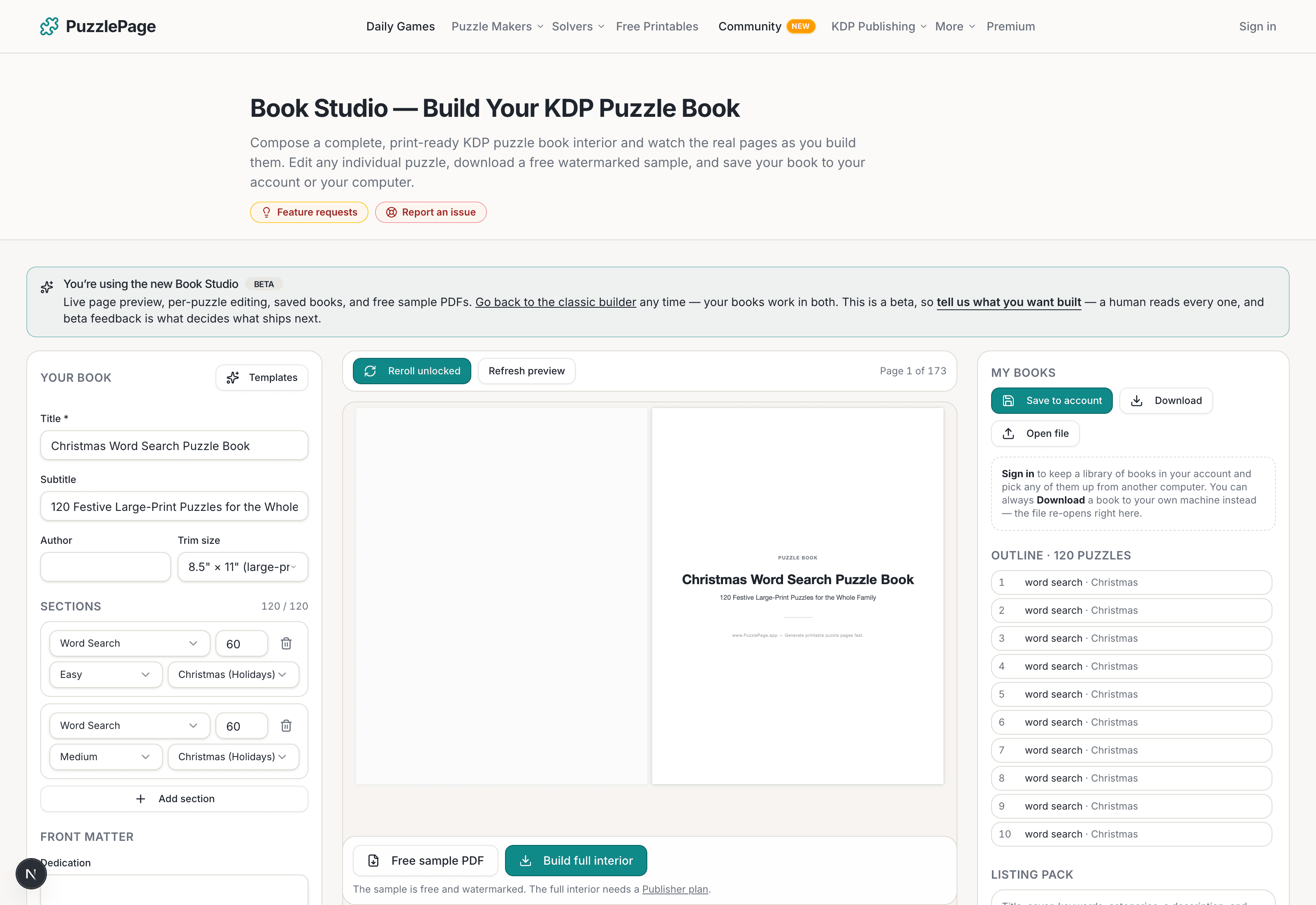
KDP Book Studio
Lay out a full puzzle book for Amazon KDP: templates, trim sizes, page checks and a cover designer.
Start a puzzle book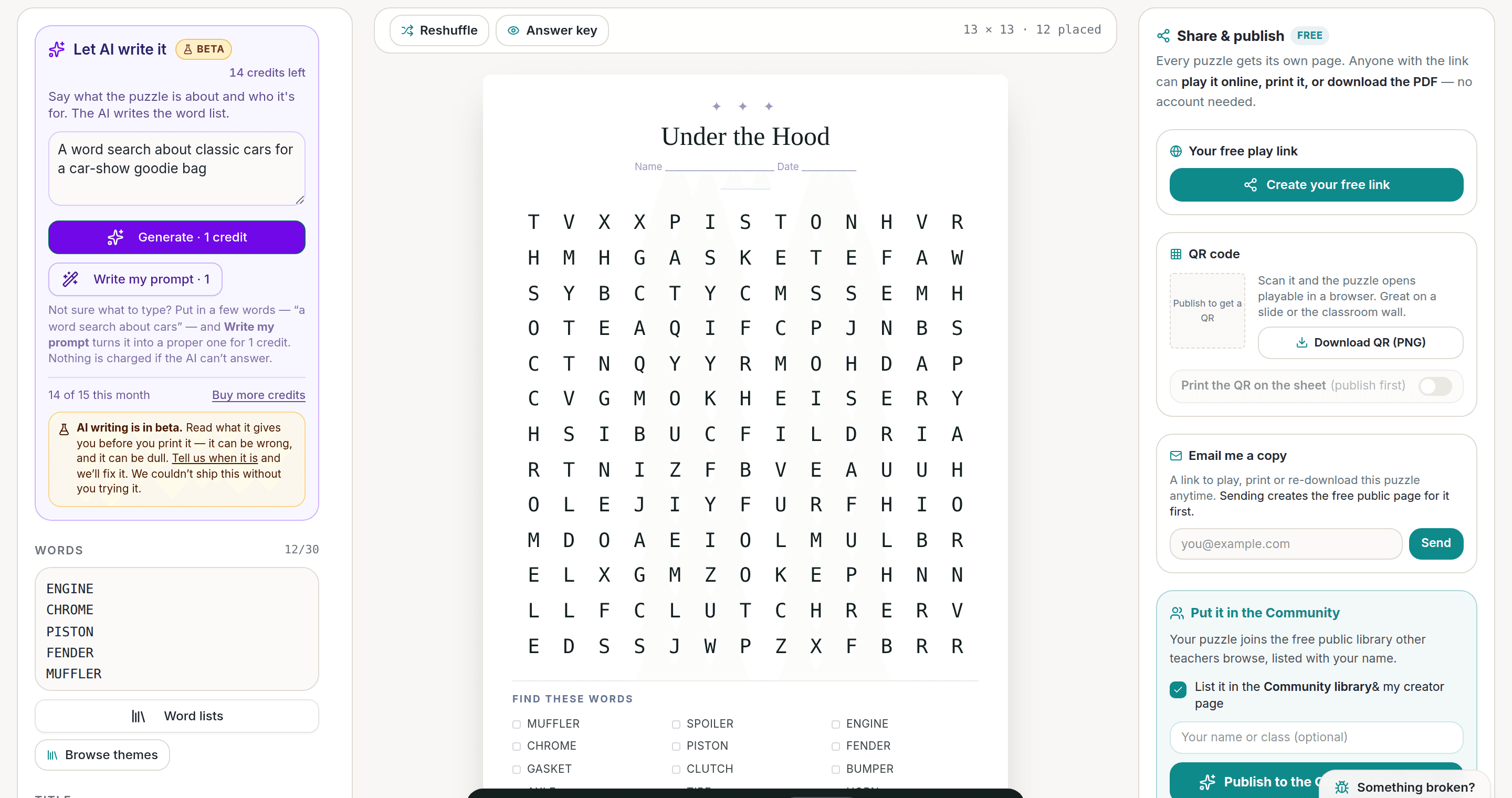
AI Puzzle Generator
Type a topic, get a themed word list and a finished puzzle. Premium also removes the footer credit and adds Word export.
Try the AI generator New
NewWorksheet Builder
Put a word search, a cryptogram and a scramble on one page, or build a whole themed packet. Prints with answer keys.
Build a worksheet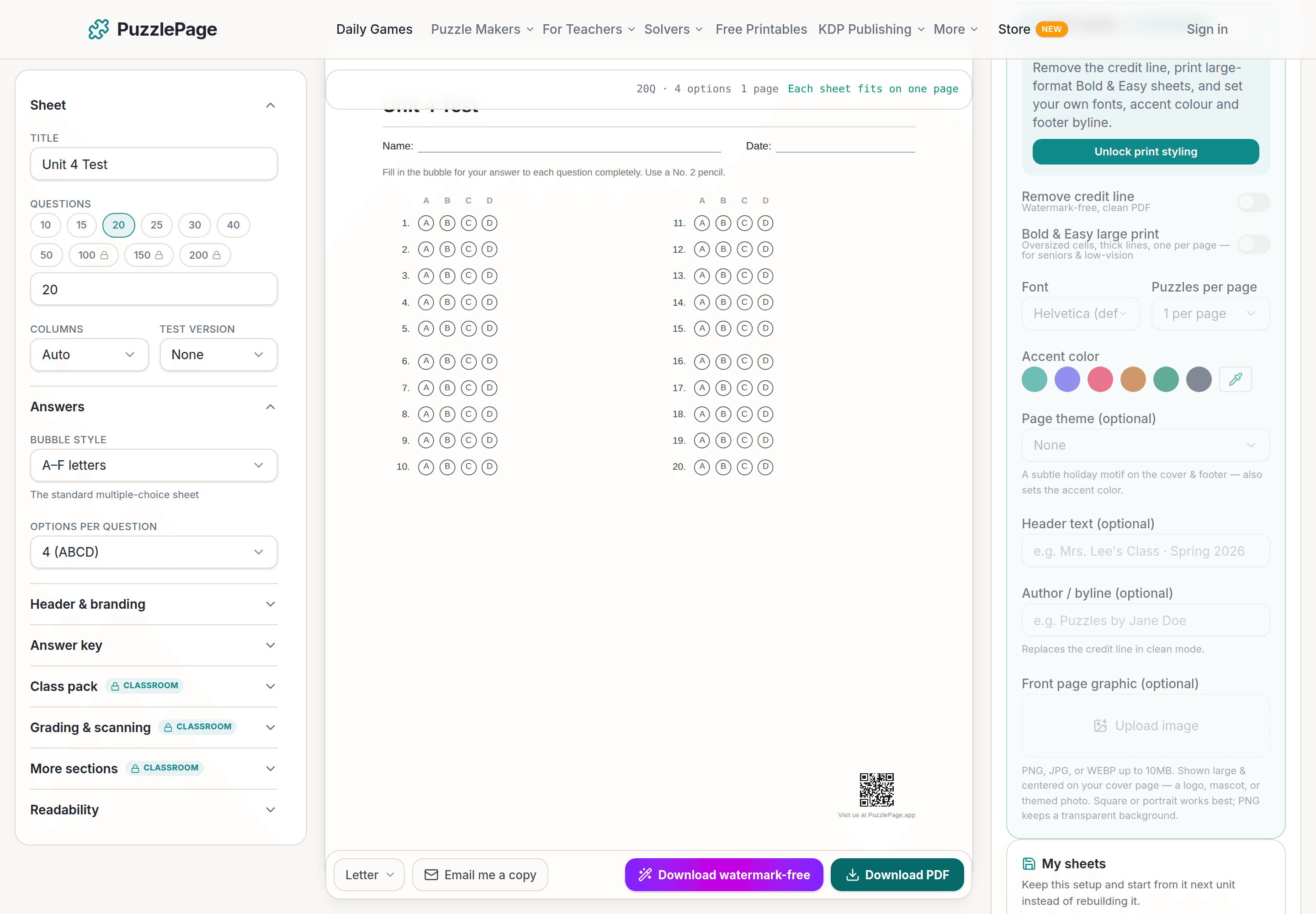
Bubble Sheet Studio
Answer sheets for any test length, with sections, versions, student ID grids and a matching answer key.
Make a bubble sheetPublisher plans unlock full print-ready interiors and covers, with a commercial licence to sell every book.
See plans →Free daily games
Need a two-minute break? Today's puzzles are live.
A new Sudoku and a new Connections board every day. No download, no account.


Keep reading
Take the puzzle with you
Free Cryptogram PDF — Puzzle Publisher Cryptogram
Print-ready · answer key included · unsubscribe anytime
Ready to build?
Build this book free in the PuzzlePage Book Studio
18 puzzle types, KDP margins and a full-wrap cover. Download the first 10 pages and the cover free.
Or start from a ready-made book template, or see books other publishers made here.
Enjoyed this? Share the puzzle on X
Like puzzles like this? Follow on Pinterest for a new one every day.