Human Body Word Search: Free Printable Body Systems
Free human body word search printable with an answer key. Grade-banded vocabulary lists for K-2 body parts and 3-5 body systems science units.

Find these words
- BRAIN
- CELLS
- DIGESTION
- HEART
- JOINTS
- LUNGS
- MUSCLE
- NERVES
- OXYGEN
- SKELETON
- SPINE
- STOMACH
Drag across the grid to trace each hidden word.
Body Systems Word Search
Human body parts and systems vocabulary for grades K-5
Word List
- DIGESTION
- SKELETON
- STOMACH
- MUSCLE
- NERVES
- JOINTS
- OXYGEN
- HEART
- LUNGS
- BRAIN
- SPINE
- CELLS
Free companion PDF
Body Systems Word Search
Human body parts and systems vocabulary for grades K-5. Grab the PDF now and we'll send 10 more printable puzzles, plus a heads-up when new generators or seasonal packs go live. Roughly two emails a month — unsubscribe anytime.
No payment · Letter-size · Answer key included
Prefer to play online? There's a new puzzle every day.
Free daily word games — play instantly. Come back tomorrow for a fresh one.
On this site: Create your own free word search puzzle·Browse 100+ free printables·Play today's puzzles
A human body word search is one of the few activities that works for a kindergarten body-parts lesson and a fifth-grade body-systems unit using the same generator, just different word lists. That flexibility is why so many teachers keep it on the shelf every fall.
This guide breaks the vocabulary down by grade band, walks through building the puzzle, and covers classroom uses from morning work to sub-day filler.
📌 Key Takeaways
- Grade band matters: K-2 wants simple body parts, 3-5 wants system-level vocabulary like DIGESTION and NERVES.
- Every puzzle downloads with a matching answer key, ready before the first hand goes up.
- A themed word list turns science vocabulary review into a quiet, focused activity.
- The same tool builds a harder version for early finishers without any extra prep work.
 1:02
1:02Why Does a Human Body Word Search Work So Well in Science Class?
A word search lets students see and spell body-systems vocabulary before they are asked to define it on a test. Recognition builds first, and that recognition makes the later vocabulary quiz far less intimidating.
Elementary science standards in most states introduce body systems in third through fifth grade, right when a puzzle worksheet like this earns its keep. When we ran a body-systems word search with a class of 22 fourth graders opening a new science unit, 20 finished within 12 minutes and asked to keep the sheet in their science folder.
That kind of quick win matters for a hidden words game aimed at kids who are just meeting words like SKELETON and DIGESTION for the first time.
Free Word Search PDF — Body Systems Word Search
Print-ready · answer key included · unsubscribe anytime
What Words Belong on a Body Systems Word List?
Split the vocabulary by grade band so the puzzle worksheet matches what students are actually learning that week. Younger students need concrete body parts; older students are ready for system-level terms.
| Grade band | Focus | Sample words | Suggested difficulty |
|---|---|---|---|
| K-2 | Body parts | HEART, BRAIN, STOMACH, SPINE | Easy |
| 3-5 | Body systems | SKELETON, MUSCLE, NERVES, DIGESTION | Medium |
| Enrichment | Function words | OXYGEN, CELLS, JOINTS, LUNGS | Hard |
For background reading on how young readers pick up new science vocabulary, Reading Rockets' vocabulary resources cover strategies that pair nicely with a themed puzzle worksheet like this one.
How Do You Build the Puzzle in Under Two Minutes?
Open the free word search generator at PuzzlePage, choose a grade-band word list, and download a print-ready PDF with its answer key attached. The whole build takes about two minutes, start to finish.
The screenshot below shows the live word search tool mid-build, with a body-systems list already entered.


- Title the puzzle something like Body Systems Hunt.
- Type 12 to 15 vocabulary words for your grade band, one per line, in capital letters.
- Set the grid size and difficulty to match the age group.
- Generate and download the free PDF along with the separate answer key page.
Pro Tip
Pair each word with a one-sentence definition on a separate handout. Students look the word up in the grid first, then match it to its meaning, which turns a find-a-word into a two-step vocabulary check.
Where Does This Puzzle Fit in a Science Unit?
A human body word search fits best as an opener, a review station, or a sub-day activity, since it needs no direct instruction to complete. Students who already know a few of the words get a confidence boost; students who don't get a gentle first exposure.
- Opening-day warm-up before a body systems unit begins
- Vocabulary review station the day before a quiz
- Early-finisher activity during independent science work
- Ready-made sub-day plan that needs zero explanation
Pair it with a body-systems word scramble for a two-station rotation, or a word fill-in puzzle for students who need a logic-puzzle challenge instead of a hunt.
Pro Tip
Keep one master word list for the whole unit, then print it at three difficulty levels. Every student works from the same vocabulary, so class discussion still lines up even though the grids look different.
How Can Families Use This Puzzle at Home Too?
A human body word search is not just a classroom tool; it travels well to the kitchen table for homeschool families or as a rainy-day supplement to a science lesson. The same grade-banded lists work whether a child is in a classroom or learning at home.
Homeschool parents planning a body systems unit can build a full week of vocabulary using the same generator: a word search on day one, a word scramble on day three, and a review grid on day five with the same words mixed in a harder grid.
- Day one: easy word search to introduce new vocabulary
- Day three: word scramble to reinforce spelling
- Day five: medium or hard word search as a review check
This kind of spaced repetition, seeing the same words across several formats over a week, tends to stick better than a single worksheet completed once and filed away. Teachers running a full science unit can borrow the same three-day rhythm for a station rotation.
Homeschool co-ops covering a body systems unit together can also print one shared word list at three difficulty levels, so a mixed-age group of siblings and classmates all work from the same vocabulary during a single session.
How Does This Puzzle Support Different Learning Styles?
Some students learn vocabulary best by seeing a word written out; others need to physically search for it before it sticks. A human body word search covers both, since finding SKELETON in a grid means reading it, tracing it, and circling it in one motion.
For students who struggle with traditional vocabulary lists, this hands-on searching often lowers the pressure that comes with a flashcard drill or a spelling quiz. The puzzle format turns memorization into something closer to a game, which matters for reluctant learners in any science classroom.
Pair the word search with a class discussion afterward: ask students to pick two words they found and explain what that body part or system does. That quick follow-up turns a quiet activity into a short speaking exercise too.
Try It Yourself: Build a Body Systems Puzzle
Start with SKELETON, MUSCLE, HEART, LUNGS, BRAIN, STOMACH, NERVES, and SPINE for a solid grades 3-5 list. Add JOINTS, CELLS, OXYGEN, and DIGESTION for a longer, harder version.
Type the list into the generator, set the difficulty for your grade band, and download the free PDF with its answer key. Print a class set the night before your body systems unit begins.
Build your free human body word search printable and have it ready before first period.
Frequently Asked Questions
Where can I find a human body word search puzzle answer key?
Every puzzle built at PuzzlePage's word search generator downloads with a matching answer key page automatically. There is nothing extra to build or search for separately.
Is there a human body word search for kids in kindergarten?
Yes, choose simple body-part words like HEART, BRAIN, and SPINE and set the difficulty to easy with a small grid. Most K-2 students can complete an eight-word easy grid in about 15 minutes.
Can I download the human body word search as a PDF?
Yes, every puzzle generates as a print-ready PDF sized for standard letter paper, and it downloads free in a few clicks. The answer key comes as a separate page in the same file.
What body systems words work best for a 3-5 vocabulary list?
SKELETON, MUSCLE, NERVES, DIGESTION, and OXYGEN cover the major systems taught in most third through fifth grade science curricula. Mixing in a few concrete parts like HEART and LUNGS keeps the list from feeling too abstract.
Live demo
Make your own word search right here
Swap in your own words (a spelling list, residents' names, a unit's vocabulary) and press Generate. The full maker adds answer keys, size options and PDF export.
More you can make here
One puzzle is the start. Here is the rest of the kit.
 New
NewWorksheet Builder
Put a word search, a cryptogram and a scramble on one page, or build a whole themed packet. Prints with answer keys.
Build a worksheet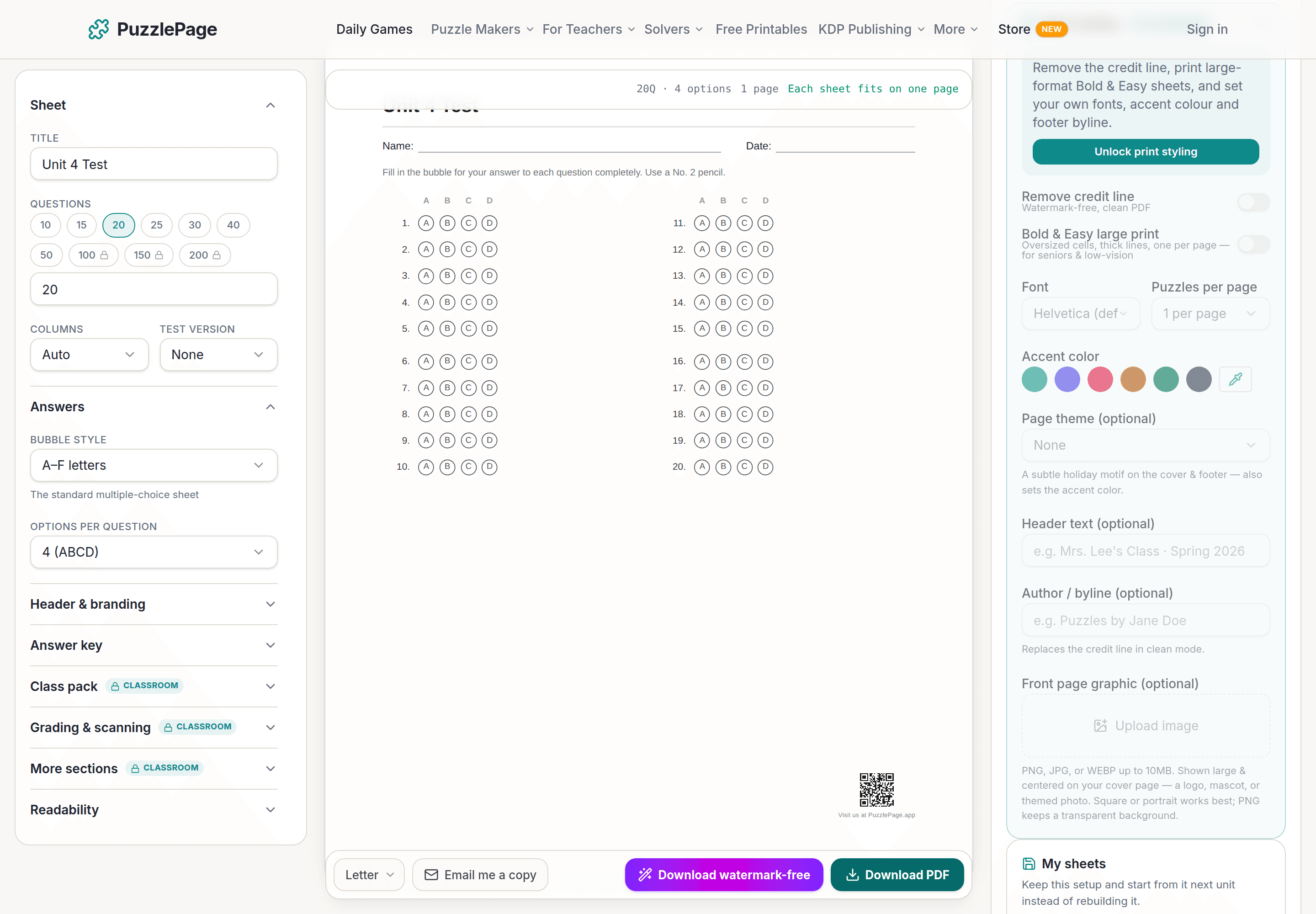
Bubble Sheet Studio
Answer sheets for any test length, with sections, versions, student ID grids and a matching answer key.
Make a bubble sheet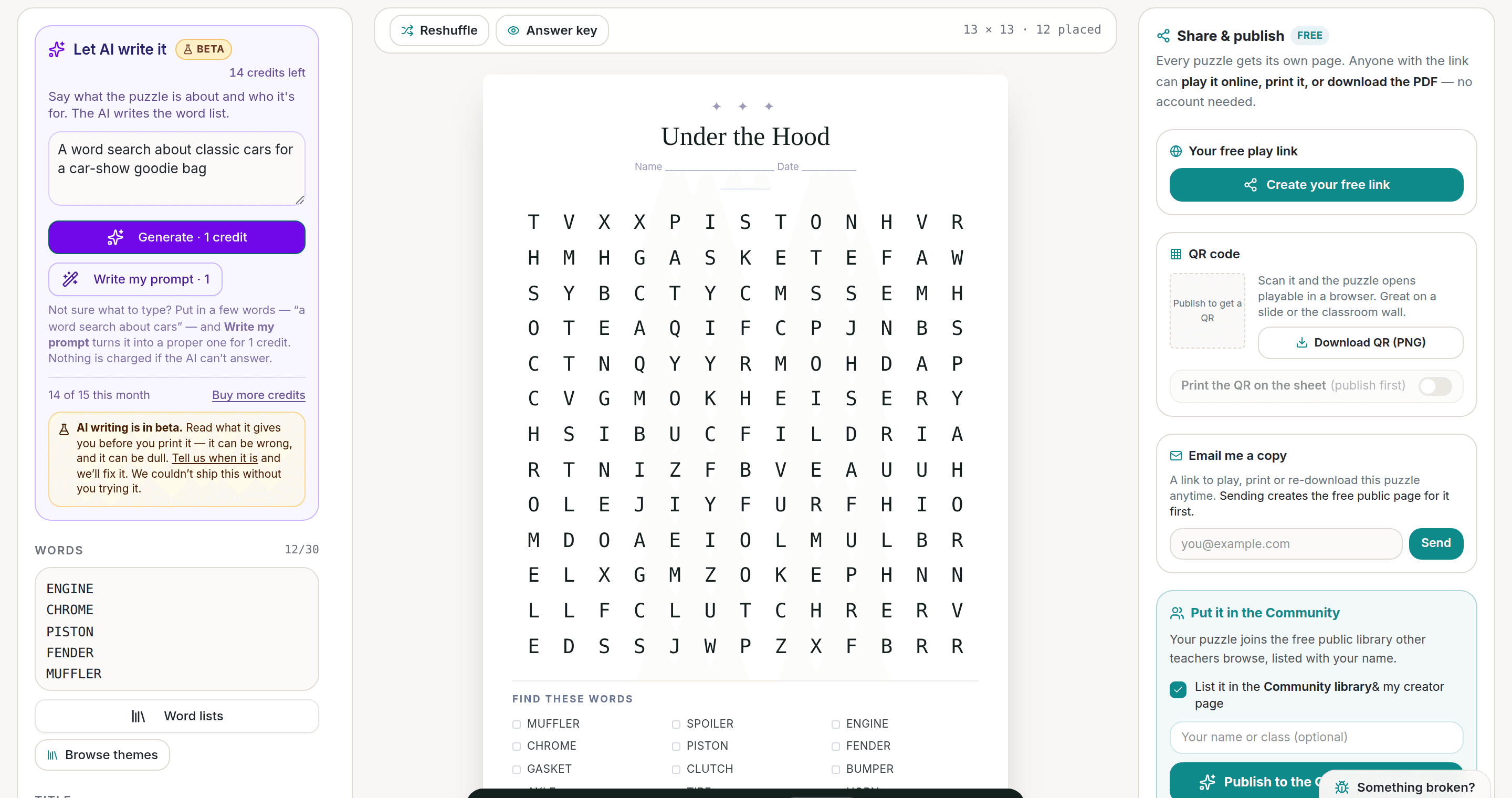
AI Puzzle Generator
Type a topic, get a themed word list and a finished puzzle. Premium also removes the footer credit and adds Word export.
Try the AI generator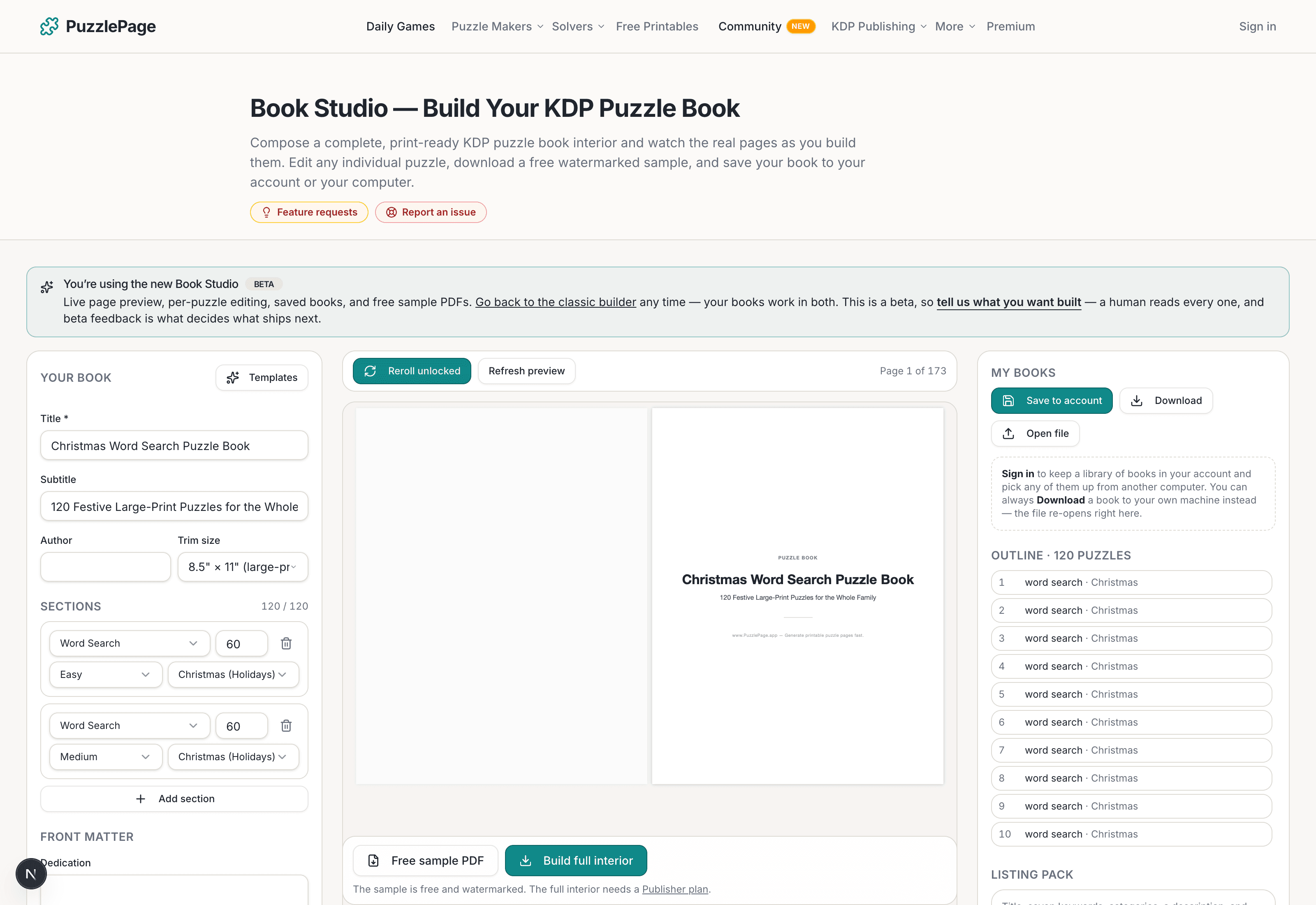
KDP Book Studio
Lay out a full puzzle book for Amazon KDP: templates, trim sizes, page checks and a cover designer.
Start a puzzle bookPremium removes the footer credit, adds Word export and custom styling across every maker.
See plans →Free daily games
Need a two-minute break? Today's puzzles are live.
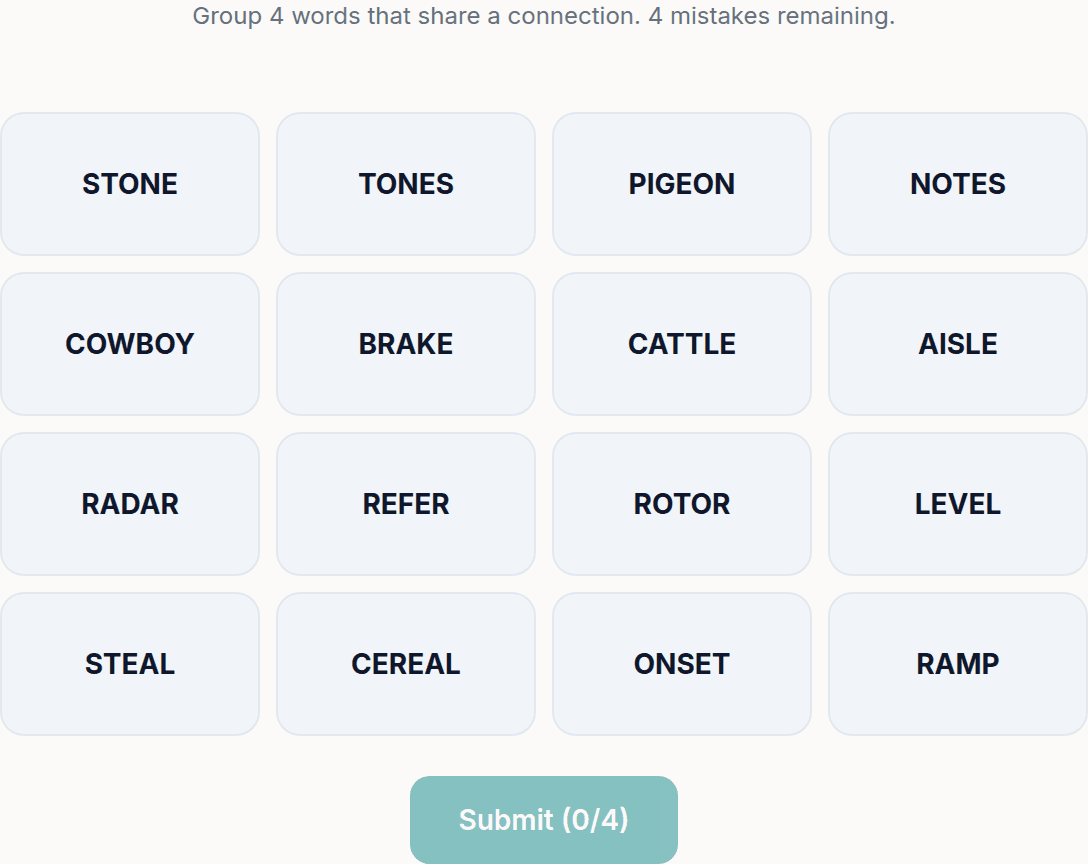
A new Sudoku and a new Connections board every day. No download, no account.
Keep reading
Take the puzzle with you
Free Word Search PDF — Body Systems Word Search
Print-ready · answer key included · unsubscribe anytime
Related printable themes
All themesEnjoyed this? Share the puzzle on X
Like puzzles like this? Follow on Pinterest for a new one every day.