Free Printable Mazes for Kids: Easy to Hard Levels
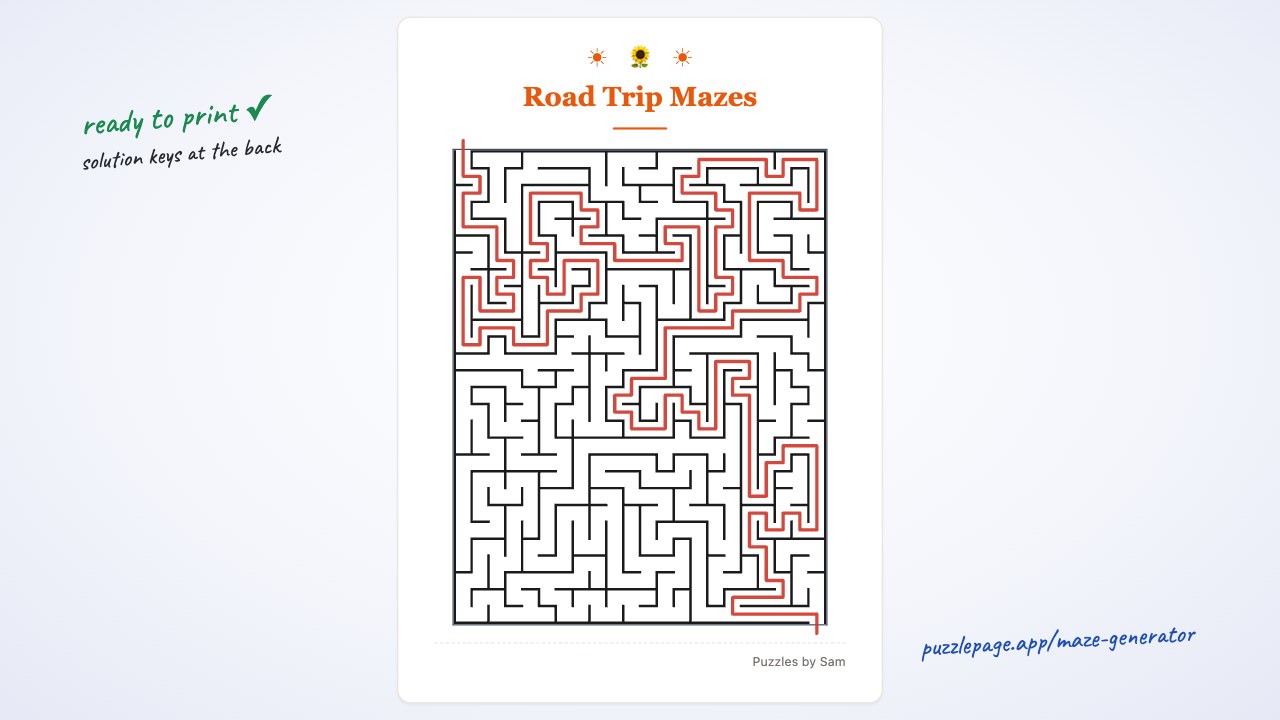
Free printable mazes for kids in easy to hard levels build pencil control and focus. Download classroom-ready PDF mazes with a solution key and print them free.

On this site: Make a free maze·Browse 100+ free printables·Play today's puzzles
A pencil, a starting arrow, and a tangle of paths that all look promising until one of them dead-ends. Free printable mazes for kids turn a spare five minutes into quiet, focused problem solving, and they cost nothing to make. Whether you need a calm-down activity or a road-trip rescue, a maze earns its keep.
📌 Key Takeaways
- Mazes build pencil control, visual tracking, planning, and the patience to push past a dead end.
- Difficulty scales with grid size and path complexity, so one tool covers ages 4 to 10.
- A small 6x6 grid suits ages 4 to 6, a medium grid suits 6 to 8, and a 15x15 grid suits 9 and up.
- Each printable PDF includes the solution path, so checking answers takes seconds.
- Great for early finishers, calm-down corners, restaurants, and long car trips.
 0:56
0:56Why free printable mazes for kids build real skills
A maze looks like play, and it is, but a child is quietly rehearsing several skills at once. Tracing a narrow path trains the same fine motor control that handwriting demands.
Looking ahead to spot a dead end before the pencil arrives is early planning. Backing up and trying another route without frustration is persistence, and both grow with practice.
Following one lane through a busy grid is also visual tracking, the very skill a child leans on when reading across a line of text. A maze gives that eye muscle a workout while it still feels like a game.
Pro Tip
For a wiggly preschooler, ask them to trace the path with a finger first, then a crayon. The finger run removes the fear of a wrong mark and warms up the hand for the real solve.
Like this? We send 10 of these every month.
Free printable puzzles, answer keys included — same quality as the ones in this post.
One email. Unsubscribe anytime.
What age are printable mazes good for?
Printable mazes work well for ages 4 to 10, and the trick is matching the grid to the child. A 4-year-old thrives on a small 6x6 grid with wide lanes, while a 9-year-old wants a 15x15 grid with false turns.
Start below a child's ceiling so the first solve lands as a win, then step the size up. A quick success keeps a young solver reaching for the next page instead of pushing it away.
Print a maze in about a minute
Pick a size, get a clean PDF with the solution key, and print a whole pack of free printable mazes for kids at no cost.
Make a free maze →How do I print mazes for free?
Printing mazes for free takes three steps: choose a size, download the PDF, and send it to any home or school printer. No download and no payment stand in the way.
- Pick a difficulty. Choose a small grid for a beginner or a large grid with more branches for an older solver.
- Download the PDF. The file includes the maze and its solution path on the answer sheet, so grading is quick.
- Print on plain paper. One page per maze keeps costs near zero, and you can print a fresh set whenever you need one.
Because the file is a standard PDF, it opens on a phone, tablet, or laptop and prints the same way every time. That reliability matters when 25 kids are waiting on their worksheet.
Pro Tip
Slide a printed maze into a clear sleeve and hand over a dry-erase marker. The same page becomes a wipe-and-repeat activity for the calm-down corner all week.
A quick maze difficulty guide
Grid size and path complexity are the two dials that set difficulty. Use the guide below to match a level to a child in seconds.
| Level | Grid size | Best age | Path style |
|---|---|---|---|
| Easy | 6x6 | 4 to 6 | Wide lanes, short route |
| Medium | 10x10 | 6 to 8 | A few false turns |
| Hard | 15x15 | 9 and up | Many branches and dead ends |
When in doubt, size down. A child who breezes through an easy page will proudly ask for a harder one, and that request is worth more than a page that feels too big.
You can also mix levels on purpose. Handing a mixed pack to a group lets each child settle at a grid that feels fair, which keeps the fast solvers and the careful solvers busy at the same time.
Where do printable mazes help most?
Printable mazes shine in the small gaps of a day, the five minutes that would otherwise turn restless. They travel well, since a page and a pencil need no batteries and no setup.
Keep a small stack in a folder and you always have a quiet activity within reach. The same pack covers a waiting room, a long drive, and the ten minutes after a test when half the room is already done.
- Early finishers. A maze keeps a fast worker busy without pulling your attention from the rest of the class.
- Calm-down corner. Tracing a single path gives a fidgety child a focused, low-stakes reset.
- Restaurants and errands. A folded maze fits a bag and buys a few peaceful minutes at the table.
- Road trips. A clipboard and a maze pack turn back-seat restlessness into a quiet game.
Because each printout costs so little, you can let a child keep the page or recycle it without a second thought. That freedom is part of why a printable set beats a pricey activity book for everyday use.
Are mazes good for a child's brain?
Yes. Mazes give low-pressure practice in visual tracking, forward planning, and problem solving, the same building blocks that support early reading and writing. Teachers value that mix of focus and play, a point echoed in classroom guidance from Edutopia.
In a class of 24 first graders I helped one morning, 20 chose the maze station before any other option. The pages that ran out fastest were the medium grids, tricky enough to feel like a real challenge yet short enough to finish before recess.
Mazes also pair nicely with other quiet puzzles. When a child wants a word twist next, a printable word search worksheet keeps the same calm focus, and a word scramble activity adds a spelling stretch that early finishers enjoy.
Frequently Asked Questions
What age are printable mazes good for?
Printable mazes work well for ages 4 to 10. A small 6x6 grid fits ages 4 to 6, a medium grid suits 6 to 8, and a 15x15 grid challenges kids 9 and up. Match the grid size to the child and step it up as pencil control grows.
How do I print mazes for free?
Open a free maze generator, pick a size, and download the PDF, which includes the solution path. Print it on plain paper with no download or payment. You can print one free maze or a whole set of free printable mazes for kids in a single click.
Are mazes good for a child's brain?
Yes. Mazes build visual tracking, planning, and persistence, the same skills that support early reading and writing. Because a child must look ahead and adjust after a dead end, mazes give gentle practice in problem solving.
What maze size should a beginner start with?
A beginner should start with a small 6x6 maze that has wide paths and a short route. It gives a quick win that builds confidence, and you can move up to a larger grid once the child finishes a few without help.
More you can make here
One puzzle is the start. Here is the rest of the kit.
 New
NewWorksheet Builder
Put a word search, a cryptogram and a scramble on one page, or build a whole themed packet. Prints with answer keys.
Build a worksheet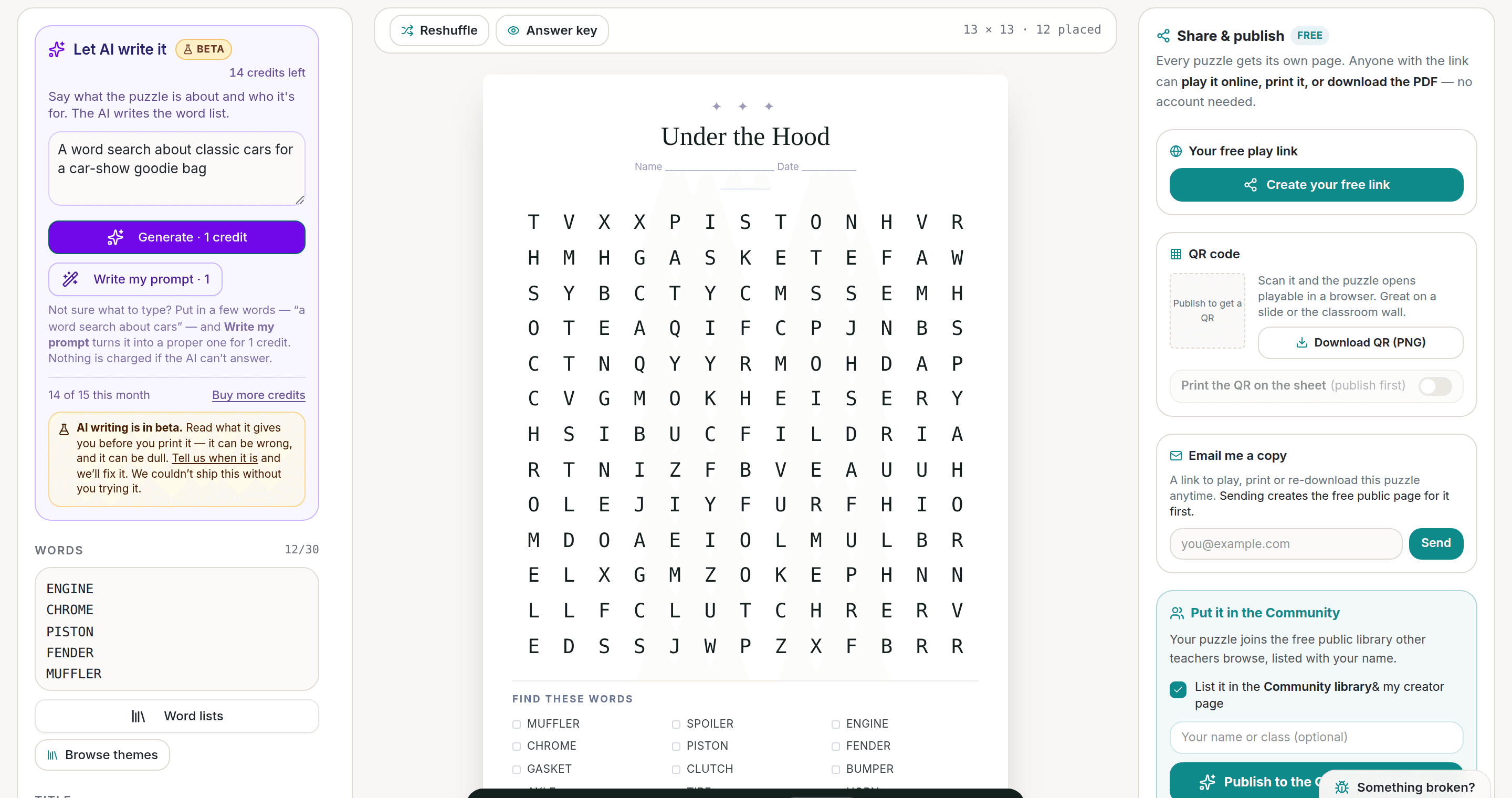
AI Puzzle Generator
Type a topic, get a themed word list and a finished puzzle. Premium also removes the footer credit and adds Word export.
Try the AI generator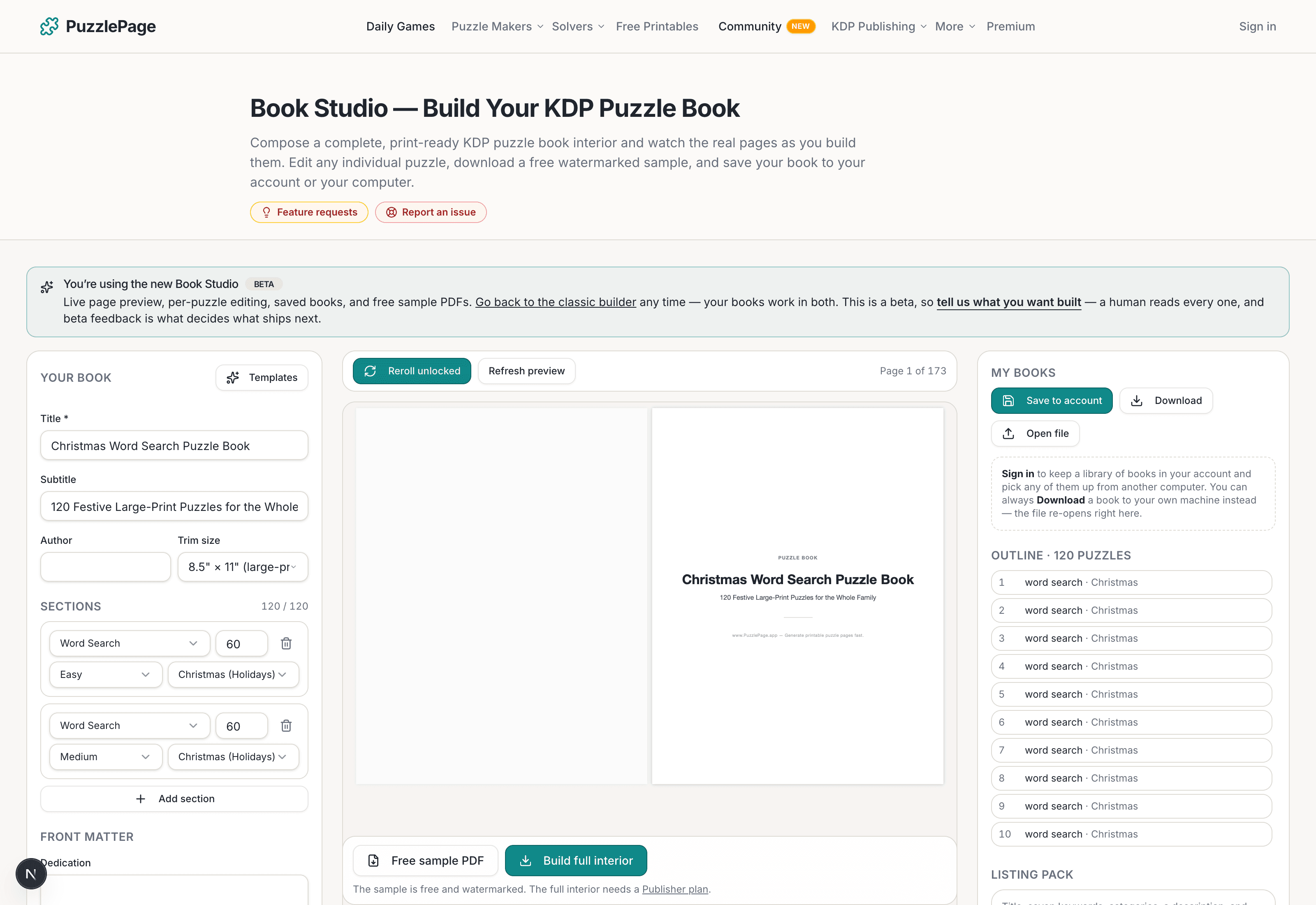
KDP Book Studio
Lay out a full puzzle book for Amazon KDP: templates, trim sizes, page checks and a cover designer.
Start a puzzle book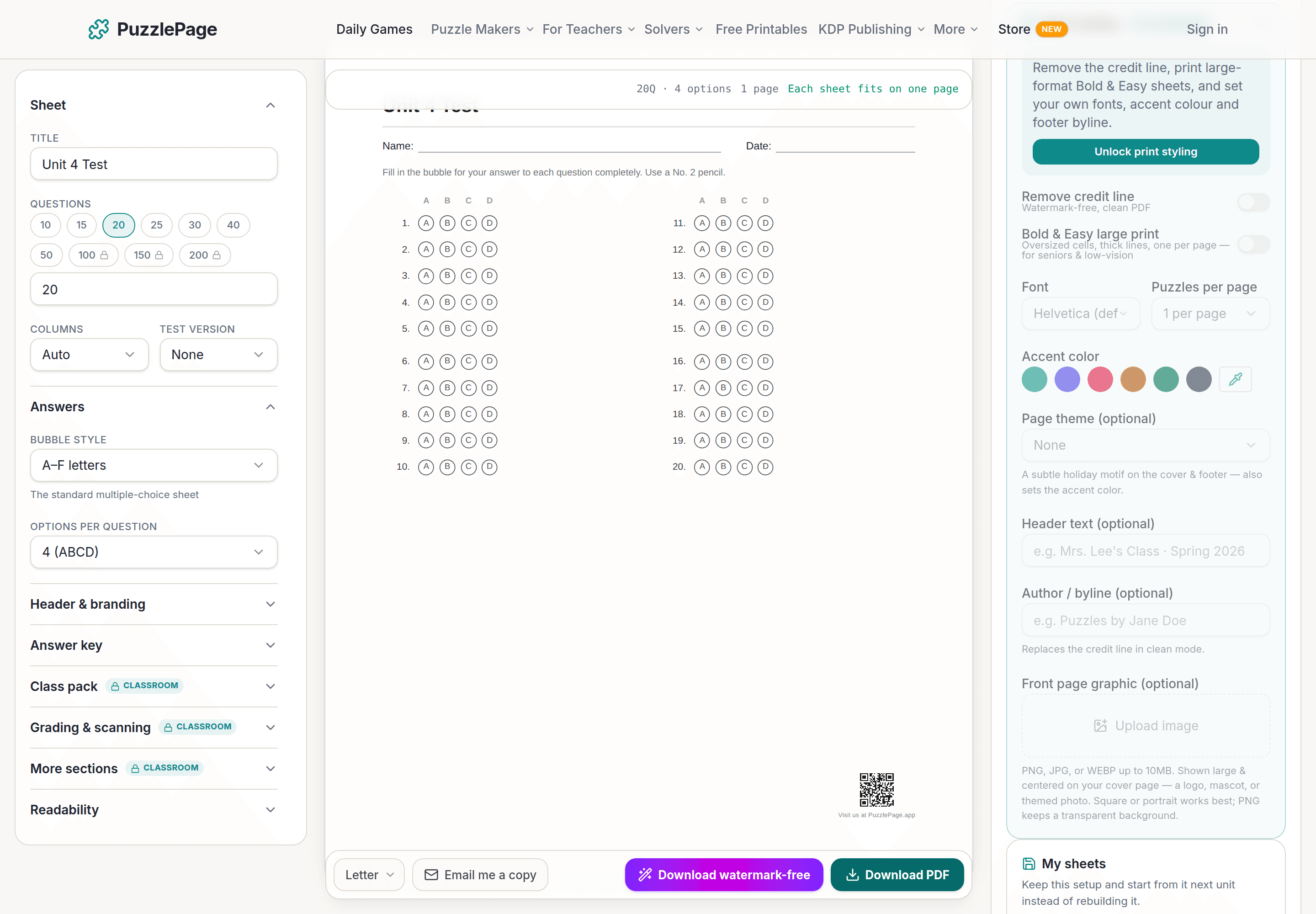
Bubble Sheet Studio
Answer sheets for any test length, with sections, versions, student ID grids and a matching answer key.
Make a bubble sheetPremium removes the footer credit, adds Word export and custom styling across every maker.
See plans →Free daily games
Need a two-minute break? Today's puzzles are live.
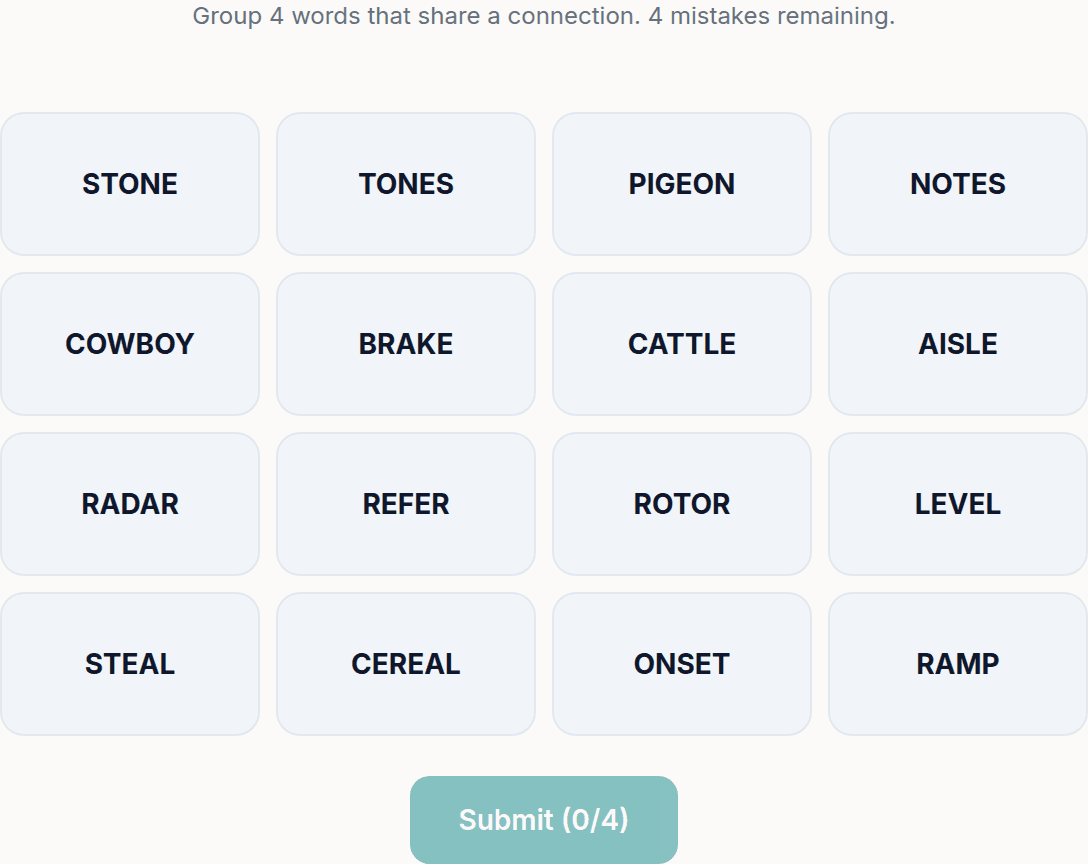
A new Sudoku and a new Connections board every day. No download, no account.
Keep reading
Get 10 free puzzles
Get the free 10-puzzle pack
Enter your email and we'll send you 10 print-ready puzzles with answer keys, plus a heads-up when we publish new generators and seasonal puzzle packs. Same quality as the ones on this page.
Roughly two emails a month. No spam, unsubscribe anytime.
Enjoyed this? Share the puzzle on X
Like puzzles like this? Follow on Pinterest for a new one every day.